Helping design and engineering professionals discover, evaluate and specify technologies and processes that shorten the design cycle and enable success.


Alert!
Digital Engineering ceased publication on July 1, 2026. This website remains available as an archive of engineering content.
For inquiries or information, please email [email protected].

Digital Engineering April 2026
In the latest issue of Digital Engineering, we take a look at the latest innovations in design for additive manufacturing, including the use of natural language inputs, social media cosplayers, and AI integration. The issue also includes a feature…

January Special Focus Issue: Design for Additive
In this Special Focus Issue of Digital Engineering, learn about the latest advancements in design for additive manufacturing, including new software tools, additive in automotive, custom medical devices, and more.
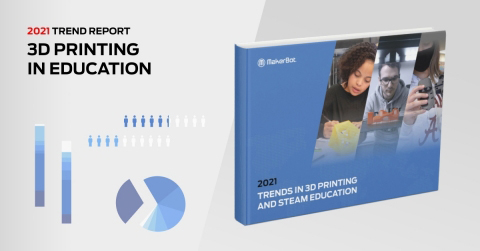
MakerBot, a Stratasys company, has released its second annual report on Trends in 3D Printing and STEAM Education, revealing how respondents leveraged 3D printing to amplify student engagement and collaboration in remote and virtual learning environments. Based on over 1,000 responses from education professionals around the world, the report also highlights some of the key factors that are leading to the increased use of 3D printing for lessons, coursework, and research projects, the company says.
Key findings from the report showed that while many schools were closed over the past year, respondents were still able to use 3D printing to support their lessons and drive student participation. Virtual learning has been a challenge for respondents, with many citing low student engagement (48%) as an obstacle.
To increase involvement, respondents added extra layers of complexity to their teachings to boost creative thinking and encourage student collaboration. A total of 57% of respondents used 3D printing for student-designed prototypes for problem-based learning projects, while 36% used 3D-printed parts related to specific lessons plans to increase student engagement. But not all remote experiences were equivalent—40% of respondents cited that their students were unable to practice their learnings due to the lack of access to equipment.
“For years, we have seen the power of 3D printing used to elevate student learning and development in the classroom. As schools look to bridge the skills gap in today’s workforce, building students’ critical thinking and creative problem-solving skills will be increasingly important,” said Nadav Goshen, CEO, MakerBot. “Over the past year, educators took 3D printing one step further, extending its capabilities to support remote education to keep students challenged, collaborative, and–most importantly–engaged.”
Additional key findings from the Trends in 3D Printing and STEAM Education report include:
“3D printing is a powerful and versatile learning tool that educators can use to create active learning experiences for students. With out-of-the-box, creative thinking, educators can leverage the technology to amplify their lessons to teach students in an exciting and impactful way,” added Goshen.

At MakerBot, we believe the easier the user experience, the more you can focus on developing your ideas. Whether you're already 3D printing or just starting out, learning how to read, write, and talk about your process with the right terms…

DE's editors contribute news and new product announcements to Digital Engineering. Press releases may be sent to them via [email protected].
Follow DE
Join over 90,000 engineering professionals who get fresh engineering news as soon as it is published.






About Us · Contact Us · Editorial Team · Advertising · Privacy Policy · Subscriber Services · © 2026 Digital Engineering 24/7 · Peerless Media