Helping design and engineering professionals discover, evaluate and specify technologies and processes that shorten the design cycle and enable success.


Alert!
Digital Engineering ceased publication on July 1, 2026. This website remains available as an archive of engineering content.
For inquiries or information, please email [email protected].


Digital Engineering April 2026
In the latest issue of Digital Engineering, we take a look at the latest innovations in design for additive manufacturing, including the use of natural language inputs, social media cosplayers, and AI integration. The issue also includes a feature…

January Special Focus Issue: Design for Additive
In this Special Focus Issue of Digital Engineering, learn about the latest advancements in design for additive manufacturing, including new software tools, additive in automotive, custom medical devices, and more.
Additive manufacturing (AM) is fueling innovations in rapid vehicle manufacturing, particularly as manufacturers seek to lightweight new vehicles and address on-demand and custom needs. Not only is progress being made with AM in the standard automotive sector, but AM is making its mark in performance and race cars, and other modes of transport. We reached out to companies in the AM space who work directly with automotive and other types of vehicle manufacturers to find out what’s happening. In each of the following instances, they share case-study examples of how additive manufacturing is driving the future of automotive and transportation overall.
BBI Autosport, founded in 2005, is a high-end performance and motorsport engineering company, specializing in churning out powerful vehicles built for the street and track. Based in southern California, BBI is known for its expertise in Porsche platforms. Further, its founders have more than three decades of combined professional racing history, resulting in expertise in the engineering and development of performance parts and services.
The company defines its mission as “returning artistry and craft to the exotic tuning market.” And a critical part of that mission involves AM. In 2023, 3D Systems teamed up with BBI, collaborating with the Brumos Racing team on the BBI-spec GT2 RS Clubsport race car driven by David Donohue.
“David would go on to not only take back-to-back victories in TA1, breaking the TA1 record to become the fastest Porsche ever to race up Pikes Peak (9:18:053). 3D Systems’ application expertise and 3D printing technologies were instrumental to developing bespoke parts for this vehicle,” says Joe Dopkowski, application engineer, 3D Systems.
Looking back on this and other related automotive collaborative work 3D Systems has conducted, Dopkowski says there were several key AM-specific takeaways.
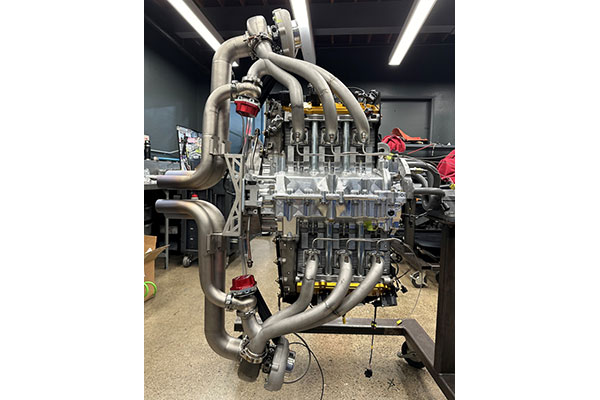
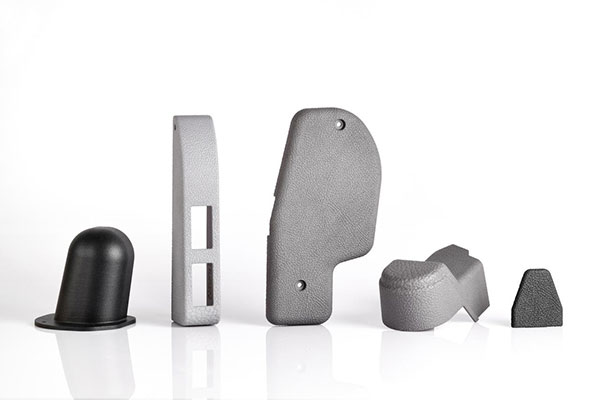
“The first is that additive manufacturing is capable of addressing multiple functional automotive applications, including air ducts and suspension components,” he notes. “Second, AM enables the cost-effective production of high complexity, low quantity components. This is particularly important for these high-performance cars that require unique innovation and part design on a case-by-case basis. Third, we often see AM in the high-performance automotive space showcased by Formula 1 teams. But it’s important to reinforce that you do not need to be a Formula 1 Team with a large budget to take advantage of increasing component functionality through additive manufacturing.”
Though the aforementioned example is specific to race cars, Dopkowski also speaks to mass-produced vehicle manufacturing and the challenges of using AM within this space.
“In regard to high-volume vehicle manufacturing such as for standard passenger vehicles, AM is currently limited as far as producing end-use parts for vehicles,” Dopkowski says. “High-volume throughput and low part cost are requirements for mass production and additive manufacturing’s sweet spot is small quantity, custom components on these vehicles. Currently, manufacturing aids like jigs and fixtures, modifications to tooling, and prototyping are the main uses for AM in the consumer vehicle segment.”
But he sees hope for AM’s broader integration into automotive manufacturing in the future.
“… as model flexibility increases, requirements for sourcing become more centralized and product lifecycles are shortened—alongside emerging trends such as autonomous driving as well as the growing number of boutique high-end vehicle manufacturers—there is an anticipated shift toward lower lot sizes in vehicle production. These evolving conditions create an environment where additive manufacturing becomes increasingly economically viable for end-use parts,” Dopkowski notes.
He cites examples such as dashboard components for a body interior, or antenna housings or components for roof sensor modules for the body’s exterior.
Depending on the application, 3D Systems has a variety of AM technologies available in its proverbial toolbox.
“Most tooling and fixturing applications are accomplished with either metal—our Direct Metal Printing or DMP platform—or large frame polymer extrusion technologies—our EXT Titan Pellet systems. Most prototyping and design verification efforts are done with our polymer systems including Selective Laser Sintering (SLS) for thermoplastic, functional prototypes. Additionally, our Stereolithography solution—laser-based (SLA) and projector-based (PSLA)—are ideal for high-resolution components in a multitude of functional materials such as: high-temperature materials that are resistant to temperatures up to 300°C, transparent materials for lighting applications and flow analysis, long-term mechanically stable materials for interior and visual components, patterns, and tools for prototype series production,” Dopkowski shares.
EOS North America’s case studies incorporating AM into automotive and transportation have led to impactful work on European trains, Formula 1 race car components, as well as metal 3D printing for DS Automobiles (under the Stellantis brand, which also has in its portfolio Fiat, Maserati and other iconic names), as examples.
Jon Walker, government relations and key account manager, EOS North America, highlights some of the AM collaborative work EOS has done related to automotive components. First, he addresses a key purpose of AM in automotive.
“Additive manufacturing isn’t here to replace traditional tooling—it’s here to enhance it, especially in high-volume applications like automotive die casting,” says Walker. “To use AM effectively, you have to consider the full equation: cost, volume, complexity and lead time. There’s no universal rule—it’s about matching the tool to the task. The more premium the vehicle or the lower the production volume, the more direct-printing parts start to make strong financial and functional sense.”
There’s one particular use case for AM that Walker sees as functionally relevant in automotive.
“For us, the strongest application of AM in automotive is conformal cooling in die-casting and mold-making tools. It’s a clear business case—better tool life and faster cycle times are hard to argue with. Beyond that, AM tends to add the most value to the toughest-to-manufacture components—typically in more premium vehicles and at lower unit volumes. Not every component is a fit, but when it works, it really works,” he says.
EOS focuses on two technologies with vehicle manufacturing: DMLS (metal) and SLS (polymer) technologies, which the company views as offering production-capable methods for automotive applications.
“DMLS is our go-to for metal tooling and performance parts, while SLS is best known for lightweight polymer fixtures, housings and prototyping,” Walker says. “Nearly every major auto OEM, foreign or domestic, in North America is using an EOS P 770 for these types of applications. SLS is also excellent for production with PA11, but like any process, it needs to be applied thoughtfully.”

HP shares a case study involving Blazin Rodz, developer of million-dollar custom cars that has its own series on YouTube, demonstrating how HP uses its Multi Jet Fusion (MJF) technology in automotive design and engineering applications.
The MJF technology has enabled design freedom, according to Steven Corzyk, additive application engineer, HP AM, “allowing for the creation of intricate, high-performance geometries…” He continues, “MJF delivered durable, final-use components that met both functional and aesthetic standards. In addition to performance, MJF significantly reduced production costs by eliminating the need for expensive tooling—without that, the team wouldn’t have been able to pursue the project at all.”
“This approach supports a digital, streamlined workflow from CAD to final part, blending engineering with artisanal skills. MJF gives engineers a highly efficient and replicable model for innovative vehicle development…,” Corzyk continues.
From HP’s vantage point, AM has a supporting role in the future of vehicle production.
“HP views additive manufacturing as a fundamental driver of next-generation vehicle production, offering a level of flexibility and agility that is especially valuable in low-volume, high-mix environments,” Corzyk says. “This technology allows for real-time iteration and optimization, making it easier to refine parts quickly and efficiently.”
“AM removes many of the limitations imposed by traditional manufacturing methods, enabling the creation of complex parts that would be impossible to achieve through milling, molding or casting. It also supports a high degree of customization and personalization, making it ideal for producing tailored interior components, structural brackets, aesthetic panels and branded elements.”
But wait, there’s more. Corzyk says that beyond the design advantages, AM cuts down lead times and costs by removing the need for tooling and allowing for on-demand production.
“… the most impactful applications of AM in vehicle production include high-performance final-use parts (such as optimized air vents, consolidated components and generatively designed structural mounts) that require durability and performance; rapid prototyping, which compresses development cycles from weeks to days, and the creation of functional tooling like custom jigs and fixtures for assembly lines and specialty vehicle modifications,” Corzyk explains.
HP uses two technologies to support automotive production. The first, the already mentioned MJF, is mostly suited for creating thermoplastic parts—for example, parts made from Engineering Grade Nylon 12, according to Corzyk. This method can be used for functional prototypes and production-grade components.
The second method in play is HP Metal Jet, HP’s metal 3D printing solution, which enables production of lightweight and complex metal parts. “It is particularly effective for structural applications and functional brackets that require a combination of strength and design efficiency,” Corzyk shares.
Each AM company represented here shares their future forecast. At 3D Systems, Dopkowski says, “AM is already very much a part of manufacturing workflows in small-scale, boutique, vehicle manufacturing. As performance increases and regulations become more restrictive, using the complexity and performance that additive components can provide will be necessary to meet these requirements. As cost decreases and throughput increases, I believe AM will become more prolific in high-volume passenger-vehicle manufacturing.”
AM will likely maintain its supporting role in automotive manufacturing, according to EOS’ Walker. “AM will continue to grow as a complementary manufacturing method—not a wholesale replacement. It brings flexibility, speed and design freedom to areas where traditional methods fall short. The real impact is cumulative: look back every 5–10 years and you’ll see how advancements in materials, machines and vehicle demands have unlocked new AM applications. That trend isn’t slowing down anytime soon.”
HP’s Corzyk suggests that “additive manufacturing will be a cornerstone of next-generation vehicle production, ultimately reshaping how vehicles are designed, built and brought to market.
“One of the most transformative aspects is mass customization,” Corzyk expounds. “As consumers increasingly seek personalized features and styles, additive manufacturing makes it possible to deliver tailored components unique to each customer. What’s more, digital workflows support on-demand manufacturing, enabling just-in-time production that reduces inventory waste and shortens time to market.
“Perhaps most importantly, additive manufacturing democratizes innovation. Manufacturers like Blazin Rodz demonstrate that advanced vehicle engineering is no longer limited to large OEMs,” Corzyk adds. “Additive manufacturing is not just a tool; it’s a transformative methodology redefining the future of automotive production.”

From digitization, design and simulation through manufacturing, inspection and management, our comprehensive portfolio of technologies provides a seamless, customizable workflow designed to optimize products and processes while accelerating…
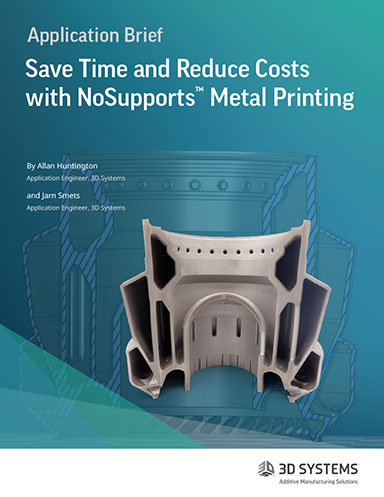
Save Time and Reduce Costs with NoSupports™ Metal Printing
Metal 3D printing is a high energy process in which it is possible for unmanaged heat and stress to build up and impact part quality, this guide presents a step-by-step methodology for how to apply NoSupports to a hot end section of a larger turbomachinery part.

Stephanie is the Associate Editor of Digital Engineering.
Follow DE






About Us · Contact Us · Editorial Team · Advertising · Privacy Policy · Subscriber Services · © 2026 Digital Engineering 24/7 · Peerless Media