Helping design and engineering professionals discover, evaluate and specify technologies and processes that shorten the design cycle and enable success.


Alert!
Digital Engineering ceased publication on July 1, 2026. This website remains available as an archive of engineering content.
For inquiries or information, please email [email protected].
Sponsored

May 2026 Special Focus: Artificial Intelligence in Design and Simulation
In this Special Focus Issue, learn about the latest developments in the integration of artificial intelligence into engineering workflows.

April 2026 Special Focus Issue: Generative Design
In this Special Focus Issue, Digital Engineering takes a look at how generative design solutions can be used across different types of design problems and with a variety of manufacturing approaches to accelerate design space exploration, and…
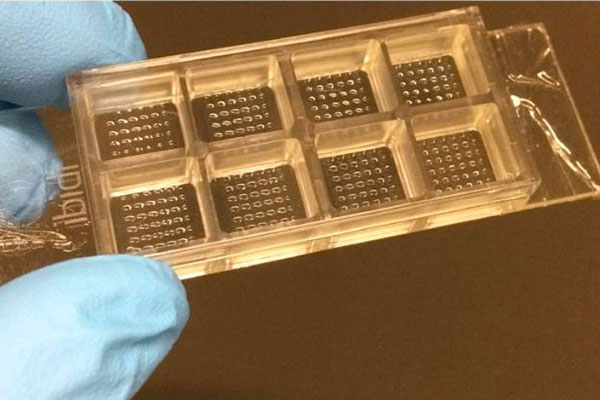
Dr. Francesco Pampaloni, PhD, a tenured staff scientist and principal investigator (PI) at the Institute, needed positive micro molds to produce microplates with specially-shaped wells for the study of cell cultures, micro-vessels, and micro-bioreactors.
Positive molds have a convex shape and are used in thermoforming, a process in which a flat thermoplastic sheet is heated and deformed into the desired shape. These molds begin with computer-aided design (CAD) software and can produce microplates with specially-shaped wells.
Vacuum thermoforming, a type of thermoforming that uses vacuum pressure to draw the sheet onto the mold, can shape very thin sheets, or foils, of fluorinated ethylene propylene (FEP) into the microwell shapes that Dr. Pampaloni’s application required. The microwell plates that the scientist used featured wells with prismatic or pyramidal shapes for high-density spheroid formation.
The diameter of these cellular spheroids, which were cultured in the micro-wells, was approximately 100-200 µm each. The ultra-thin FEP foils that were vacuum thermoformed onto the micro-molds facilitated the analysis of cell cultures with light microscopy, a common analytical technique.
With vacuum thermoforming, the quality of the final product strongly depends upon mold properties such as surface detail and smoothness. Mold materials with the proper thermal and mechanical properties are also required to ensure quality and consistency. Dr. Pampaloni had tried different microfabrication methods but was not satisfied with the results.
Then he discovered projection micro stereolithography (PµSL) from Boston Microfabrication (BMF).
Dr. Pampaloni explains:
“We have extensively tested the BMF parts for their suitability as positive molds for the thermoforming of micro-wells. The BMF micro molds have a superior resolution and surface finish compared to others we tried, so they worked very well indeed for thermoforming of the micro features required for cell culture.”
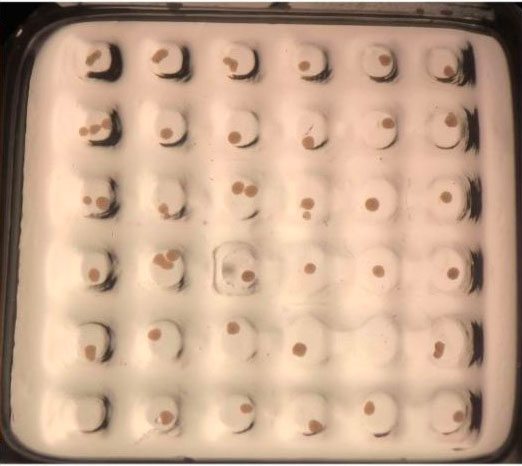 Cellular spheroids (diameter about 100 µm each), cultured in the micro-wells
3D printing can create positive molds and provides a quick route from conception to design to production. However, Dr. Pampaloni’s application required the realization of small, complex shapes with high-resolution. He also needed to use high-performance mold materials that would support consistently high-quality results using the FEP foil.
Most 3D printers aren’t able to produce small features with high resolution and accuracy, but PµSL technology from BMF is capable of achieving resolution of 2µm~10µm and tolerance of +/- 5µm~25µm. Moreover, PµSL microscale 3D printing can deliver these results at faster speeds than other micro-fabrication methods. BMF’s microArch series of 3D printers are the first commercially available microfabrication equipment to use PµSL technology.
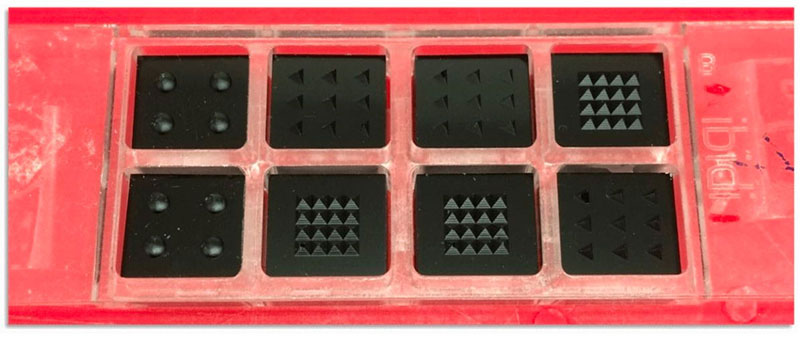 3D print molds from Boston Micro Fabrication with 8µm layer resolution
Using the CAD files that Dr. Pampaloni provided, BMF 3D printed positive micro-molds with an 8µm layer resolution. A form of stereolithography (SLA), PµSL produces parts in layers using a photochemical process in which a photosensitive liquid resin is exposed to light so that polymeric cross-linking and solidification occurs. To show or hide specific areas of a layer, a CAD file is sliced into a series of 2D images called digital masks.
Each layer has a mask, and each layer is then added until the entire 3DP structure was complete. To fabricate individual layers, slicing data is sent to a microArch 3D printing system where PµSL supports continuous exposure for faster processing. BMF’s open material system includes engineering and medical polymers that support the 3D printing of consistently high-quality parts such as micro-molds.
For the Buchmann Institute for Molecular Life Sciences at Goethe University, BMF successfully produced micro-molds with a smaller number of microwells and then 3D printed a larger mold that was used to create 96-well plates. The quality of all of these 3D printed parts was perfectly-suited for vacuum thermoforming with FEP foil. Specifically, the smoothness and details that were obtained by using PµSL technology greatly outperformed the 25µm to 50µm resolution of standard SLA printers. The thermal and mechanical properties of BMF’s 3D printed material also ensured the quality and consistency of the final product.
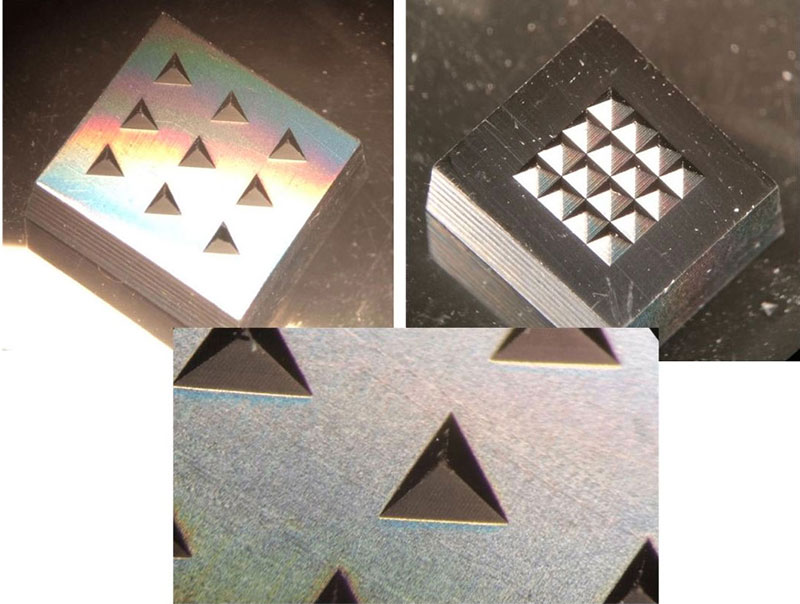 Positive molds for µ-wells from Boston Micro Fabrication - 8µm XYZ resolution


Boston Micro Fabrication is the world leader in micro-precision 3D printers utilizing Projection Micro Stereolithography (PµSL) technology. Many leading companies worldwide are adopting PµSL to 3D print true microstructures with ultra-high…

Ultra-high Accuracy, Precision, and Resolution Micro 3D Printed Medical Device Manufacturing
Discover how the use of micro-precision 3D printing is aiding medical device producers to tackle two common issues through this white paper.

Join over 90,000 engineering professionals who get fresh engineering news as soon as it is published.






About Us · Contact Us · Editorial Team · Advertising · Privacy Policy · Subscriber Services · © 2026 Digital Engineering 24/7 · Peerless Media