Helping design and engineering professionals discover, evaluate and specify technologies and processes that shorten the design cycle and enable success.


Alert!
Digital Engineering ceased publication on July 1, 2026. This website remains available as an archive of engineering content.
For inquiries or information, please email [email protected].

Digital Engineering April 2026
In the latest issue of Digital Engineering, we take a look at the latest innovations in design for additive manufacturing, including the use of natural language inputs, social media cosplayers, and AI integration. The issue also includes a feature…

January Special Focus Issue: Design for Additive
In this Special Focus Issue of Digital Engineering, learn about the latest advancements in design for additive manufacturing, including new software tools, additive in automotive, custom medical devices, and more.
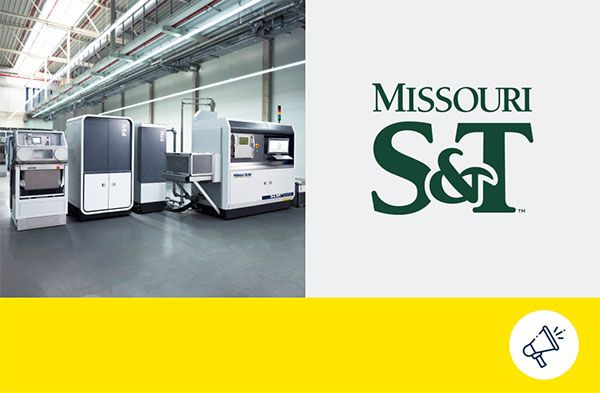
Missouri University of Science and Technology (Missouri S&T) has expanded its advanced manufacturing capabilities by installing a Nikon SLM 500 metal additive manufacturing system. The new equipment will be used to help train the next generation of engineers and bolster workforce development across Missouri.
Funded through a Department of Labor grant and supported by the state’s MoExcels initiative, the SLM 500 will support hands-on undergraduate instruction in advanced manufacturing courses, student design teams, and workshops focused on modern alternatives to traditional casting technologies. The investment also positions Missouri S&T as a collaborator for regional manufacturing businesses seeking access to industrial-scale additive capabilities.
“Having a machine of this scale allows us to train students using the same technology they’ll encounter in the field,” says Bradley Deuser, manufacturing operations manager of the Center for Advanced Manufacturing. “It also opens the door for continuing education and collaboration with industry partners who are eager to upskill their workforce.”
With the SLM 500’s production-grade features in use by major aerospace and manufacturing companies, Missouri S&T is seeking to close the gap between academic instruction and real-world application. The machine will be used to teach key additive principles, optimize design for manufacturing, and equip students and professionals with expertise.
“In higher education, it’s critical to align what we teach with where industry is going,” says Richard Billo, director of the Missouri Protoplex and the Center for Advanced Manufacturing. “This acquisition ensures that our graduates—and our region’s workforce—are ready to lead in an advanced manufacturing future.”
“Missouri S&T’s investment in industrial-scale metal AM isn’t just a win for education—it’s a win for the entire region. By giving students and industry professionals access to the same technology trusted by aerospace and defense leaders, they’re building a pipeline of skilled talent ready to lead the future of manufacturing,” says Charlie Grace, chief commerical offier of Nikon SLM Solutions.
Sources: Press materials received from the company and additional information gleaned from the company’s website.


DE's editors contribute news and new product announcements to Digital Engineering. Press releases may be sent to them via [email protected].
Follow DE






About Us · Contact Us · Editorial Team · Advertising · Privacy Policy · Subscriber Services · © 2026 Digital Engineering 24/7 · Peerless Media