Helping design and engineering professionals discover, evaluate and specify technologies and processes that shorten the design cycle and enable success.


Alert!
Digital Engineering ceased publication on July 1, 2026. This website remains available as an archive of engineering content.
For inquiries or information, please email [email protected].

Digital Engineering April 2026
In the latest issue of Digital Engineering, we take a look at the latest innovations in design for additive manufacturing, including the use of natural language inputs, social media cosplayers, and AI integration. The issue also includes a feature…

January Special Focus Issue: Design for Additive
In this Special Focus Issue of Digital Engineering, learn about the latest advancements in design for additive manufacturing, including new software tools, additive in automotive, custom medical devices, and more.
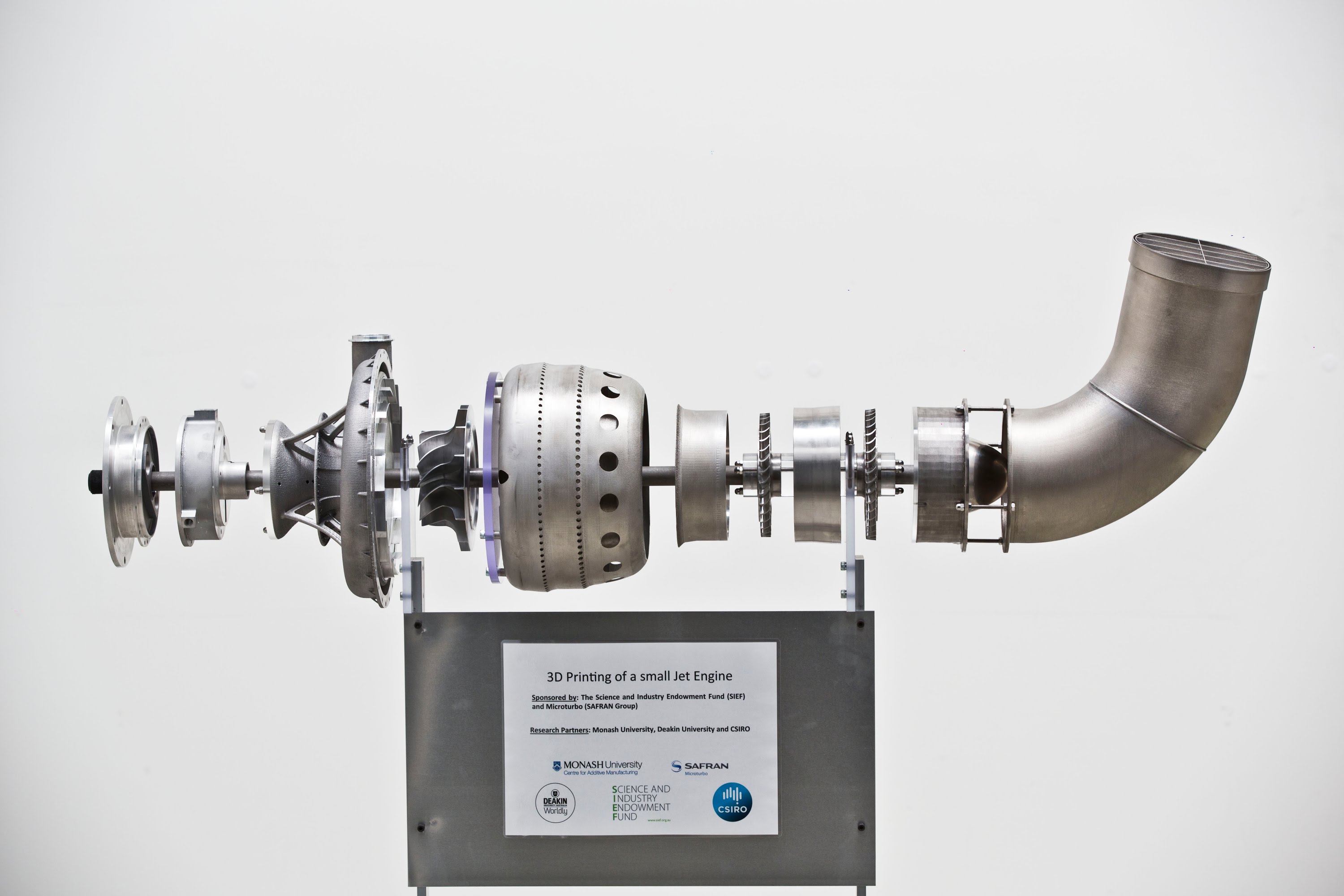
A number of companies are using, or investigating in methods of using AM to replace highly complex parts in a single build, rather than requiring multiple production methods and additional assembly. Australia’s Monash University (MU), along with its industry spinoff AMAERO Engineering, have gone one step further and produced an entire jet engine built with 3D printing.
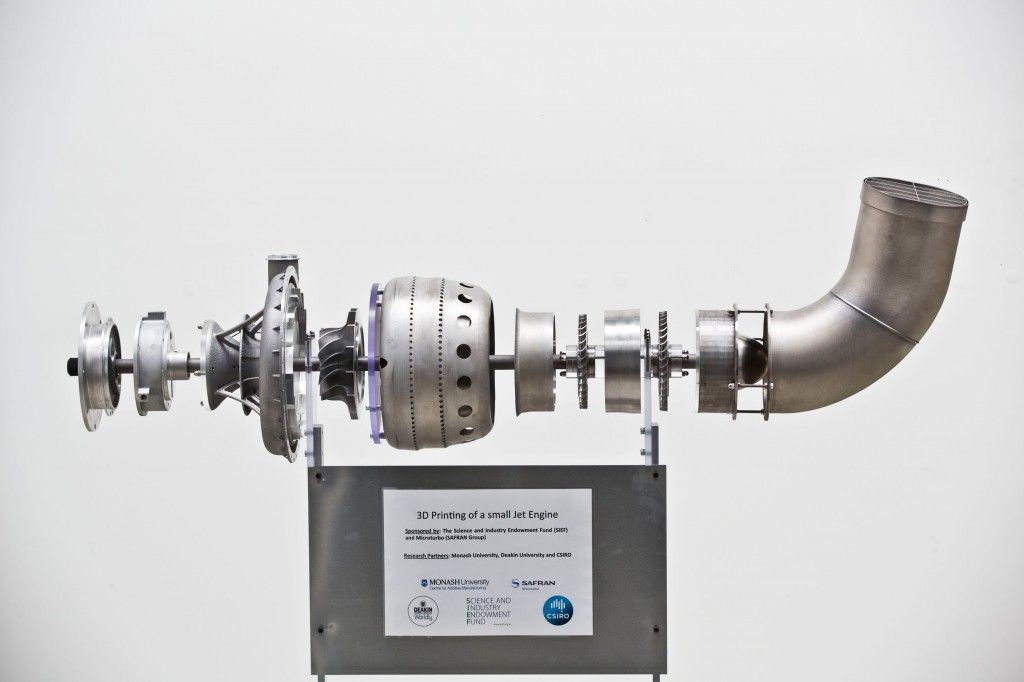 Monash University has 3D printed the first complete jet engine. Courtesy of Monash University.
The appeal in using AM for aerospace manufacturing is multifaceted, but generally can be tied to material conservation and weight reduction. Many of the materials used in aerospace construction are extremely expensive, and 3D printing wastes far less material than traditional methods. It is possible to build parts for AM that are just as strong and durable as parts built using traditional methods, while reducing the overall weight of the part, and eliminating redundant features.
The jet engine printed by MU is a proof-of-concept model of an existing gas turbine engine. MU chose the older design because of confidentiality agreements that wouldn’t have allowed the university to openly display the finished engine.
“It was our chance to prove what we could do,” says Professor Xinhua Wu, the director of the Monash Centre for Additive Manufacturing. “But when we reviewed the plans we realized that the engine had evolved over years of manufacture. So we took the engine to pieces and scanned the components. Then we printed two copies.”
AMAERO Engineering lists a Concept Laser XLine and two EOS INT 280M as available AM systems, so those systems may have been responsible for some or all of the build work required to complete the engine. Australia also produces many of the metals used for aerospace manufacturing, positioning it as a potential industry leader in the emerging field of 3D printed jet engines.
Below you’ll find a short video about the project.
Source: Monash University


John Newman is a Digital Engineering contributor who focuses on 3D printing. Contact him via [email protected] and read his posts on Rapid Ready Technology.
Follow DE
Join over 90,000 engineering professionals who get fresh engineering news as soon as it is published.






About Us · Contact Us · Editorial Team · Advertising · Privacy Policy · Subscriber Services · © 2026 Digital Engineering 24/7 · Peerless Media