Helping design and engineering professionals discover, evaluate and specify technologies and processes that shorten the design cycle and enable success.


Alert!
Digital Engineering ceased publication on July 1, 2026. This website remains available as an archive of engineering content.
For inquiries or information, please email [email protected].

Digital Engineering April 2026
In the latest issue of Digital Engineering, we take a look at the latest innovations in design for additive manufacturing, including the use of natural language inputs, social media cosplayers, and AI integration. The issue also includes a feature…

January Special Focus Issue: Design for Additive
In this Special Focus Issue of Digital Engineering, learn about the latest advancements in design for additive manufacturing, including new software tools, additive in automotive, custom medical devices, and more.
That probably isn’t the exact question that drove Enrico Dini to found Monolite UK, but it might have been something similar. We’ve covered architectural additive manufacturing before, but this process is a bit different and we’ll go a little deeper.
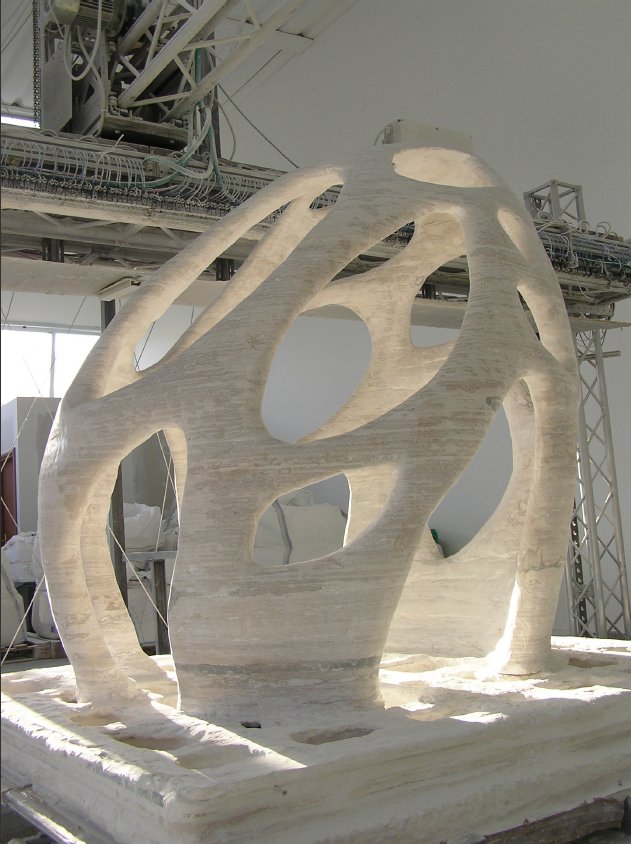
The creation process used by Monolite UK follows the standard steps you’d expect from any sort of 3D printing. An architect works up a CAD design of a building, then feeds it into a building apparatus. The apparatus in this case is called D-shape.
Like with other types of 3D printing, the build object is created a layer at a time. In this case, the layers can include wiring, cabling and piping cavities, along with decorative touches like statues. All of this is accomplished without a drop of cement.
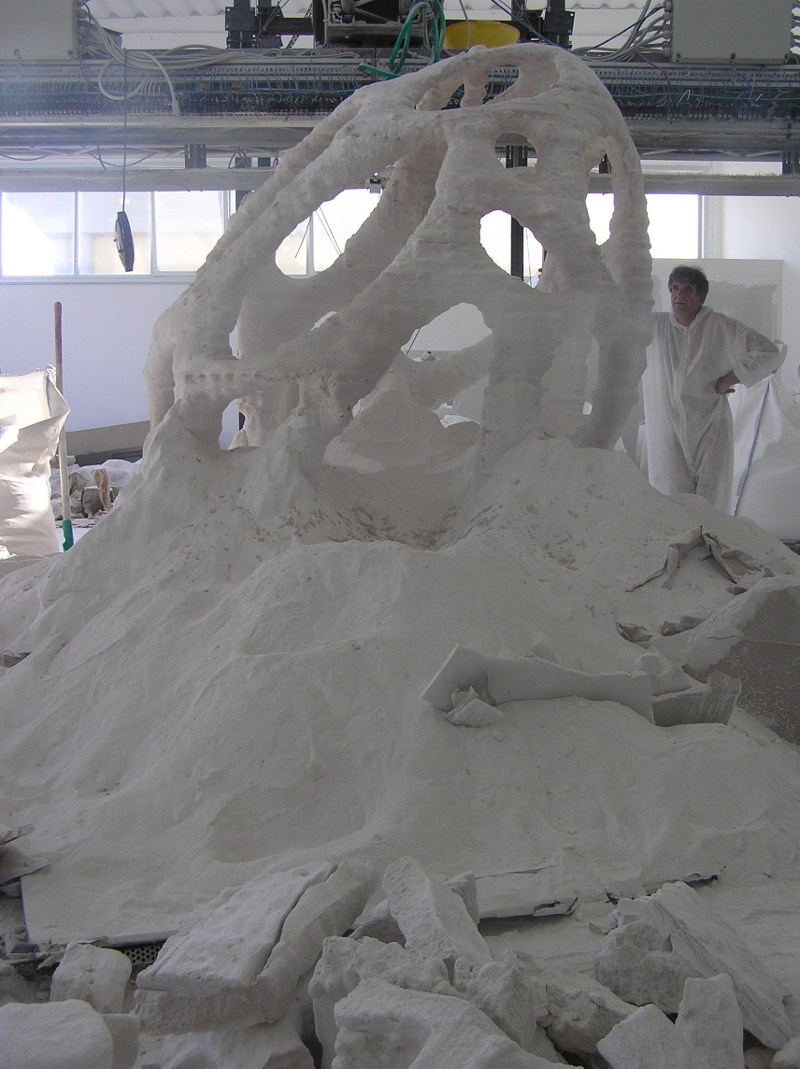
Monolite uses regular sand and the extruder head pumps out a binder agent. Once a build is complete, the structure requires 24 hours to fully set. When the 24 hours are up, the structure is dug out of the surrounding sand (similar to how laser sintering works). Any sand that hasn’t been used to build the structure can be reused.
The end result of a build using D-shape and the Monolite binder is a marble-like structure that is, according to the company, stronger than concrete without needing to rely on internal iron supports. Monolite also expects (and this is true of most rapid manufacturing) that building a house with D-shape will go much faster than standard methods of construction.
The company predicts that even with the higher cost of their binder material, compared to regular concrete, the final price tag on a building will see a significant reduction. Another possible benefit to this method is improved safety. The build process requires less human interaction than traditional techniques, meaning accidents are less likely.
Monolite is currently looking to build a D-shape printer large enough to produce full-scale buildings. Enrico Dini is the subject of a documentary named The Man Who Prints Houses about his struggles to get the company moving.
Below you’ll find the documentary trailer.
Source: Monolite UK


John Newman is a Digital Engineering contributor who focuses on 3D printing. Contact him via [email protected] and read his posts on Rapid Ready Technology.
Follow DE






About Us · Contact Us · Editorial Team · Advertising · Privacy Policy · Subscriber Services · © 2026 Digital Engineering 24/7 · Peerless Media