Helping design and engineering professionals discover, evaluate and specify technologies and processes that shorten the design cycle and enable success.


Alert!
Digital Engineering ceased publication on July 1, 2026. This website remains available as an archive of engineering content.
For inquiries or information, please email [email protected].

May 2026 Special Focus: Artificial Intelligence in Design and Simulation
In this Special Focus Issue, learn about the latest developments in the integration of artificial intelligence into engineering workflows.

Design & Simulation Software Guide 2025
In this Special Issue, Digital Engineering presents its second annual guide to design and simulation software vendors.
As manufacturing and engineering companies around the globe shuttered their offices in response to the spread of COVID-19, engineering software companies have responded by providing remote access to their tools. One of those was MSC Software, which opened up remote licensing to customers and is also providing e-learning tools to help customers learn to use additional products available through their token-based licensing platform.
To find out more about those efforts, Digital Engineering spoke to Roger Assaker, MSC’s chief customer engagement officer and chief material strategist, MSC Software, and CEO, e-Xstream engineering. He is also the vice chairman of NAFEMS Composite Working Group and is an active member of other technical material associations such as SPE and SAMPE.
Digital Engineering: How challenging was it to make this change? What was involved?
Roger Assaker: We are a global company so we have customers all around the world and across industries. So for us, this did not happen overnight. It started in China. Our customers and employees were forced to stay home. Then things started to propagate around the world and we started hearing rapidly from our teams asking how we could react to customer requests and help them stay active.
We were able to look at the initiatives we were supporting locally, and then react at the corporate level to put things into place. Customers were asking if they could use their software from home. A few contacted customer support indicating they could not access their own licensed server. We saw trends developing so we reacted and put new programs into place.
DE: What types of changes were you able to make to help support those customers?
Assaker: We removed the restrictions in the software license agreement so they could use the software from home. They need to be able to access the license and the license server. Some can do that through a VPN. Some cannot. We created an emergency license server for the MSC One token system.
They also need to have compute power locally. Some of them took their workstations home. Some can access HPC resources at their own company.
We are also helping our customers explore the rest of the portfolio via our e-learning offerings.
DE: What sorts of technology challenges have customers been experiencing?
Assaker: I would put our customers into two categories. First, there are customers that are used to working from home. These are more modern companies or smaller companies that are used to working a few days a week from home. They are set up for that, so this is not a big deal for them.
The biggest problem is for larger companies, which are used to working in an office, and have their own IT issues. Can they support using the VPN and having the bandwidth to absorb everybody at the same time?
If they need to go to a lab or validate an analysis, that has been delayed. Other companies are shifting focus to different projects. In some cases they are launching projects in response to the pandemic. From our side, though, everything has gone smoothly.
DE: Tell us about the e-learning tools.
Assaker: We have a broad range of products, all supported in the MSC One token system. We have legacy products, and those that are newer or that we have acquired or built more recently.
We are giving our customer base the opportunity to learn about the new products they have access to. The licensing system allows them to access all products, in addition to the ones they use day in and day out.
DE: What lessons have you learned, as a company, about engineering from home?
Assaker: There’s going to be a before and after way of doing things. We are discovering that we can do more remotely than we used to do. Not every meeting needs to be face-to-face. We will discover that some managers that wanted to see the engineers in the office are finding that people are pretty productive remotely.
Some things still require teamwork. That cannot be changed completely. There is value in being in the room together that cannot be easily replaced.
DE: As a technology vendor, what have you learned about what your customers need in this type of environment?
Assaker: We need to be more flexible in terms of licensing. We need to provide multiple channels of usage, cloud, SaaS, in addition to traditional software. I think we need to be proactive in terms of support. We should partner with customers and make sure we can pivot very quickly, because things can change overnight. And we’ve also learned it's good to be diversified in terms of industry coverage. You cannot have all of your eggs in the same basket and rely on one industry.
DE: After this is over, what changes do you think we’ll see in the industry?
I think we’ll see some long-term changes. One thing we will see immediately is it will be longer to recover, especially in aerospace and automotive. That is a big driver in the simulation area. Will it be three months? Two years? It will take time so we need to be ready to support our customers in that journey. We need to be ready for all kinds of cost mitigation. Our customers will have a strong mandate to think about short-term cash flow, even before thinking about long-term growth, so we need to be able to help them with cost-cutting initiatives.
By that I mean how simulation can help companies save money. We will need to be creative with business models. There may be some changes in terms of the distribution of the workforce, the flexibility of licensing, and links between software and services for our customers. They may need to change fixed costs into variable costs. I think there will be big changes.


MSC Software develops simulation software technology that enables engineers to validate and optimize their designs using virtual prototypes. Customers in almost every part of manufacturing use our software to complement, and in some cases even…
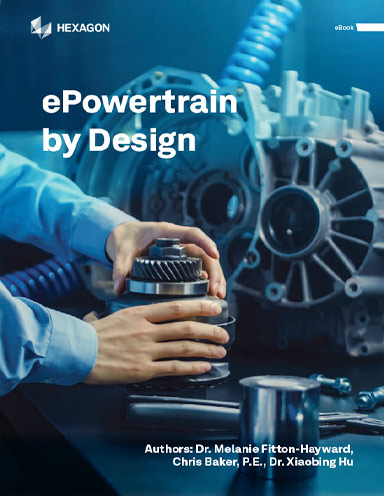
ePowertrain by Design
Electrification is the single largest disruptor that has occurred to mobility in decades and in particular it is impacting the automotive industry faster and more widely than other sectors.

Brian Albright is the editorial director of Digital Engineering.
Contact him at [email protected].






About Us · Contact Us · Editorial Team · Advertising · Privacy Policy · Subscriber Services · © 2026 Digital Engineering 24/7 · Peerless Media