Helping design and engineering professionals discover, evaluate and specify technologies and processes that shorten the design cycle and enable success.


Alert!
Digital Engineering ceased publication on July 1, 2026. This website remains available as an archive of engineering content.
For inquiries or information, please email [email protected].

Digital Engineering April 2026
In the latest issue of Digital Engineering, we take a look at the latest innovations in design for additive manufacturing, including the use of natural language inputs, social media cosplayers, and AI integration. The issue also includes a feature…

January Special Focus Issue: Design for Additive
In this Special Focus Issue of Digital Engineering, learn about the latest advancements in design for additive manufacturing, including new software tools, additive in automotive, custom medical devices, and more.
It’s easy to forget just how many items we use every day are made from some form of plastic. Take a quick look around and see how many plastic products you can spot. Everything from chairs to eyewear is made from plastic. The cost of all that convenience is paid for by diminishing room in landfills and masses of plastic waste floating in the Pacific Ocean.
Biodegradable plastics offer a bridge between the convenience of plastic and an environmentally sound attitude toward manufacturing. Additive manufacturing (AM) is beginning to embrace the potential of biodegradable plastic and three new green material options have recently been launched.
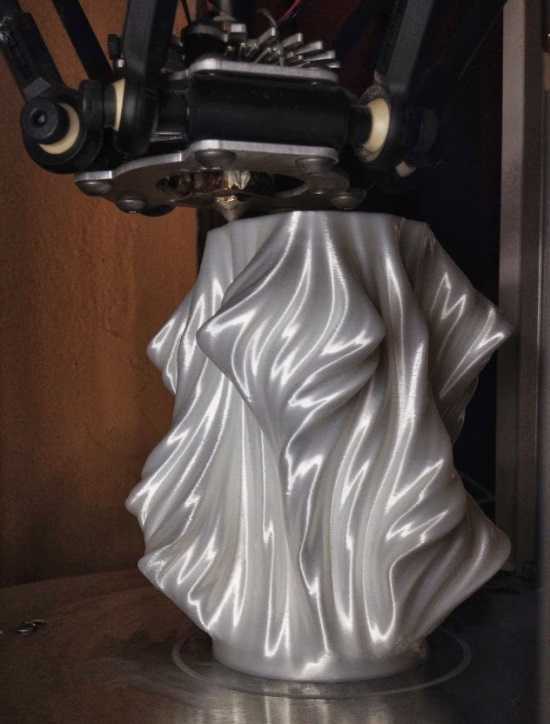
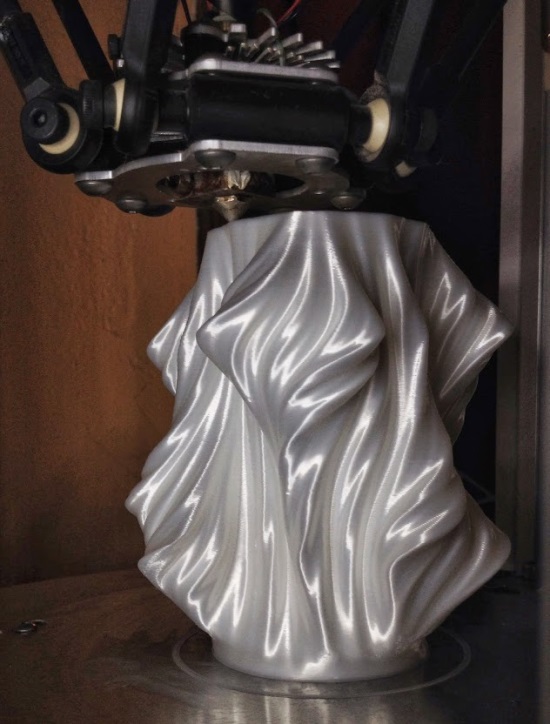
German startup twoBEars has launched two new biofabrication materials collectively called bioFila. Both materials are based on lignin, a complex polymer of aromatic alcohols known as monolignols, which is commonly derived from wood. The end result is completely biodegradable while, according to the company, retaining the durability required for 3D printed products.
BioFila silk can be printed to a layer thickness of 0.45 mm, and offers an (unsurprisingly) silky look and sheen to finished objects. A completed print has a softer look than is usual with standard plastic AM materials such as ABS. BioFila linen offers a finished product with a cloth-like appearance. The linen option can also be printed to a layer thickness of 0.45 mm. Both bioFila options sell for 49.90€ / 750g (about $69/26.5 oz.).
Sierra Resins and 3D Printlife have also partnered to develop a new bioplastic filament. Along with AM, the new bioplastic is targeting film applications and injection-molded products. The goal is to produce a 100% biodegradable product that can also fill a wide range of manufacturing needs.
“Processability, smoothness, and adherence to tolerances were good,” said John Tersigni, President and CEO of Sierra Resins. “We’re now going to submit this particular grade of 3D biofilament to an independent ASTM certified biodegradability testing laboratory. We’re happy about the initial results, so it’s a good sign.”
Hopefully these products will join a growing stream of biodegradable AM materials, perhaps allaying any concerns that the growth of 3D printing will be accompanied by a new influx of plastic refuse. Eventually we may see the majority of AM products being printed in bioplastics, which should help assuage any environmental concerns about the technology.
Below you’ll find a clip featuring a test print of Sierra Resins and 3D Printlife’s new bioplastic.
Sources: twoBEars, Sierra Resins


John Newman is a Digital Engineering contributor who focuses on 3D printing. Contact him via [email protected] and read his posts on Rapid Ready Technology.
Follow DE






About Us · Contact Us · Editorial Team · Advertising · Privacy Policy · Subscriber Services · © 2026 Digital Engineering 24/7 · Peerless Media