Helping design and engineering professionals discover, evaluate and specify technologies and processes that shorten the design cycle and enable success.


Alert!
Digital Engineering ceased publication on July 1, 2026. This website remains available as an archive of engineering content.
For inquiries or information, please email [email protected].


May 2026 Special Focus: Artificial Intelligence in Design and Simulation
In this Special Focus Issue, learn about the latest developments in the integration of artificial intelligence into engineering workflows.

April 2026 Special Focus Issue: Generative Design
In this Special Focus Issue, Digital Engineering takes a look at how generative design solutions can be used across different types of design problems and with a variety of manufacturing approaches to accelerate design space exploration, and…
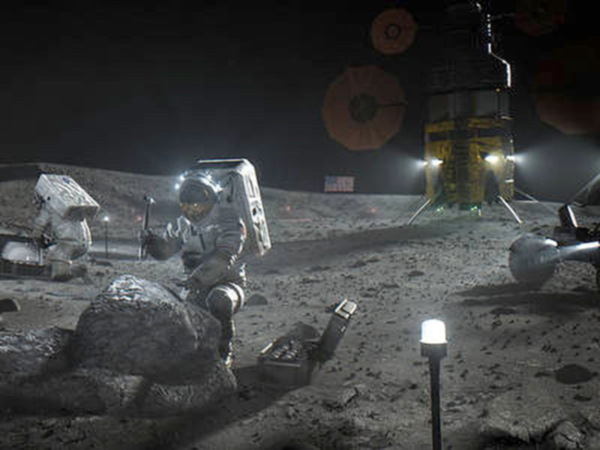
NASA Spacesuit User Interface Technologies for Students (SUITS) is a student design competition that challenges students to design and create spacesuit information displays within augmented reality (AR). As NASA pursues Artemis, its international human spaceflight program to land American astronauts on the Moon, the competition is part of the agency’s acceleration of investments in surface architecture and technology development.
Each prospective on-site team member must be a full-time undergraduate or graduate student enrolled in an accredited U.S. institution of higher learning (military academy, technical college, community college or university) or faculty member at the time of proposal submission.
NASA believes that for exploration, it is essential that crew members on spacewalks are equipped with appropriate human autonomy enabling technologies necessary for the elevated demands of lunar surface exploration and extreme terrestrial access. For 2022, the SUITS Challenge targets the Artemis mission’s key aspects.
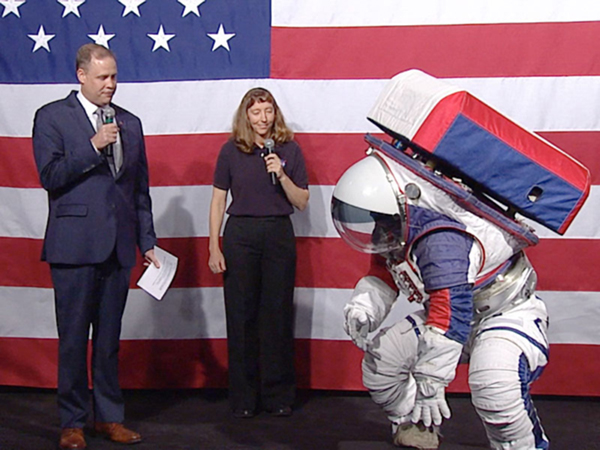
Brandon Hargis is the STEM engagement manager at NASA’s Johnson Space Center in Houston, TX. We spoke to Hargis to learn more about this competition.
Digital Engineering: Can you provide an overview of the NASA SUITS competition, how it came to be and the intent of the program?
Brandon Hargis: NASA SUITS was first introduced in 2018 as a collaboration between the Extravehicular Activity Office and their Informatics division, designing toward the exploration Extravehicular Mobility Unit (xEMU) and the NASA Office of STEM Engagement.
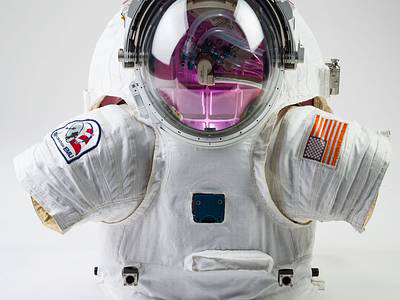
The primary objective for SUITS is to develop a user interface that uses a head-mounted display (HMD) device in augmented or mixed reality to assist crew members with extravehicular activity (EVA) responsibilities and tasks during a lunar mission via procedural and EVA system state information in a non-obtrusive way. Participants in SUITS come from colleges and universities across the U.S. with about 20 teams selected each year. In the 2020-21 cycle we had 220 participants representing 28 institutions.
DE: Can you tell us about some of the designs that are part of the event and how they came to be?
Hargis: Student designs are created in commercially available hardware like the Microsoft HoloLens 1 and 2, and Magic Leap. Design requirements include navigation, suit interaction with other devices, biometric display data, interaction with other assets and tools, the human environment and science/geology tasks.
DE: Can you provide some examples of what the event has produced or what you expect it to produce?
Hargis: Over the last four years, the student teams representing U.S. higher education institutions have produced more than 50 user interface software design concepts and over 25 white papers for technical journals and conferences.
DE: What drove NASA to sponsor the event and coordinate it?
Hargis: Engaging academic institutions and the future STEM workforce in designing future forward concepts for the xEMU creates unique opportunities for diverse groups of higher education students to contribute solutions to NASA Artemis missions, increases research and capacity to conduct research in the field of augmented reality and human computer interaction for greater astronaut EVA autonomy, and develops the STEM workforce pipeline to NASA and industry leaders.


Jim Romeo is a freelance writer based in Chesapeake, VA. Send e-mail about this article to [email protected].
Follow DE






About Us · Contact Us · Editorial Team · Advertising · Privacy Policy · Subscriber Services · © 2026 Digital Engineering 24/7 · Peerless Media