Helping design and engineering professionals discover, evaluate and specify technologies and processes that shorten the design cycle and enable success.



Cut Retrieval-Augmented Generation (RAG) Hallucinations by 50%
Most teams hit the same wall with enterprise AI: LLMs that hallucinate, pipelines that don’t scale, and infrastructure that’s harder to design than the models themselves.

What Is Intelligent BOM Management? A Guide to Smarter Product Development
Learn how intelligent Bill of Materials (BOM) management helps teams collaborate, reduce errors, and bring innovative products to market faster with cloud-based PLM tools.
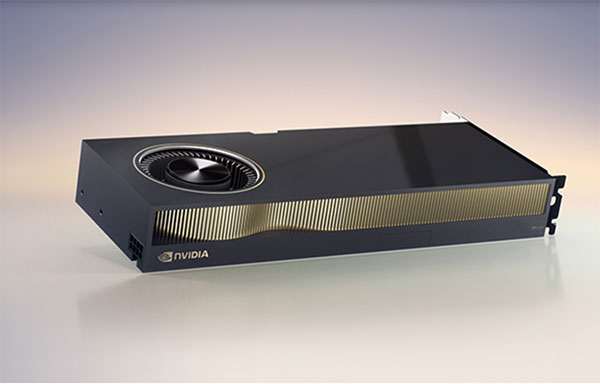
NVIDIA now delivers the NVIDIA RTX 6000 workstation GPU, based on its new NVIDIA Ada Lovelace architecture.
With the new NVIDIA RTX 6000 Ada Generation GPU delivering real-time rendering, graphics and AI, designers and engineers can drive simulation-based workflows to build and validate more designs.
Designed for neural graphics and advanced virtual world simulation, the RTX 6000, with Ada generation AI and programmable shader technology, is a platform for creating content and tools for the metaverse with NVIDIA Omniverse Enterprise. Incorporating the latest generations of render, AI and shader technologies and 48GB of GPU memory, the RTX 6000 enables users to create detailed content, develop complex simulations and form the building blocks needed to construct engaging virtual worlds, according to NVIDIA.
“Neural graphics is driving the next wave of innovation in computer graphics and will change the way content is created and experienced,” says Bob Pette, vice president of professional visualization at NVIDIA. “The NVIDIA RTX 6000 is ready to power this new era for engineers, designers and scientists to meet the need for demanding content-creation, rendering, AI and simulation workloads that are required to build worlds in the metaverse.”
Powered by the NVIDIA Ada architecture, the world’s most advanced GPU architecture, the NVIDIA RTX 6000 features NVIDIA RTX technology. Features include:
The NVIDIA RTX 6000 workstation GPU will be available from global distribution partners and manufacturers starting in December.
To learn more about NVIDIA RTX, watch NVIDIA founder and CEO Jensen Huang’s GTC 2022 keynote.
Register for GTC for free to attend sessions with NVIDIA and industry leaders.
Sources: Press materials received from the company and additional information gleaned from the company’s website.


Since its founding in 1993, NVIDIA (NASDAQ: NVDA) has been a pioneer in accelerated computing. The company’s invention of the GPU in 1999 sparked the growth of the PC gaming market, redefined computer graphics, ignited the era of modern AI and…
Cut Retrieval-Augmented Generation (RAG) Hallucinations by 50%
Most teams hit the same wall with enterprise AI: LLMs that hallucinate, pipelines that don’t scale, and infrastructure that’s harder to design than the models themselves.

DE's editors contribute news and new product announcements to Digital Engineering. Press releases may be sent to them via [email protected].
Follow DE
Join over 90,000 engineering professionals who get fresh engineering news as soon as it is published.






About Us · Contact Us · Editorial Team · Advertising · Privacy Policy · Subscriber Services · © 2026 Digital Engineering 24/7 · Peerless Media