Helping design and engineering professionals discover, evaluate and specify technologies and processes that shorten the design cycle and enable success.



May 2026 Special Focus: Artificial Intelligence in Design and Simulation
In this Special Focus Issue, learn about the latest developments in the integration of artificial intelligence into engineering workflows.

Design & Simulation Software Guide 2025
In this Special Issue, Digital Engineering presents its second annual guide to design and simulation software vendors.

James Bond's weapon of choice is a Walther PPK -- "less of a random killing machine, more of a personal statement," as described by Q in the new movie Skyfall. For filmmakers of EFILM, the arsenal was NVIDIA’s GPUs.
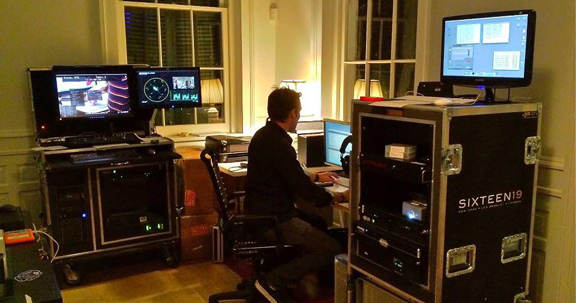
In a guest blog post at NVIDIA's site, EFILM's vice president Joachim Zell wrote, "Every day after shooting Skyfall, director of photography Roger Deakins would view the day’s work -- with full-stereo sound -- on a big screen my company, EFILM, had set up in London. It immediately gave us insurance that everything was right."
The instant preview was made possible by On-set Dailies (OSD) software from Colorfront, which uses CUDA to render footage on GPUs. Previously, Zell had to rely on colleagues manning a room full of workstations to do most of the heavy lifting.
"Now OSD allows me to put an HP z820 workstation or a MacBook Pro into a flight case and I can follow a production around the world, reducing the cycle time between shooting and reviewing," said Zell. He called the current mode of editing "a post-production facility in a box."
Parallel processing power of GPUs play a critical role in running compute-intense simulation and rendering software that supports CUDA. Though originally conceived as graphics-boosting devices, GPUs have migrated to the general-purpose computing realm.
Skyfall opens tomorrow in U.S. theaters.


Kenneth Wong is Digital Engineering's resident blogger and senior editor. Email him at [email protected] or share your thoughts or suggestions at digitaleng.news/facebook.
Follow DE
Join over 90,000 engineering professionals who get fresh engineering news as soon as it is published.






About Us · Contact Us · Editorial Team · Advertising · Privacy Policy · Subscriber Services · © 2026 Digital Engineering 24/7 · Peerless Media