Helping design and engineering professionals discover, evaluate and specify technologies and processes that shorten the design cycle and enable success.



Cut Retrieval-Augmented Generation (RAG) Hallucinations by 50%
Most teams hit the same wall with enterprise AI: LLMs that hallucinate, pipelines that don’t scale, and infrastructure that’s harder to design than the models themselves.

What Is Intelligent BOM Management? A Guide to Smarter Product Development
Learn how intelligent Bill of Materials (BOM) management helps teams collaborate, reduce errors, and bring innovative products to market faster with cloud-based PLM tools.
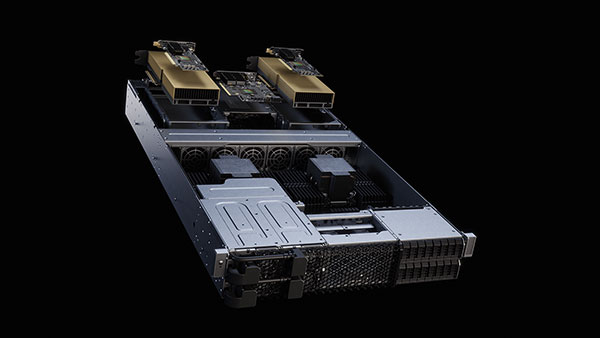
At SIGGRAPH—NVIDIA announced that the NVIDIA RTX PRO 6000 Blackwell Server Edition GPU is coming to leading enterprise servers.
With these new 2U mainstream servers, enterprises can harness the NVIDIA Blackwell architecture in rack-mounted systems for efficiency in their data centers, NVIDIA reports.
Global system partners including Cisco, Dell Technologies, HPE, Lenovo and Supermicro will offer the 2U NVIDIA RTX PRO Servers—available in multiple configurations—for acceleration for enterprise workloads spanning agentic AI, content creation, data analytics, graphics, scientific simulation, as well as industrial and physical AI, NVIDIA reports
“AI is reinventing computing for the first time in 60 years—what started in the cloud is now transforming the architecture of on-premises data centers,” says Jensen Huang, founder and CEO of NVIDIA. “With the world’s leading server providers, we’re making NVIDIA Blackwell RTX PRO Servers the standard platform for enterprise and industrial AI.”
RTX PRO Servers bring GPU acceleration to traditional CPU-based workloads like data analytics, simulation, video processing and graphics rendering. NVIDIA RTX PRO Servers represent a new class of on-premises infrastructure that brings Blackwell performance to enterprise customers building AI factories with space-, power- and cooling-constrained data centers, according to NVIDIA.
These systems also provide infrastructure backbone for the NVIDIA AI Data Platform, a customizable reference design for building modern storage systems for enterprise agentic AI.
At SIGGRAPH, Dell is announcing updates to the Dell AI Data Platform—integrated with the NVIDIA AI Data Platform reference design—along with Dell PowerEdge R7725 2U servers featuring two RTX PRO 6000 GPUs, NVIDIA AI Enterprise software and NVIDIA networking.
The new 2U mainstream systems join a family of RTX PRO Servers announced earlier this year, providing rack-mounted designs capable of supporting two, four or eight NVIDIA RTX PRO 6000 Blackwell GPUs.
The new RTX PRO Servers provide a platform for applications including AI and machine learning, data analytics, 3D graphics and scientific simulation. These servers incorporate the latest Blackwell architecture, including:
RTX PRO Servers running NVIDIA Omniverse libraries and NVIDIA Cosmos world foundation models enable physical AI developers to build and deploy applications including digital twins for factory and robot simulation or large-scale synthetic data generation.
In addition, RTX PRO Servers can now support advanced blueprints — including the latest NVIDIA Blueprint for video search and summarization, part of the NVIDIA Metropolis platform — as well as vision language models and synthetic data generation extensions.
All RTX PRO Servers are certified for NVIDIA AI Enterprise.
RTX PRO Servers can run AI agents that use AI reasoning models to act and automate complex tasks. Such models include Llama Nemotron Super, also announced today.
isco, Dell, HPE, Lenovo and Supermicro will offer a range of NVIDIA-Certified RTX PRO Servers. Additional data center system partners bringing RTX PRO Servers to market include Advantech, Aetina, Airves, ASRock Rack, ASUS, Compal, Foxconn, GIGABYTE, Inventec, MiTAC Computing, MSI, PEGATRON, Quanta Cloud Technology (QCT), Wistron and Wiwynn.
Customers can order RTX PRO Servers from these system makers and channel partners worldwide. Configurations with eight RTX PRO 6000 GPUs in 4U form factors are available now. The 2U mainstream RTX PRO Servers are expected to be available later this year. Learn more about RTX PRO Servers.
Watch the NVIDIA Research special address at SIGGRAPH.
Sources: Press materials received from the company and additional information gleaned from the company’s website.


Since its founding in 1993, NVIDIA (NASDAQ: NVDA) has been a pioneer in accelerated computing. The company’s invention of the GPU in 1999 sparked the growth of the PC gaming market, redefined computer graphics, ignited the era of modern AI and…
Cut Retrieval-Augmented Generation (RAG) Hallucinations by 50%
Most teams hit the same wall with enterprise AI: LLMs that hallucinate, pipelines that don’t scale, and infrastructure that’s harder to design than the models themselves.

DE's editors contribute news and new product announcements to Digital Engineering. Press releases may be sent to them via [email protected].
Follow DE
Join over 90,000 engineering professionals who get fresh engineering news as soon as it is published.






About Us · Contact Us · Editorial Team · Advertising · Privacy Policy · Subscriber Services · © 2026 Digital Engineering 24/7 · Peerless Media