Helping design and engineering professionals discover, evaluate and specify technologies and processes that shorten the design cycle and enable success.


Alert!
Digital Engineering ceased publication on July 1, 2026. This website remains available as an archive of engineering content.
For inquiries or information, please email [email protected].

Cut Retrieval-Augmented Generation (RAG) Hallucinations by 50%
Most teams hit the same wall with enterprise AI: LLMs that hallucinate, pipelines that don’t scale, and infrastructure that’s harder to design than the models themselves.

What Is Intelligent BOM Management? A Guide to Smarter Product Development
Learn how intelligent Bill of Materials (BOM) management helps teams collaborate, reduce errors, and bring innovative products to market faster with cloud-based PLM tools.
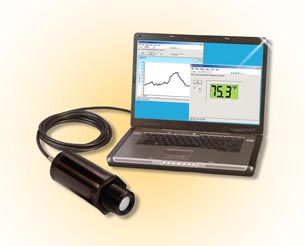 |
Omega’s new IR-USB series of infrared temperature sensors provide a method for most PC-based non-contact temperature monitoring. The unit features an IR sensor/signal conditioner installation with a direct USB connection and free user software that converts a PC into a temperature meter, chart recorder or data logger.
The Emissivity is adjustable from 0.10 to 1.0. The IR-USB measures -18 to 538 degrees Celsius (0 to 1000 degrees Fahrenheit).
Some typical temperature monitoring applications are where the object to be measured is moving; where the object is surrounded by an EM field, as in induction heating; where the object is contained in a vacuum or other controlled atmosphere; or in circumstances where a fast response is required.
Prices start at $175.
For more information, visit Omega Engineering.
Sources: Press materials received from the company and additional information gleaned from the company's website.


DE's editors contribute news and new product announcements to Digital Engineering. Press releases may be sent to them via [email protected].
Follow DE






About Us · Contact Us · Editorial Team · Advertising · Privacy Policy · Subscriber Services · © 2026 Digital Engineering 24/7 · Peerless Media