Helping design and engineering professionals discover, evaluate and specify technologies and processes that shorten the design cycle and enable success.


Alert!
Digital Engineering ceased publication on July 1, 2026. This website remains available as an archive of engineering content.
For inquiries or information, please email [email protected].

Digital Engineering April 2026
In the latest issue of Digital Engineering, we take a look at the latest innovations in design for additive manufacturing, including the use of natural language inputs, social media cosplayers, and AI integration. The issue also includes a feature…

January Special Focus Issue: Design for Additive
In this Special Focus Issue of Digital Engineering, learn about the latest advancements in design for additive manufacturing, including new software tools, additive in automotive, custom medical devices, and more.
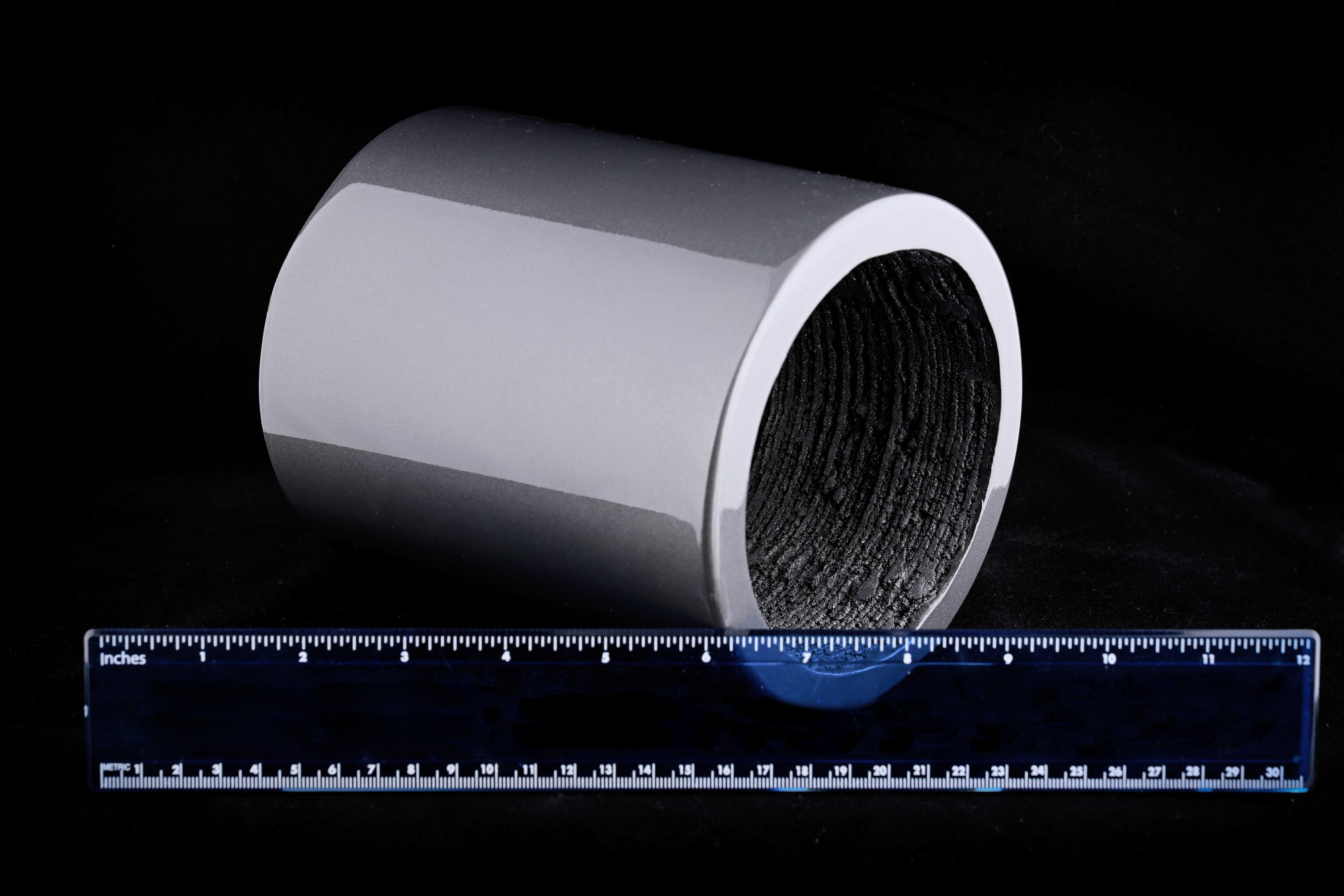
Magnets are usually fabricated using injection molding. The Oak Ridge team fabricated isotropic, near-net-shape, neodymium-iron-boron (NdFeB) bonded magnets (the strongest type of permanent magnet available) at the Department of Energy’s Manufacturing Demonstration Facility at ORNL using the Big Area Additive Manufacturing (BAAM) machine.
The magnets had comparable or better magnetic, mechanical and microstructural properties than bonded magnets made using the same materials via injection molding.
The researchers published their results in the journal Scientific Reports.
The team used composite pellets that were melted, compounded and extruded by the BAAM into various shapes. The printing process can be used to make magnets in more complex shapes and requires no tooling. It is also faster than injection molding.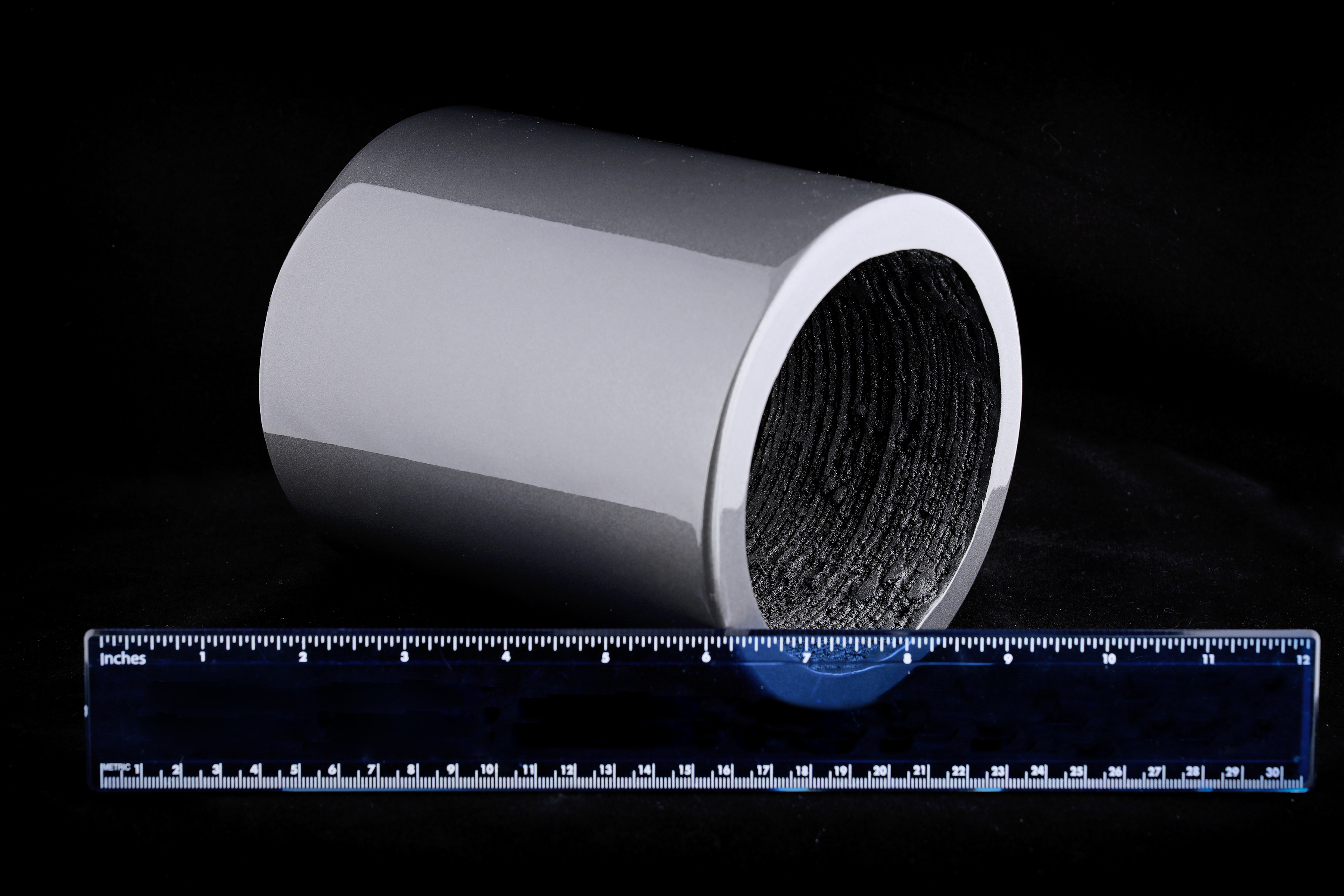
The process also produces nearly no wasted material. Injection molding can result in as much as 30% to 50% material waste, a key concern given that many magnets are made of rare earth elements that are mined in foreign countries.
“Manufacturing is changing rapidly, and a customer may need 50 different designs for the magnets they want to use,” said ORNL researcher and co-author Ling Li. According to Li, traditional injection molding requires the creation of a new mold and tooling for each item; with additive manufacturing the forms can be crafted quickly using computer-assisted design.
Future work will explore the printing of anisotropic, or directional, bonded magnets, which are stronger than isotropic magnets that have no preferred magnetization direction. ORNL will also examine the effect of binder type, the loading fraction of magnetic powder, and processing temperature on the magnetic and mechanical properties of printed magnets.
“The ability to print high-strength magnets in complex shapes is a game changer for the design of efficient electric motors and generators,” said Alex King, director of the Critical Materials Institute. “It removes many of the restrictions imposed by today’s manufacturing methods.”
Source: Oak Ridge National Laboratory


Brian Albright is the editorial director of Digital Engineering.
Contact him at [email protected].






About Us · Contact Us · Editorial Team · Advertising · Privacy Policy · Subscriber Services · © 2026 Digital Engineering 24/7 · Peerless Media