Helping design and engineering professionals discover, evaluate and specify technologies and processes that shorten the design cycle and enable success.


Alert!
Digital Engineering ceased publication on July 1, 2026. This website remains available as an archive of engineering content.
For inquiries or information, please email [email protected].

Digital Engineering April 2026
In the latest issue of Digital Engineering, we take a look at the latest innovations in design for additive manufacturing, including the use of natural language inputs, social media cosplayers, and AI integration. The issue also includes a feature…

January Special Focus Issue: Design for Additive
In this Special Focus Issue of Digital Engineering, learn about the latest advancements in design for additive manufacturing, including new software tools, additive in automotive, custom medical devices, and more.
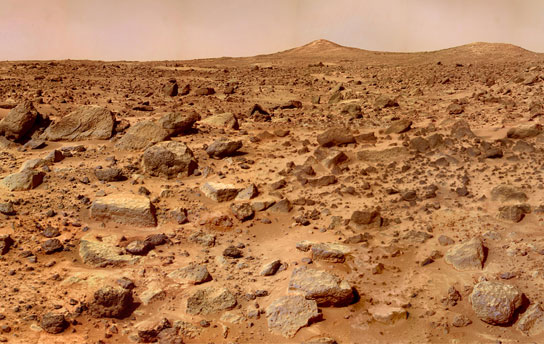
Unless you can 3D print the parts on demand. A research team at the Oklahoma State University is developing a 3D-printed rover to test out the idea.
Undergrad engineering major Aavron Estep first suggested building a 3D-printed space shuttle as part of a class project. He petitioned the university for a budget (which he got) and also received help from professors in the aerospace and mechanical engineering departments. Eventually, the project evolved into 3D printing a remote-control vehicle for exploring Mars.
Estep now leads a 30-person team that is developing the rover and testing different types of materials.
“My goal is to determine if it would be a viable option to take printers to Mars and use them to manufacture parts for rovers that would be exposed to extremes in temperature and terrain,” Estep said.
“This could result in reduced costs at launch and more flexibility of missions on the surface of Mars,” said Dr. Joseph Conner, adjunct assistant professor in the mechnical and aerospace engineering department at OSU. “Human explorers bring unique abilities to the exploration of Mars that cannot be met by remotely operated rovers from Earth. With the ability to print custom rovers, the explorers will be able to react in real time to new and unexpected situations.”
NASA has already been using 3D-printed parts on rover prototypes, producing around 70 components on a production-grade Stratasys printer. There is also a 3D printer on the International Space Station that has successfully printed objects based on designed beamed up from Earth.
Source: Oklahoma State


Brian Albright is the editorial director of Digital Engineering.
Contact him at [email protected].






About Us · Contact Us · Editorial Team · Advertising · Privacy Policy · Subscriber Services · © 2026 Digital Engineering 24/7 · Peerless Media