Helping design and engineering professionals discover, evaluate and specify technologies and processes that shorten the design cycle and enable success.


Alert!
Digital Engineering ceased publication on July 1, 2026. This website remains available as an archive of engineering content.
For inquiries or information, please email [email protected].

Digital Engineering April 2026
In the latest issue of Digital Engineering, we take a look at the latest innovations in design for additive manufacturing, including the use of natural language inputs, social media cosplayers, and AI integration. The issue also includes a feature…

January Special Focus Issue: Design for Additive
In this Special Focus Issue of Digital Engineering, learn about the latest advancements in design for additive manufacturing, including new software tools, additive in automotive, custom medical devices, and more.
These processes often require a vacuum sealed chamber or high powered lasers to create a build, resulting in AM systems with a hefty price tag. Researchers at North Carolina State University (NC State) have discovered a method to build 3D structures using liquid metal at room temperature. The structures are built without the use of a vacuum chamber or laser.
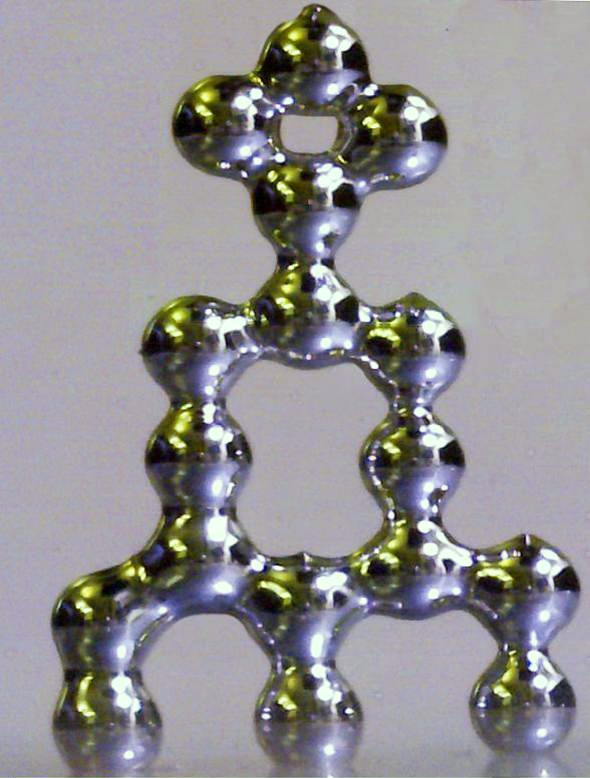
“It’s difficult to create structures out of liquids, because liquids want to bead up. But we’ve found that a liquid metal alloy of gallium and indium reacts to the oxygen in the air at room temperature to form a ‘skin’ that allows the liquid metal structures to retain their shapes,” says Dr. Michael Dickey, an assistant professor of chemical and biomolecular engineering at NC State and co-author of a paper describing the work.
The researcher’s work revolves around the binary eutectic alloy of gallium and indium, but, according to the NC State team, should work with just about any alloy of gallium. EGaIn remains a liquid at room temperature and possesses metallic conductivity. Exposure to air forms a thin skin made up of gallium oxide atop the metal, allowing it to maintain its shape while the interior hardens.
The research team developed multiple methods to produce metal structures. One method stacks droplets of liquid metal on top and beside one another to build shapes. Each droplet maintains its initial form, but also bonds with the other droplets around it to form a solid structure. Another method injects the liquid metal into a polymer template. Once the metal has hardened, the template is dissolved, leaving the metal behind in the desired shape. The team also managed to create wiring employing a similar technique.
Further research will be required before the process is ready for market applications, but this new process of metal AM carries the promise of significantly reducing the price of 3D printing in metal. Minus the vacuum chamber or expensive energy systems currently required to 3D print parts in metal, it may even be possible to design desktop metal AM systems. The paper, “3-D Printing of Free Standing Liquid Metal Microstructures,” has been published online in the journal Advanced Materials.
Below you’ll find a video of the processes developed by NC State.
Source: NC State


John Newman is a Digital Engineering contributor who focuses on 3D printing. Contact him via [email protected] and read his posts on Rapid Ready Technology.
Follow DE






About Us · Contact Us · Editorial Team · Advertising · Privacy Policy · Subscriber Services · © 2026 Digital Engineering 24/7 · Peerless Media