Helping design and engineering professionals discover, evaluate and specify technologies and processes that shorten the design cycle and enable success.


Alert!
Digital Engineering ceased publication on July 1, 2026. This website remains available as an archive of engineering content.
For inquiries or information, please email [email protected].


May 2026 Special Focus: Artificial Intelligence in Design and Simulation
In this Special Focus Issue, learn about the latest developments in the integration of artificial intelligence into engineering workflows.

April 2026 Special Focus Issue: Generative Design
In this Special Focus Issue, Digital Engineering takes a look at how generative design solutions can be used across different types of design problems and with a variety of manufacturing approaches to accelerate design space exploration, and…
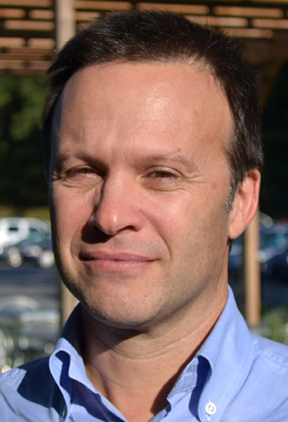 SolidWorks appoints Gian Paolo Bassi CEO.
Three weeks before SolidWorks World 2015, SolidWorks made what would probably be the biggest announcement for the year. The company is getting a new CEO. (For more on this, read “Dassault Systèmes Appoints New SolidWorks CEO,” January 15, 2015)
Gian Paolo Bassi, now stepping into his new role as the captain of a long-standing CAD institution, is certainly not a newcomer to the company or the industry. Bassi had been SolidWorks' VP of R&D for the past three years. In his phone call with DE, Bassi discusses the convergence of mobile and cloud technologies that SolidWorks customers are facing, the revival of the entrepreneurial spirit brought on by crowd-funding sites and on-demand technologies, and his desire to expand beyond the mechanical CAD territory.
DE: Is the CEO appointment unexpected? Or did you anticipate it, plan for it?
Gian Paolo Bassi (GPB): This was not completely unexpected. The executives approached me a few weeks ago and made the proposal. [Outgoing CEO] Bertrand Sicot was part of it. I thought about it, discussed the challenges with them, about what could be my contribution, about my objectives. I thought the scenario was interesting and attractive, so I accepted. Then it became public.
DE: You have been overseeing the R&D division for SolidWorks. So do you plan to be in dual-role, as CEO and R&D chief? Or do you have in mind someone to step into your previous role?
GPB: Because of my background and what I’ve been doing at SolidWorks in the last few years, and mostly because of what [Dassault Systemes CEO] Bernard [Charles] and Bertrand wanted me to do, I’d like to stay close to product development. It’s also part of the tradition of SolidWorks to be deeply rooted in the engineering community. Adding a person with that kind of background in charge, I think, is a good thing. Therefore, I will keep strong relationship with R&D. I’d like to be directly responsible for R&D. Of course, I will have a lot of strong leaders who can help me out through the process.
DE: Do you see any trends or consumer behaviors that could threaten SolidWorks’s established position in the industry?
GPB: I’m not worried about the competitive challenges that much. I’m more worried about the challenges our customers are facing. If we stay close to our customers’ challenges, our challenges would consequently remain in a distance, because we’ll be leading our customers by a pretty large margin.
We have recently seen a huge convergence of mobile technologies and cloud storage. Mobile devices are not only becoming pervasive, but they’re also connected. That’s one of the strongest trends. As you know, a few years back, our mantra became, “Our customers should be able to use any device, anywhere, always connected.” That’s what we’re going to pursue. I have to point out this type of convergence puts stress on the user-experience design. If you know that you want to simultaneously use the [software] on different form factors, you need a superior user experience. We have an advantage over our competitors because user experience has been at the center of our design since the beginning.
The other thing to note is the explosion of connected objects. I think I read that, by 2020, there’ll be more than 200 billion connected devices. [“The Digital Universe of Opportunities: Rich Data and the Increasing Value of the Internet of Things.,” by IDC, April 2014.] At the same time, all devices would produce a staggering amount of data. IoT is a source of data that would keep busy a lot of analysts in the world.
Engineers like data—the more data they have, the better decision they can make. Think about it: 200 billion devices putting out data across the Internet, with engineers connected as well. They would want to make use of those data. Who will feed them the data? Who will mine the data to make their decision more effective? We want to be at the center of this huge shift.
You notice the U.S. administration is expanding its Federal investment in material research to ensure U.S. leadership in using advanced manufacturing materials. [The Obama administration created the Advanced Manufacturing Partnership Steering Committee in 2011. In his January 2014 State of the Union address, President Obama said he planned to move ahead with “Clean Energy Manufacturing Innovation Institute for Composites Materials and Structures, led by DOE.” Source: http://manufacturing.gov/nnmi.html]
There’s a huge momentum around this innovation—of inventing new materials. As we’re moving away from homogeneous materials, we have to change from designing with the assumption that our materials are mechanically homogeneous in physical and electrical properties. The 3D printers will become capable to controlling the chemical compositions of materials at the molecular level. The fundamental mathematics behind CAD to create NURBS and geometry was developed 20-30 years ago, with subtractive manufacturing in mind. [The new materials] are all completely different. We want to be at the center of this new world, including 3D printing.
In economy, we’re going from product economy to service economy. All these lead to a change in business models, where capital investments are substituted by operating costs. Here’s the analogy: One day I may want to print 3,000 pieces of paper; the next day, I may not have anything to print. I want to have a printer room that can change according to these requirements—to make it an elastic resource. This is also happening in computing. The only way to do this is with the right infrastructure.
The most exciting change is a new way to doing things. People see more opportunities to be in business. When I graduated from university, the average engineer dreamed of being employed by one of the big brands, like GE or IBM. Today, the kids coming out of college dream of creating their own company. The infrastructure is there to make it happen. If you need capital, you can go to a crowd-funding site to start your business. If you need technology, it’s easily available. If you need to make something, there are inexpensive 3D printers. It’s shifting the way people think.
DE: You’re the captain of the SolidWorks ship now, in a manner of speaking. Are you happy with its direction? Do you feel the need to chart a new course?
GPB: I think I’m happy with the overall direction of the ship. I also think, instead of a ship, we may need a fleet. So far, we have 2.6 millions of seats sold, but the community is probably larger. In education, for one seat, there are multiple users. One thing I’d like to improve on—that was started by Bertrand—is to expand our community, help the members, keep them, nurture them, and be in continuous communication with them.
Both vertically and horizontally, I’d like us to become more inclusive. Vertically I want to add more apps for mechanical design, the area of our strength. Right now, SolidWorks is very strong in universities. We want to expand our 3D design outreach in education even to elementary schools, into middle schools and high schools. Makers should also be part of this inclusiveness. Right now, we sell in the world of professional designers. But we want to include the many 3D enthusiasts.
Horizontally, our capabilities should spill over to solving different types of problems. I’m thinking, for example, of us going into architecture or construction. We definitely have the capability and technology to get there.
I want to pay more attention to emerging economies, to make sure they have the opportunities to reach our standard of living, to become part of the prosperous world. We’re the best company to help them socially and economically.


Kenneth Wong is Digital Engineering's resident blogger and senior editor. Email him at [email protected] or share your thoughts or suggestions at digitaleng.news/facebook.
Follow DE






About Us · Contact Us · Editorial Team · Advertising · Privacy Policy · Subscriber Services · © 2026 Digital Engineering 24/7 · Peerless Media