Helping design and engineering professionals discover, evaluate and specify technologies and processes that shorten the design cycle and enable success.


Alert!
Digital Engineering ceased publication on July 1, 2026. This website remains available as an archive of engineering content.
For inquiries or information, please email [email protected].

Digital Engineering April 2026
In the latest issue of Digital Engineering, we take a look at the latest innovations in design for additive manufacturing, including the use of natural language inputs, social media cosplayers, and AI integration. The issue also includes a feature…

January Special Focus Issue: Design for Additive
In this Special Focus Issue of Digital Engineering, learn about the latest advancements in design for additive manufacturing, including new software tools, additive in automotive, custom medical devices, and more.
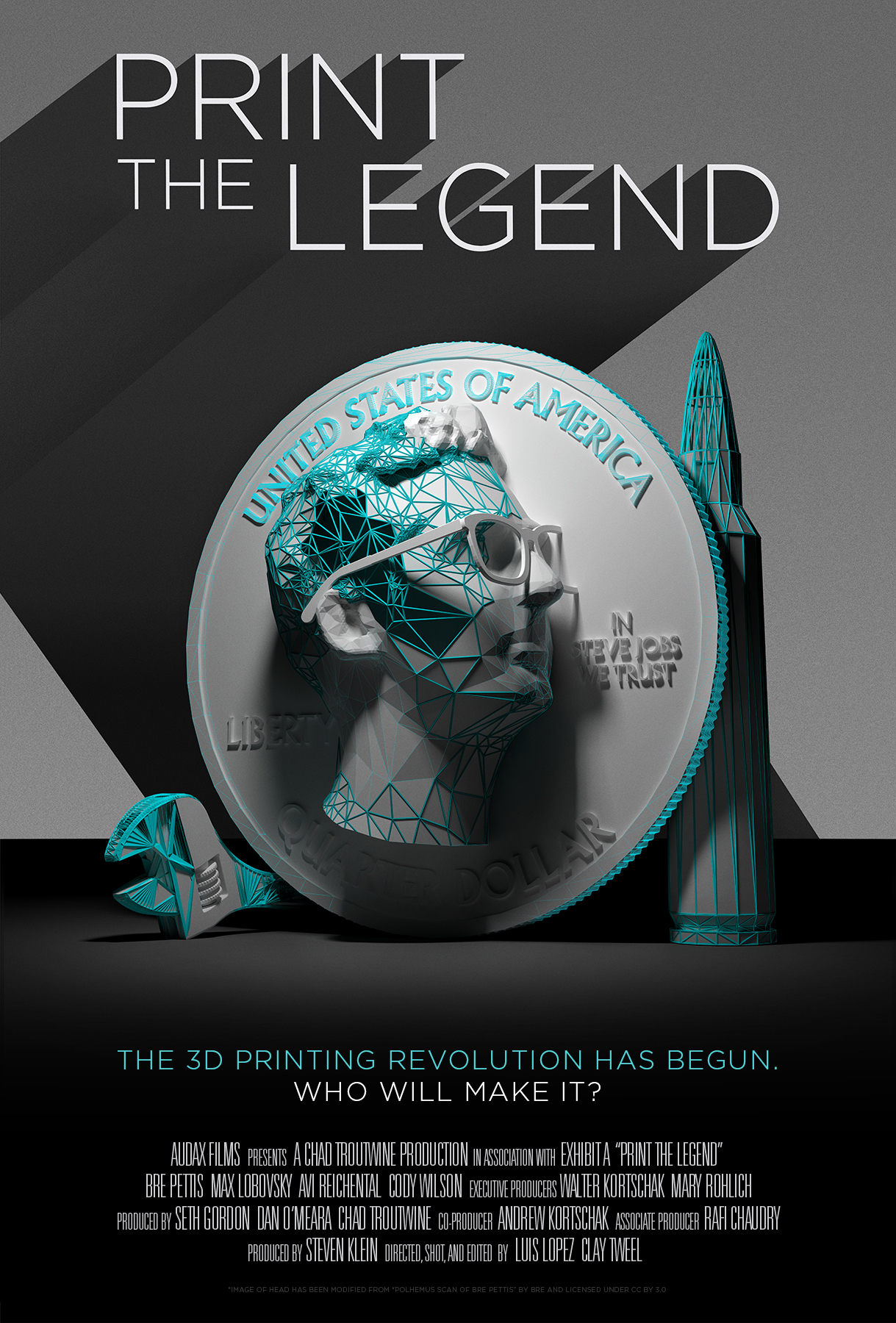
The year 2012 is generally seen as the when AM went mainstream. Instead of being hidden away in prototype labs, it started making the news as the next great manufacturing revolution. Print the Legend is a documentary about AM that managed to coincide with that zeitgeist and capture the growing excitement and maturation of the 3D printing market.
Broadly speaking, the documentary has three main characters. These are Bre Pettis, co-founder of MakerBot; Max Lobovsky, co-founder of Formlabs; and Cody Wilson of Defense Distributed fame. The film follows each individual from humble beginnings to lofty heights, and manages to tell some of the story of AM along the way.
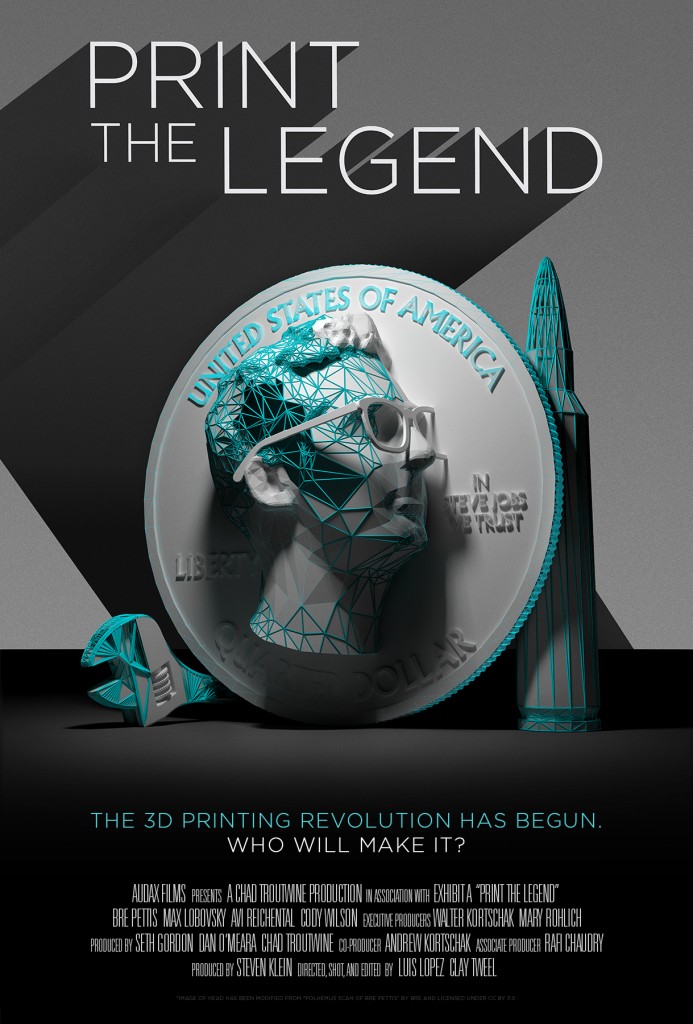
Along with being a documentary about individuals, Print the Legend acts as a primer to AM by explaining the basics behind how the technology operates. Within the first five minutes of the film, the audience is introduced to stereolithography and Fused Deposition Modeling.
While some might be tempted to criticize the film for covering only two processes used in 3D printing, it’s important to recognize the film really isn’t about AM. The film is actually about the people behind the technology. Drowning the audience in a sea of technical jargon wouldn’t have done anything positive for the story the documentary meant to tell, so I’ll go ahead and give it a pass.
Print the Legend has its biases, and one of them is an appreciation for open-source development and the maker community. Unsurprisingly, this results in Bre Pettis being cast in the role of villain. Much like how Milton’s Paradise Lost chronicles the fall of God’s favored son, Lucifer, the film focuses a good amount of its attention on Pettis’ perceived betrayal of the open-source community.
Far from the gregarious and charming portrait commonly conjured by the media, Pettis is shown as cruelly ambitious, grasping, and a sellout. This is particularly apparent in interviews with Pettis in which he discusses his potential rival, Formlabs. Rather than presenting the appreciative maker one might expect, Pettis instead belittles the Form1 as a “goo and laser” system. He makes snide references to the delays suffered in meeting Form1 Kickstarter backer orders, and later dismisses the system as something not for him after describing how the first object he built with it broke when he attempted to remove it from the build plate.
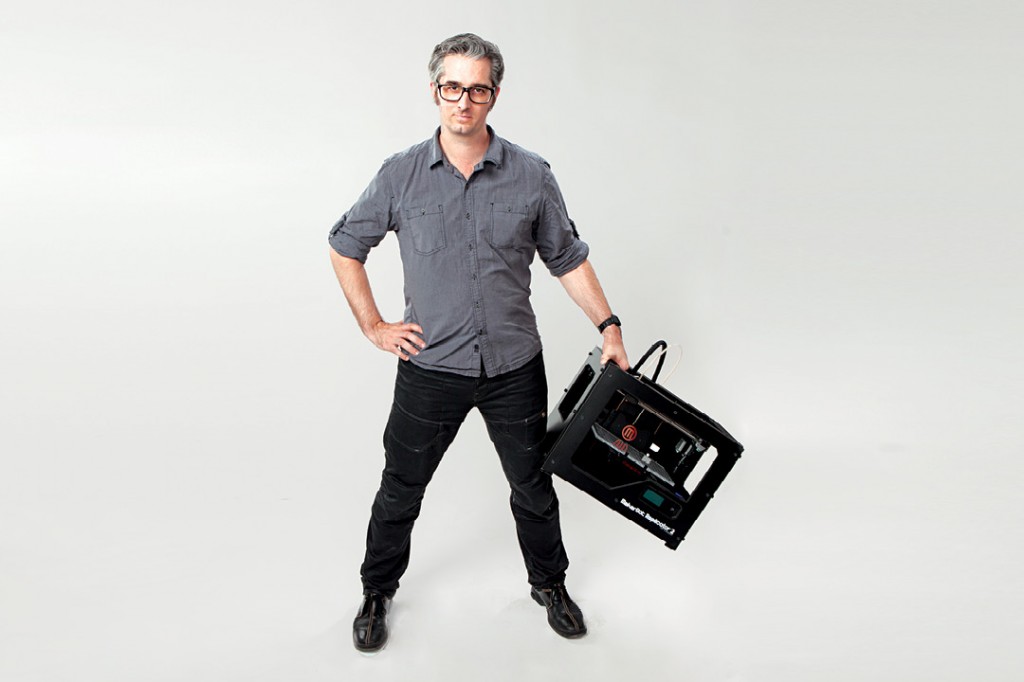 Print the Legend presents a different side of MakerBot co-founder Bre Pettis. Courtesy of MakerBot.
If Pettis is the villain, Formlabs’ Lobovsky is meant to be the hero. Unfortunately for the documentary, Lobovsky doesn’t really have the appeal required to make him a sympathetic character. He readily admits he’s better with tech than with people, and the result is that Formlabs becomes as much the hero as Lobovsky. The film even highlights the company’s legal battles with 3D Systems as a sort of David versus Goliath struggle, building sympathy for Formlabs.
In another example of the film’s bias toward the smaller, more energetic companies, 3D Systems is quickly painted as a typical greedy corporate giant. The lawsuit is framed as an attempt to squash a smaller company before it can compete with the big boys. How much of that is truth is open to interpretation, but the documentary itself gives absolutely no credence to the lawsuit, even managing to portray 3D Systems’ CEO Avi Reichental as simultaneously bumbling and arrogantly cynical.
Perhaps the most interesting portions of the film are those following Cody Wilson. Print the Legend almost romanticizes Wilson, portraying him as the outsider rebel trying to shake up the establishment. The film pays some lip service to the idea that 3D printed guns might be bad, but still offers Wilson the perfect platform from which to spread his ideology. Ironically, Wilson even explains he uses media to convey his message, a point the documentary seems to have missed.
If you are willing to listen to Wilson’s ramblings, which include a mix of anarchistic catch phrases and clichéd Nietzschean philosophy, the real story he tells is about his ego. He wants to make sure everyone knows he was responsible for 3D printed guns, and that he built and fired the first 3D printed gun. Regardless of the film’s obvious fondness for Wilson, he still ends up gazing into the camera the same way Narcissus stared into the reflecting pool.
Print the Legend was premiered at SXSW, where it won the award for special jury recognition for documentary features. You can currently find the documentary on Netflix, where it has a user rating of four stars out of a possible five. Even with its flaws and biases, the film is definitely interesting and worth a watch. Below you’ll find a trailer for the film.


John Newman is a Digital Engineering contributor who focuses on 3D printing. Contact him via [email protected] and read his posts on Rapid Ready Technology.
Follow DE
Join over 90,000 engineering professionals who get fresh engineering news as soon as it is published.






About Us · Contact Us · Editorial Team · Advertising · Privacy Policy · Subscriber Services · © 2026 Digital Engineering 24/7 · Peerless Media