Helping design and engineering professionals discover, evaluate and specify technologies and processes that shorten the design cycle and enable success.


Alert!
Digital Engineering ceased publication on July 1, 2026. This website remains available as an archive of engineering content.
For inquiries or information, please email [email protected].

May 2026 Special Focus: Artificial Intelligence in Design and Simulation
In this Special Focus Issue, learn about the latest developments in the integration of artificial intelligence into engineering workflows.

April 2026 Special Focus Issue: Generative Design
In this Special Focus Issue, Digital Engineering takes a look at how generative design solutions can be used across different types of design problems and with a variety of manufacturing approaches to accelerate design space exploration, and…
Let’s start today’s Roundup with some 3D imaging news. In the land of hacked hardware, the Kinect is royalty. One common hack is to use the Kinect to record 3D images that can then be used in a number of ways, including 3D printing. Rather than fighting against this use, Microsoft has released Kinect for Windows SDK 1.7, which supports more accurate 3D capture.
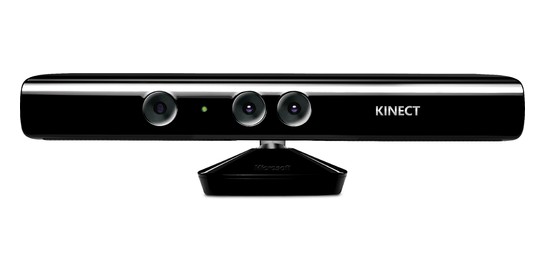
“Kinect Fusion is one of the most affordable tools available today for creating accurate 3-D renderings of people and objects,” blogged Bob Heddle, director of Kinect for Windows. “Kinect Fusion fuses together multiple snapshots from the Kinect for Windows sensor to create accurate, full, 3D models. Developers can move a Kinect for Windows sensor around a person, object, or environment and 'paint' a 3D image of the person or thing in real time. These 3D images can then be used to enhance countless real-world scenarios, including augmented reality, 3D printing, interior and industrial design, and body scanning for things such as improved clothes shopping experiences and better-fitting orthotics.”
Moving on, French design firm NoDesign has leveraged the power of AM to create an interactive lamp. Sensors in the lamp turn it on and off with a wave of the hand, or cause it to change colors. The lamp also responds to an app for more precise control.
3D printing was selected for the lamp manufacturing process because of how readily the technology handles complex geometries. This made leaving space for sensors and various other electronics simpler. Sculpteo printed the design and the lamp has since been featured on French television and at several design conferences.
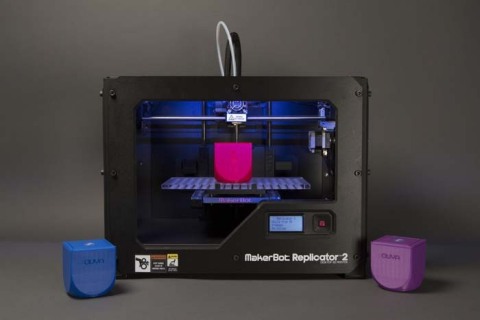
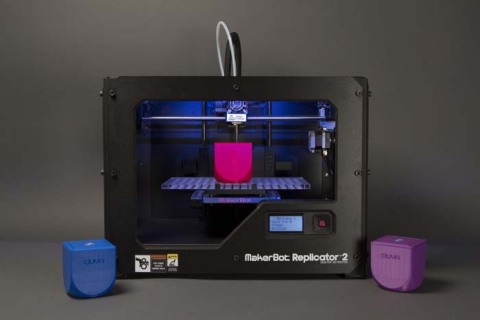
Next, the open source gaming console OUYA has partnered with MakerBot. Thingiverse is hosting an OUYA 3D printing development kit that is meant to give gamers the chance to create custom console cases. The kit includes a 3D template and specs for printing console covers that the user can customize with patterns and colors.
“OUYA is all about being open – from allowing any game developer to make games for the TV to being able to literally open the console with a standard screwdriver,” said Julie Uhrman, CEO of OUYA. “It was a natural progression to extend our openness by partnering with MakerBot. What better way to bring OUYA’s console to life than letting anyone print and modify it.”
Last for today, we come to the really old cups. I like visiting museums as much (and probably more) as most people, but some days I really want to touch the stuff on display. Like some really old cups, for example. I restrain myself, but soon I may not have to be so disciplined.
Dutch design researcher Maaike Roozenburg has started a project named “Smart Replicas” which uses 3D scanning and AM to reproduce objects on display at museums. These replicas will be handed over to the general public to provide a tactile experience to go along with the standard visual experience of visiting a museum. If you happen to speak Dutch (or trust Google translate), you can check out the project blog.
Below you’ll find a short video of NoDesign’s interactive lamp.
Sources: Fast Company, Business Wire, Microsoft, NoDesign


John Newman is a Digital Engineering contributor who focuses on 3D printing. Contact him via [email protected] and read his posts on Rapid Ready Technology.
Follow DE






About Us · Contact Us · Editorial Team · Advertising · Privacy Policy · Subscriber Services · © 2026 Digital Engineering 24/7 · Peerless Media