Helping design and engineering professionals discover, evaluate and specify technologies and processes that shorten the design cycle and enable success.


Alert!
Digital Engineering ceased publication on July 1, 2026. This website remains available as an archive of engineering content.
For inquiries or information, please email [email protected].

Digital Engineering April 2026
In the latest issue of Digital Engineering, we take a look at the latest innovations in design for additive manufacturing, including the use of natural language inputs, social media cosplayers, and AI integration. The issue also includes a feature…

January Special Focus Issue: Design for Additive
In this Special Focus Issue of Digital Engineering, learn about the latest advancements in design for additive manufacturing, including new software tools, additive in automotive, custom medical devices, and more.
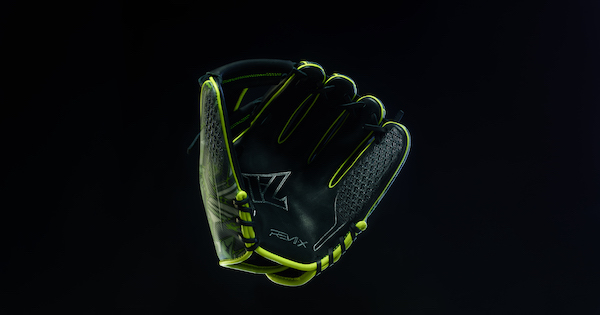
3D printing is the newest player on deck for Rawlings as the baseball equipment giant since 1887 teams up with modern-day innovators like digital manufacturing company Fast Radius and 3D printer maker Carbon to innovate a new high-performance glove.
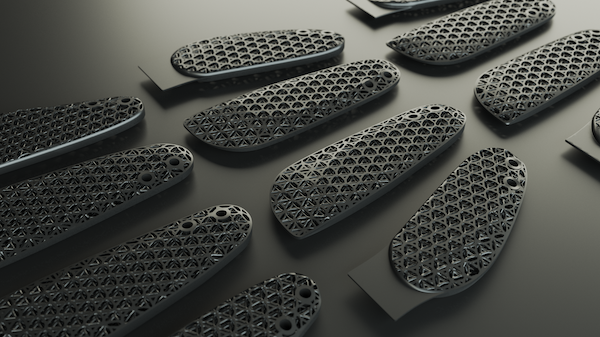
The REV1X glove was designed based on players’ desire to have more variable stiffness in the thumb and pinky area without sacrificing protection, durability, or playability, according to Rawlings engineers. There was also a goal to replace conventional padding materials like foam and plastic with more lightweight structures that will allow stiffness to be tuned while creating a design that was sleek and would reduce weight. In addition, the 3D printed inserts don't wear out as easily as more traditional materials, thus helping to improve ball handling when on the field, Rawlings officials said.
“The 3D printed lattice replacements are not just lighter and thinner, they are also calibrated with variable stiffness that conforms to the player’s hand,” explains John Nanry, chief manufacturing officer and co-founder of Fast Radius. “It’s immediately ready for game play and lasts much longer than traditional materials.” Another benefit: The lack of tooling in the AM process meant that testing, iterating, and part improvement could be done more rapidly, greatly accelerating the product development process, he says.
Rawlings’ engineering team zeroed in on the Carbon Digital Light Synthesis (DLS) process as the optimal 3D printing technology to output the lattice structure that would help it achieve its design goals due to its high tolerances and ability to print complex geometries at rapid speeds. Moreover, Carbon’s FPU 50 material provided a flexible polyurethane for producing malleable and formable parts that are capable of withstanding significant impact while maintaining their shape, Nanry says.
To ensure the company would be able to accelerate the move from prototype to full production at scale, Rawlings brought in Fast Radius, a digital manufacturing provider that as part of the Carbon Production Network of partners in North America, had the infrastructure, software and expertise to keep development of the REV1X on track. Fast Radius worked closely with Rawlings to develop custom post-processing solutions to enable reliable printing, improving part yield by more than four times, Nanry says. Fast Radius also enabled Rawlings to scale production up and down quickly based on need, he added.
Fast Radius’ Cloud Manufacturing Platform, which integrates design, production, and fulfillment operations through a common digital infrastructure, was another asset for moving the glove through design to production. Rawlings got access to a build package, a comprehensive collection of design files, custom post-processing methods, and fulfillment instructions stored within the platform. “The build package makes it easy to produce reliable parts at any time, in any quantity, and in any place without worrying about quality,” Nanry says.
To learn more about the effort, check out this video.

Carbon works at the intersection of hardware, software, and molecular science. Our vision is a future fabricated with light, where traceable, final-quality parts are produced at scale with CLIP technology. CLIP Continuous Liquid Interface…

Beth Stackpole is a contributing editor to Digital Engineering. Send e-mail about this article to [email protected].
Follow DE






About Us · Contact Us · Editorial Team · Advertising · Privacy Policy · Subscriber Services · © 2026 Digital Engineering 24/7 · Peerless Media