Helping design and engineering professionals discover, evaluate and specify technologies and processes that shorten the design cycle and enable success.


Alert!
Digital Engineering ceased publication on July 1, 2026. This website remains available as an archive of engineering content.
For inquiries or information, please email [email protected].
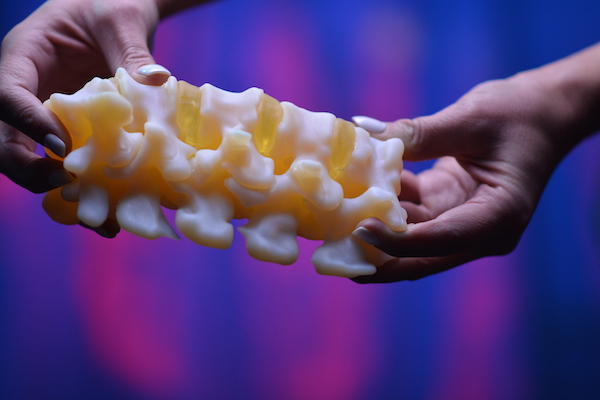
Patient-specific anatomic models is a big deal in modern medicine and a key use case driving increasing deployment of 3D printing for medical applications. To make the technology more accessible to a broader swath of healthcare providers and hospitals, Stratasys is teaming up with Ricoh USA Inc. to deliver a point-of-care solution for healthcare facilities.
The partners are collaborating on RICOH 3D for Healthcare, an integrated, end-to-end 3D medical modeling solution. The platform aims to reduce the barriers to entry for healthcare organizations of all sizes, as well as medical schools, to create 3D medical models without having to shell out a large capital investment and to get the whole operation up and running quickly so they can focus on patient care.
3D printed anatomic models are gaining traction as an efficient and effective way to educate patients on procedures and to communicate about complex cases and personalized treatments. They also enable physician training without use of cadavers and allow practicing physicians and medical students to try out new approaches and improve their skills, experts says. Grandview Research says the global market for 3D printed surgical models was valued at $282.5 million in 2020 and is expected to expand at a compound annual growth rate (CAGR) of 15.6% from 2021 to 2028.
The RICOH 3D for Healthcare solution uses the Stratasys J750 Digital Anatomy printer and the Stratasys J5 MediJet 3D printer to create life-like anatomic models that reflect an individual patient’s pathology and can be physically manipulated like human tissue.
“To date, access to anatomic models at point-of-care locations has been limited to large hospitals and healthcare facilities,” said Gary Turner, Managing Director, Ricoh 3D for Healthcare, Ricoh USA, Inc., in a prepared press release. “Our cost-effective solution expands access for healthcare providers of all sizes. By partnering with Stratasys, through an integration with IBM Watson Health and our on-going commitment to innovation, we are able to provide these models to any facility using IBM iConnect® Access.”
Health care facilities can access RICOH 3D for Healthcare in two ways. There’s a point-of-care option, which puts the Stratasys 3D printers on site, supported by Ricoh’s managed services staff who oversee the entire process in line with Ricoh’s Quality Management System and manufacturing best practices. Alternatively, customers can opt for an on-demand option that enables providers or physicians order anatomic models, which are printed off site and shipped to them directly. Both options are designed for HIPAA compliance and are intended to knock down some of the barriers to entry healthcare providers face when standing up 3D printing operations—specifically, trained staff, quality control, and IT challenges.
For more information on how the Stratasys J750 Digital Anatomy printer works, check out this video.


Every day, our customers find simpler, smarter approaches to stubborn design problemsand greater confidence to confront towering human and technological challenges. Less hindered by the usual constraints, they can imagine, design, iterate and…
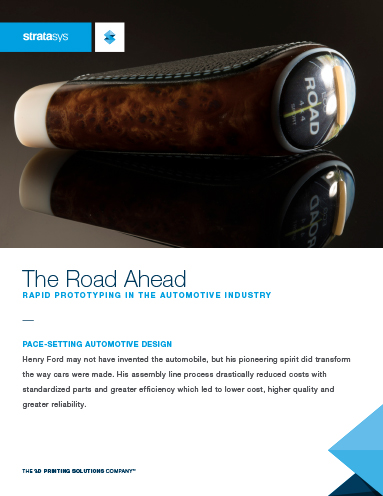
Rapid Prototyping in The Automotive Industry
Henry Ford may not have invented the automobile, but his pioneering spirit did transform the way cars were made. His assembly line process drastically reduced costs with standardized parts and greater efficiency which led to lower cost, higher quality and greater reliability.

Beth Stackpole is a contributing editor to Digital Engineering. Send e-mail about this article to [email protected].
Follow DE






About Us · Contact Us · Editorial Team · Advertising · Privacy Policy · Subscriber Services · © 2026 Digital Engineering 24/7 · Peerless Media