Helping design and engineering professionals discover, evaluate and specify technologies and processes that shorten the design cycle and enable success.


Alert!
Digital Engineering ceased publication on July 1, 2026. This website remains available as an archive of engineering content.
For inquiries or information, please email [email protected].

May 2026 Special Focus: Artificial Intelligence in Design and Simulation
In this Special Focus Issue, learn about the latest developments in the integration of artificial intelligence into engineering workflows.

Design & Simulation Software Guide 2025
In this Special Issue, Digital Engineering presents its second annual guide to design and simulation software vendors.
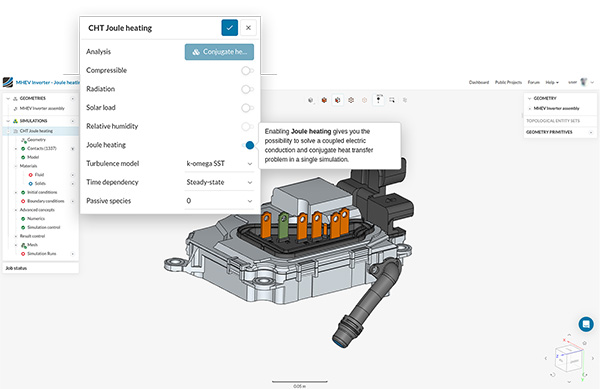
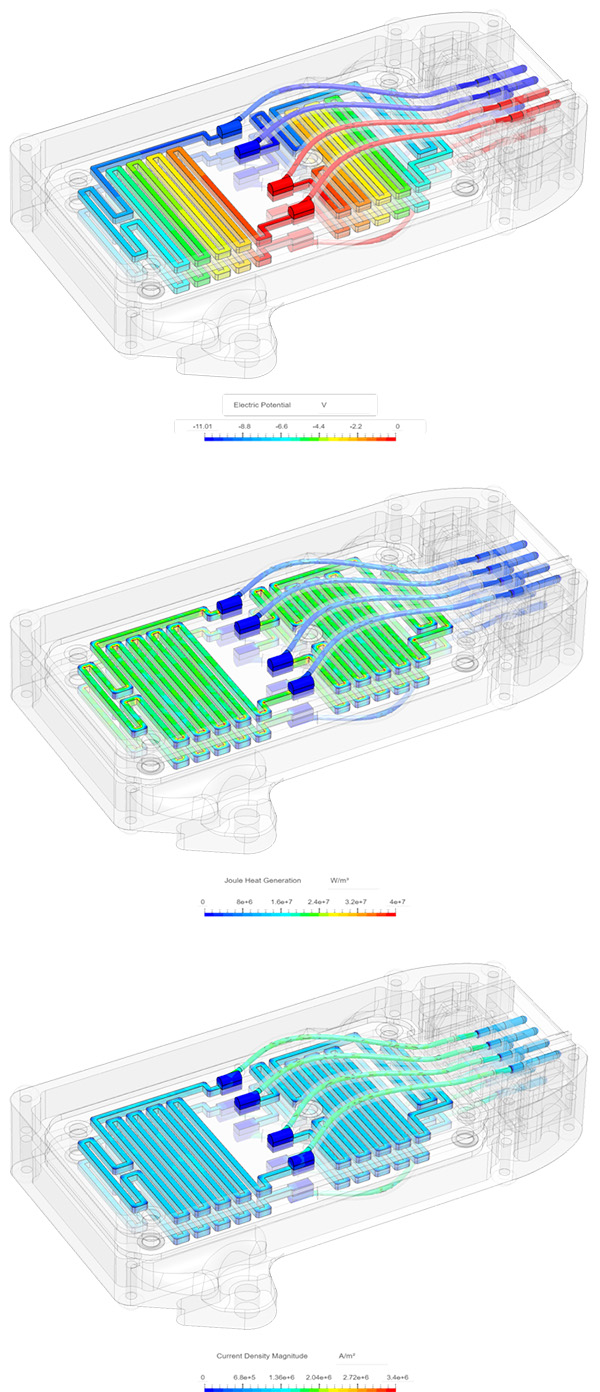
Last week, SimScale launched a new Joule Heating Simulation program, aimed at those developing power electronics products and components. In the blog post announcing the release, SimScale writes, "With the new features introduced in SimScale, users can now explicitly define the key Joule heating parameters, variables and output key metrics to base design decisions on."
The announcement highlights the following:
SimScale says its new tool offers "an easy-to-use interface with powerful and automated post-processing features." With it, you can add dissipated power as a power source on the electronic components, the company explains.
As example applications, SimScale presents simulation performed on electrical inverters, resistors, electric vehicle batteries, and fuse blocks.
With headquarters in Munich, Germany, and offices in New York and Boston, U.S., SimScale offers cloud-based simulation.
Joule heating simulation is also part of COMSOL Multiphysics, Cadence, and SOLIDWORKS Simulation, among others.


SimScale enables engineering teams to access accurate and fast simulation, on their terms, without compromise. We make engineering simulation technically and economically accessible from everywhere, at any time, and at any scale, in the cloud. We…
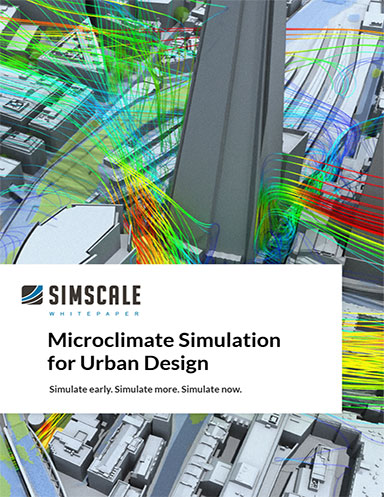
Microclimate Simulation for Urban Design
A cloud-native simulation platform allows architects and engineers to simulate and analyze high-fidelity models with complex physics for urban design.

Kenneth Wong is Digital Engineering's resident blogger and senior editor. Email him at [email protected] or share your thoughts or suggestions at digitaleng.news/facebook.
Follow DE






About Us · Contact Us · Editorial Team · Advertising · Privacy Policy · Subscriber Services · © 2026 Digital Engineering 24/7 · Peerless Media