Helping design and engineering professionals discover, evaluate and specify technologies and processes that shorten the design cycle and enable success.


Alert!
Digital Engineering ceased publication on July 1, 2026. This website remains available as an archive of engineering content.
For inquiries or information, please email [email protected].

Digital Engineering April 2026
In the latest issue of Digital Engineering, we take a look at the latest innovations in design for additive manufacturing, including the use of natural language inputs, social media cosplayers, and AI integration. The issue also includes a feature…

January Special Focus Issue: Design for Additive
In this Special Focus Issue of Digital Engineering, learn about the latest advancements in design for additive manufacturing, including new software tools, additive in automotive, custom medical devices, and more.
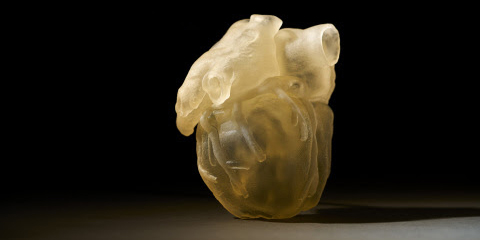
Stratasys has unveiled the new J750 Digital Anatomy 3D Printer targeted to the medical industry. Designed to replicate the feel, responsiveness and biomechanics of human anatomy in medical models, the system is built to improve surgical preparedness and training while helping bring new medical devices to market faster, the company reports.
The Digital Anatomy 3D Printer recreates actual tissue response - and can be used anywhere without specialized facilities. It also lets users focus on specific pathologies.
“We believe in the potential of 3D printing to provide better health care, and the Digital Anatomy 3D Printer is a major step forward,” says Stratasys Healthcare Business Unit head Eyal Miller. “We’re giving surgeons a more realistic training environment in no-risk settings. We also anticipate this will enable medical device makers to improve how they bring products to market by performing design verification, validation, usability studies and failure analysis with these new models.”
The new 3D printer has already been tested at several organizations. The Jacobs Institute, a Buffalo, NY-based medical innovation center focused on accelerating device development in vascular medicine, has been testing the Digital Anatomy 3D Printer to recreate key vascular components for advanced testing and training.
“3D printing has been wonderful for recreating patient-specific anatomy compared to cadavers or animal models; however, the final frontier for organ model realism has been live-tissue feel and biomechanical realism,” says Dr. Adnan Siddiqui, chief medical officer, Jacobs Institute. “We believe these models give us the best opportunity to recreate human physiological conditions to simulate actual clinical situations and to study new devices to establish their effectiveness before introducing them to patients.”
In conjunction with the 3D printer, Stratasys is also introducing three new materials—TissueMatrix, GelMatrix and BoneMatrix—used to create cardiac, vascular and orthopedic 3D printing applications. A Blood Vessel Cleaning Station that removes support material from inside 3D-printed blood vessels is also being released.
The new Stratasys 3D printer is expected to see adoption primarily by medical device companies, which require new ways to drive faster adoption of technologies and procedures—and academic medical centers. The solution also supports efforts to move from time-based surgical training to proficiency-based evaluation.
Sources: Press materials received from the company and additional information gleaned from the company’s website.


Every day, our customers find simpler, smarter approaches to stubborn design problemsand greater confidence to confront towering human and technological challenges. Less hindered by the usual constraints, they can imagine, design, iterate and…
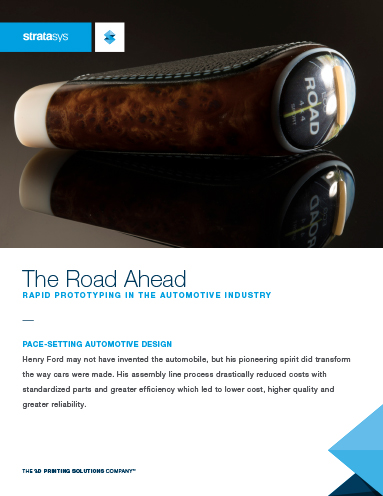
Rapid Prototyping in The Automotive Industry
Henry Ford may not have invented the automobile, but his pioneering spirit did transform the way cars were made. His assembly line process drastically reduced costs with standardized parts and greater efficiency which led to lower cost, higher quality and greater reliability.

DE's editors contribute news and new product announcements to Digital Engineering. Press releases may be sent to them via [email protected].
Follow DE






About Us · Contact Us · Editorial Team · Advertising · Privacy Policy · Subscriber Services · © 2026 Digital Engineering 24/7 · Peerless Media