Helping design and engineering professionals discover, evaluate and specify technologies and processes that shorten the design cycle and enable success.



Digital Engineering April 2026
In the latest issue of Digital Engineering, we take a look at the latest innovations in design for additive manufacturing, including the use of natural language inputs, social media cosplayers, and AI integration. The issue also includes a feature…

January Special Focus Issue: Design for Additive
In this Special Focus Issue of Digital Engineering, learn about the latest advancements in design for additive manufacturing, including new software tools, additive in automotive, custom medical devices, and more.
Stratasys Ltd. has signed a definitive agreement to acquire the additive manufacturing materials business of Covestro AG. The acquisition is expected to be immediately accretive upon closing. It will include R&D facilities and activities, global development and sales teams across Europe, the U.S. and China, a portfolio of approximately 60 additive manufacturing materials, and an extensive IP portfolio comprised of hundreds of patents and patents pending. The purchase price is approximately 43 million euros, plus additional inventory, less certain liabilities. In addition, there is a potential earnout of up to 37 million euros, subject to the achievement of various performance metrics.
Covestro has been a key part of Stratasys’ third-party materials ecosystem, and the acquisition will benefit customers using multiple Stratasys 3D printing platforms, including its Origin P3, Neo stereolithography and H350 printers. Stratasys is already a distributor of Covestro’s Somos resins and they are available for Neo and Origin One 3D printers.
“Innovative materials are the fuel of additive manufacturing and translate directly into the ability to create new use cases for 3D printing, particularly in the production of end-use parts like dental aligners and automotive components,” says Stratasys CEO Dr. Yoav Zeif. “The acquisition of Covestro’s highly regarded Additive Manufacturing business positions us to further grow adoption of our newest technologies.”
The acquisition is expected to close during the first quarter of 2023, and the transaction is subject to the receipt of regulatory approvals and satisfaction of other customary closing conditions. The majority of employees of the acquired entity will continue to be based in Geleen, Netherlands and Elgin, IL.
Sources: Press materials received from the company and additional information gleaned from the company’s website.


Every day, our customers find simpler, smarter approaches to stubborn design problemsand greater confidence to confront towering human and technological challenges. Less hindered by the usual constraints, they can imagine, design, iterate and…
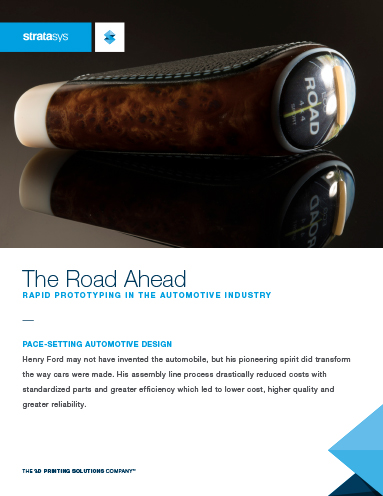
Rapid Prototyping in The Automotive Industry
Henry Ford may not have invented the automobile, but his pioneering spirit did transform the way cars were made. His assembly line process drastically reduced costs with standardized parts and greater efficiency which led to lower cost, higher quality and greater reliability.

DE's editors contribute news and new product announcements to Digital Engineering. Press releases may be sent to them via [email protected].
Follow DE
Join over 90,000 engineering professionals who get fresh engineering news as soon as it is published.






About Us · Contact Us · Editorial Team · Advertising · Privacy Policy · Subscriber Services · © 2026 Digital Engineering 24/7 · Peerless Media