Helping design and engineering professionals discover, evaluate and specify technologies and processes that shorten the design cycle and enable success.



Design & Simulation Software Guide 2025
In this Special Issue, Digital Engineering presents its second annual guide to design and simulation software vendors.

Design & Simulation Software Guide
In this Special Issue, Digital Engineering presents its inaugural guide to design and simulation software vendors, including listings for CAD, CAM, simulation, generative design, PLM, rendering and visualization, design for additive manufacturing,…
Speaking the same language, metaphorically of course, is critical when you’re trying to share product data with stakeholders up and down various points in the lifecycle while promoting an open exchange across an extended supply chain.
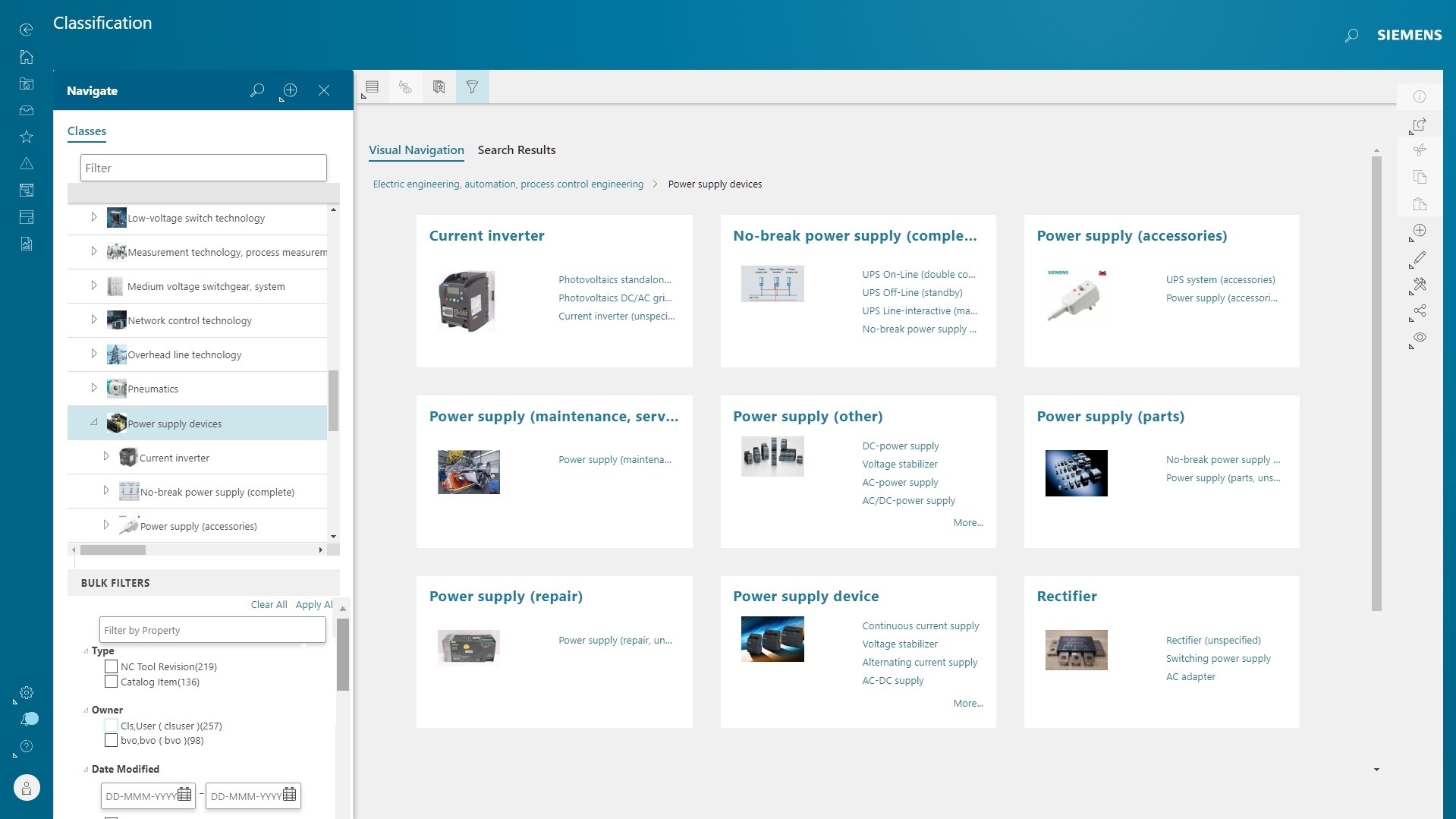
To bolster its product lifecycle management platform’s data exchange capabilities, Siemens is adding formal support for eCl@ss, an 18-year-plus ISO/IEC-compliant industry standard for classification and product description. Teamcenter, which has long enabled customers to create their unique taxonomies and classes, is adding eCl@ss support as an option for companies looking to streamline business data exchange throughout their supply chain while creating a foundation on which to build the digital twin and a digital thread to connect enterprises processes.
“A common 'language' is a key success factor for digitalization and can help to minimize mistakes in information exchange with our customers and suppliers,” said Robert Jung, head of Siemens’ Intelligent Data Logistics Program, in a prepared release.
Over the last few years, eCl@ss has grown into a mainstream reference-data standard for classification and description of products and services, notes Jim Dehmlow, Teamcenter product management. By incorporating eCl@ss support into Teamcenter, which Dehmlow claims is a first among PLM suppliers, Siemens is trying to help companies by providing a common language through which they can exchange information, eliminating the inconsistencies and inefficiencies currently spent describing classification properties so partners can effectively share data.
“When you have a standardized taxonomy, you can get into more of a single thread for digital data exchange, which streamlines information flow through design, procurement, engineering and production processes,” he explains. “Ultimately that will lead to a more robust digital twin.”
Classification as delivered by eCl@ss is typically used within PLM for a number of business processes, including to facilitate searches for parts. Traditionally, Teamcenter users have determined their unique taxonomy and data classes, which while allowing for maximum flexibility in terms of classifying anything (including parts, documents and processes), leads to data being stored and managed in diverse formats. As a result, organizations often face challenges like loss of information during translation to other systems or the propagation of disconnected and inefficient data silos and information systems. Both practices will ultimately lead to higher costs and lower quality product, Dehmlow claims.
Through use of eCl@ss, Teamcenter customers can avoid those scenarios.
“Classification provides a detailed set of criteria by which to search for things and when you put it into PLM, it can help with reuse,” Dehmlow says, explaining that if an engineer or procurement specialist can’t find a component in the system, they typically will create another, which leads to duplicate parts and thousands of dollars in waste. “They have to then manage and source those parts, when they already might have had volume sourcing agreements,” he says. “It can create all sorts of problems running an efficient digital twin because you introduce waste into the system.”
In addition to the new eCl@ss capabilities, Teamcenter will still support the traditional classification approach, which means customers can seamlessly migrate to the new system as they are ready. The feature will be available within Active Workspace for Teamcenter.


Simcenter™ software, from Siemens Digital Industries Software, uniquely combines system simulation, 3D CAE and test to help you predict performance across all critical attributes earlier and throughout the entire product lifecycle. By combining…
Making the Case for Artificial Intelligence and Machine Learning in Engineering
In this paper, Siemens Digital Industries Software and Digital Engineering will provide an overview of how AI/ML-enabled software can improve design workflows, while also addressing common questions and concerns around implementing this technology in an engineering organization.

Beth Stackpole is a contributing editor to Digital Engineering. Send e-mail about this article to [email protected].
Follow DE
Join over 90,000 engineering professionals who get fresh engineering news as soon as it is published.






About Us · Contact Us · Editorial Team · Advertising · Privacy Policy · Subscriber Services · © 2026 Digital Engineering 24/7 · Peerless Media