Helping design and engineering professionals discover, evaluate and specify technologies and processes that shorten the design cycle and enable success.


Alert!
Digital Engineering ceased publication on July 1, 2026. This website remains available as an archive of engineering content.
For inquiries or information, please email [email protected].

Digital Engineering April 2026
In the latest issue of Digital Engineering, we take a look at the latest innovations in design for additive manufacturing, including the use of natural language inputs, social media cosplayers, and AI integration. The issue also includes a feature…

January Special Focus Issue: Design for Additive
In this Special Focus Issue of Digital Engineering, learn about the latest advancements in design for additive manufacturing, including new software tools, additive in automotive, custom medical devices, and more.
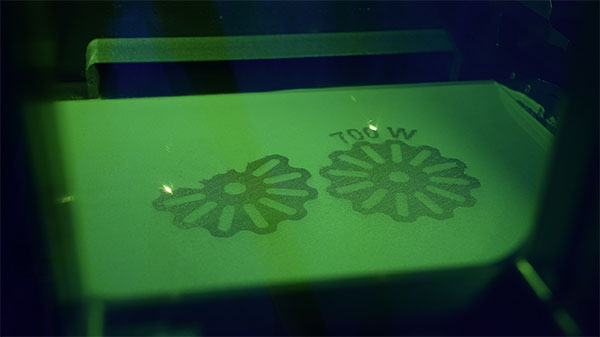
At Formnext, TRUMPF is focusing on more productive 3D printing systems. The high-tech company has equipped the TruPrint 3000 with an integrated cooling system for the build platform and increased the laser power of the two fiber lasers to 700 watts.
"The TruPrint 3000 is designed for volume production of high-quality parts. Users from all industries, such as the automotive and aerospace industries, will benefit from it," says Roland Spiegelhalder, product manager for Additive Manufacturing at TRUMPF. The high-tech company is presenting the 3D printer at Formnext, the leading trade show for additive manufacturing, in Frankfurt, Germany.
In the TruPrint 3000, a system monitors the process area and maintains a constant temperature, according to Trumpf. This allows the 3D printer to use the full 700 watts of laser power without overheating the material during the printing process.
The integrated cooling also allows the material to cool more quickly. As a result, components are more durable and there is a high level of reproducibility, meaning that the machine can print the same part repeatedly with the same quality standard. This benefits industries such as automotive, where the TruPrint 3000 can be used to mass-produce crash-resistant parts, according to Trumpf.
Thanks to the increased laser power of 700 watts, TRUMPF was able to increase the size of the machine's two laser spots from 80 to 200 µm using special optics. This allows the lasers to process a larger area on the build plate.
"This increases the productivity of the system while maintaining the same high part quality," says Spiegelhalder.
Sources: Press materials received from the company and additional information gleaned from the company’s website.


DE's editors contribute news and new product announcements to Digital Engineering. Press releases may be sent to them via [email protected].
Follow DE






About Us · Contact Us · Editorial Team · Advertising · Privacy Policy · Subscriber Services · © 2026 Digital Engineering 24/7 · Peerless Media