Helping design and engineering professionals discover, evaluate and specify technologies and processes that shorten the design cycle and enable success.


Alert!
Digital Engineering ceased publication on July 1, 2026. This website remains available as an archive of engineering content.
For inquiries or information, please email [email protected].

May 2026 Special Focus: Artificial Intelligence in Design and Simulation
In this Special Focus Issue, learn about the latest developments in the integration of artificial intelligence into engineering workflows.

April 2026 Special Focus Issue: Generative Design
In this Special Focus Issue, Digital Engineering takes a look at how generative design solutions can be used across different types of design problems and with a variety of manufacturing approaches to accelerate design space exploration, and…
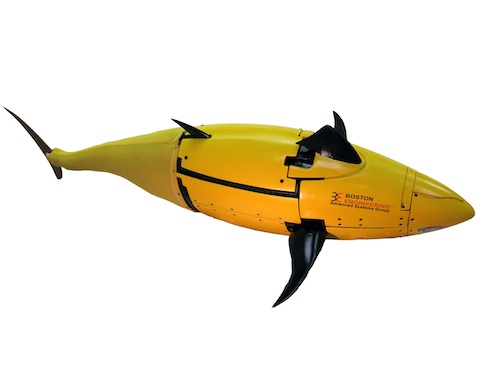
Not only is the tuna a strong swimmer, but the front portion of its body remains stable as it propels itself through water. This unique style of movement was the inspiration for a U.S. Navy project, which employed biomimickry practices to create the optimal design for an autonomous unmanned underwater vehicle.
The so-called tuna robot, designed in partnership with Boston Engineering, builds off the seaworthy profile of the tuna and includes a propulsion system, a single oscillating foil, appropriately placed fins, and a finely-tuned muscular and sensory control system. The full set of technology makes the tuna robot efficient at a variety of speeds, unlike a traditional thruster propulsion system, which is typically optimized to operate at a single velocity.


Beth Stackpole is a contributing editor to Digital Engineering. Send e-mail about this article to [email protected].
Follow DE
Join over 90,000 engineering professionals who get fresh engineering news as soon as it is published.






About Us · Contact Us · Editorial Team · Advertising · Privacy Policy · Subscriber Services · © 2026 Digital Engineering 24/7 · Peerless Media