Helping design and engineering professionals discover, evaluate and specify technologies and processes that shorten the design cycle and enable success.



Design & Simulation Software Guide 2025
In this Special Issue, Digital Engineering presents its second annual guide to design and simulation software vendors.

Design & Simulation Software Guide
In this Special Issue, Digital Engineering presents its inaugural guide to design and simulation software vendors, including listings for CAD, CAM, simulation, generative design, PLM, rendering and visualization, design for additive manufacturing,…
Imagine if you could clone your machine, factory, process or device, and operate it before your eyes in real time. If you could monitor, measure and have an accurate, real-time aperture into all facets of a system or equipment, it could lead to a new frontier of operational efficiency. This imagined state is advancing to becoming a more widespread reality thanks to digital twins.
“Digital twins are in an early stage of their lifecycle,” says John Renick, GE Digital senior director, Digital Twins. “The market has not congealed on a standard definition or nomenclature of twins; they continue to evolve. Many industry sectors see twins as a way to take advantage of existing data they have and gain new insights.
“In the near term, we can continue to expect to see some confusion in the market and in industry until some standardization is realized,” Renick continues. “We will see more customers looking for ways to develop and deploy twins as part of digital transformation efforts.”
Even with the tech in the development stage, there is excitement around the concept of the digital twin in many industry sectors. But at present, most organizations are still trying to understand what the concept is and how it might benefit them.
There’s a lot of talk about them. Companies are opening up new business lines around them. IoT (Internet of Things) rangers are planning on their success. But what exactly are digital twins, anyhow?
“At first, [digital twin] sounds like something from a Factory-of-the-Future display at a trade show where you navigate through a 3D model of a factory with [augmented reality] glasses while a robot with a British accent calmly warns you of a pending explosion,” says Michael Kanellos, IoT technology analyst at OSIsoft. “But the bells and whistles aren’t necessary.
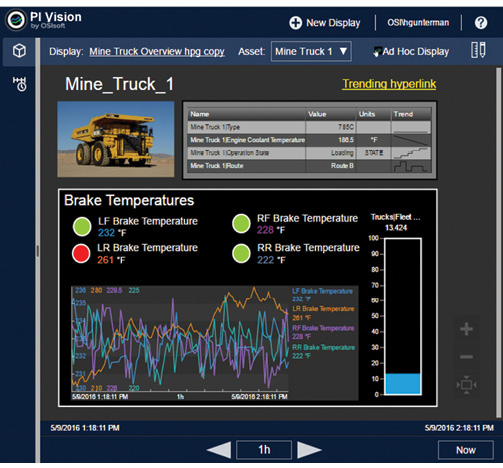
“A digital twin is merely what occurs when you combine all of the relevant data streams from an asset or facility in a way that allows a technician or engineer see what’s going on and solve problems,” Kanellos continues. “Think of digital twin as the equivalent of an EKG [electrocardiogram] for equipment or facilities. It takes technology to synthesize and visualize the data, but the technology exists. Data is often there and being collected at facilities. It’s just not being fit together so people can understand it and act on it quickly. That’s what the digital twin does.”
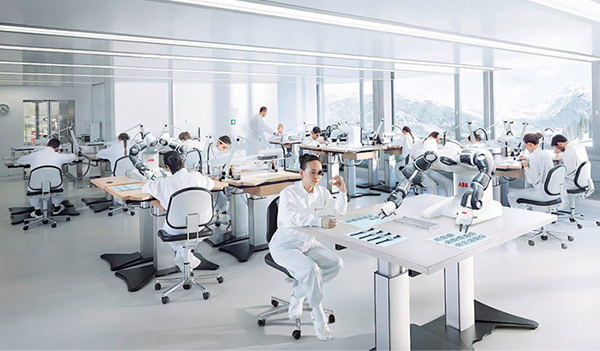
“Digital twins have become particularly attractive to manufacturers with the emergence of IoT technologies,” says Cathy Martin, vice president, BigLever Software. “Combined with IoT, manufacturers use a product’s digital twin to understand what is contained in that product, track its current status and monitor its use and performance in the field. Digital twins play a significant role in enabling continuous engineering—the ability to dynamically improve products after they leave the factory with updates and enhancements—as well as allowing the manufacturer to more effectively perform predictive and preventive maintenance.”
Getting started may mean building a team and assigning leaders to move a digital twin effort forward.
“The best way to get started is to research solution providers who offer digital twin capabilities for networks, and implement a POC [proof of concept] on a relatively small portion of the network to test the functionality,” says Lisa Garvey, vice president, Forward Networks. “It’s wise to make sure your chosen vendor can support all of the various devices in your network—routers, switches, load balancers, firewalls and ensure that their software scales to meet your given size requirements. If you have a cloud/hybrid cloud environment, or specific virtualization and security requirements, look for a vendor who can address that level of complexity.”
This level of complexity, however, requires companies to invest in data. Data is at the core of modeling and building digital twins.
“Investing in the data to accurately model industrial processes is well underway and a big part of the digital transformation of the industry. Just in the past month, I’ve heard about digital twins that model everything from future electric powertrain factories at Ford, to better understand the breaking point of chocolate from Mondelez (Cadbury),” says Matt Turner, chief strategy officer, Media & Manufacturing at enterprise database company MarkLogic.
Turner adds that just aggregating data and putting it to work isn’t always enough. It’s all about the integrity of the data and ensuring it’s accurate.
“An important factor in realizing the value of these twins is getting the data correct,” says Turner. “With good data, when the model is used to greatly reduce development time (in the case of Mondelez) or truly envision a new process (like at Ford), it can be relied on and implemented in the actual physical process. If you don’t have an accurate and complete picture of the part, component, product, assembly line and even worker skillset, you won’t get the results you’re hoping for.”
The value of digital twins comes from their relation with physical objects and the virtual representation of them. “A digital twin is a powerful proxy, not only for a device, but for its function and relationship to other devices and objects in its vicinity,” says Elena Vasconi, senior technologist and business strategist at Itron Outcomes. “Like all things, however, successful adoption of digital twin platforms will depend fundamentally on its design: An intuitive user interface, ready integration with open data sets, libraries of machine learning algorithms and useful reporting and monitoring dashboards.”
Vasconi adds that in the longer term, as more cities upgrade and build out their energy, water and smart city infrastructure, digital twin “what-if” scenarios promise to identify and optimize spatial maps of existing, proposed and planned infrastructure enhancements and enable strong justifications to regulators, for example, for investing capital to optimize service to the community.
Building digital twins is strategic. Firms seek to build operation efficiency with them, but that’s the main challenge at this stage, where a lot of organizations are still building up a digital operational strategy.
“In the long term, the ability to implement effective digital twins will be a critical skill in writing the digital future of the automation landscape,” says Guido Jouret, chief digital officer at ABB in San Jose, CA. “With an estimated 7.5 billion potential digital twins in global industry right now, there is also high value in making data available from all digital twins across all processes in an open, interoperable and vendor-independent manner.”
But Jouret says it’s important to keep in mind that the digital twin is just part of the evolution to autonomy. “From my perspective, domain expertise is the ‘secret sauce’ of autonomy,” he says. “Smart and successful industrial companies and their partners have a strong grasp on what works in all sorts of environments and conditions. What will truly accelerate an organization’s evolution to autonomy is combining this expertise with the right digital twin technology and ever-smarter AI [artificial intelligence] to maximize business outcomes and optimize operational efficiency.”

BigLever's Product Line Engineering (PLE) solution has enabled leading-edge organizations across a spectrum of industries to make a smooth, efficient transition to PLE practice. The BigLever PLE solution delivers the following essential…

Jim Romeo is a freelance writer based in Chesapeake, VA. Send e-mail about this article to [email protected].
Follow DE
Join over 90,000 engineering professionals who get fresh engineering news as soon as it is published.






About Us · Contact Us · Editorial Team · Advertising · Privacy Policy · Subscriber Services · © 2026 Digital Engineering 24/7 · Peerless Media