Helping design and engineering professionals discover, evaluate and specify technologies and processes that shorten the design cycle and enable success.



Artificial Intelligence for Design and Engineering Workflows
In this white paper, learn how artificial intelligence and machine learning can improve design and simulation.

Technology Focus: Designing for Optimization & Simulation
Simulation is pervasive, with people from different departments and backgrounds discovering new ways to put it to use, in all of its varied forms.
3D printing became part of the national discussion about gun control following the successful firing of the “Liberator” designed by Cody Wilson of Defense Distributed. Wilson, a self-described crypto-anarchist, quickly found his design and his company under fire from the U.S. Department of State which issued an order to remove the plans from his website.
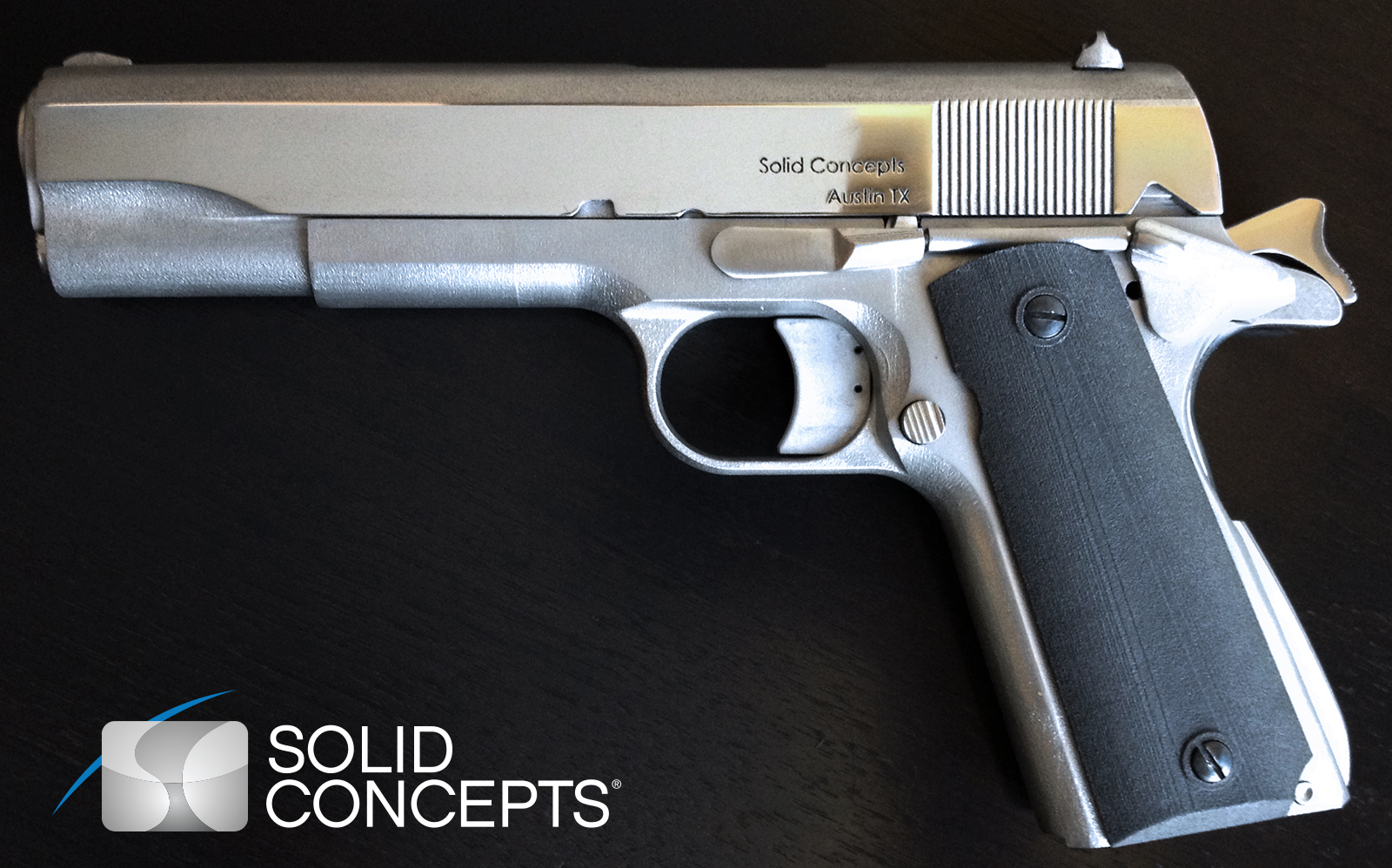 This 1911 pistol was built using 3D printing. Image courtesy of Solid Concepts.
Although Wilson complied with the order, he launched a lawsuit against the government agency claiming the order violated his rights to freedom of speech. Regardless of Wilson’s suit, the U.S. Department of State has begun to move ahead with stricter rules regarding the availability and legality of electronic files that can lead to the unauthorized production of firearms.
The new regulations come in the form of a number of revisions to the International Traffic in Arms Regulations (ITAR), the most important of which is a change to definition of arms export. The updated rules would classify export as any attempt to, “… remove activities associated with a defense article's further movement or release outside the United States … including any technical data posted on the Internet.”
While it may seem ridiculous to attempt to ban something that already exists on the Internet (ask Hollywood how hard it is to find pirated copies of movies), codifying the ban offers some advantages. The new regulations would give the government a tool to prosecute offenders, leverage to pull down new designs and provide at least a modest deterrent to design dissemination.
The move is also probably the only option for the U.S. Department of State to do something about the problem. Even with the support of lawmakers such as Senator Chuck Schumer, it seems like any attempt at new gun control legislation is doomed to failure. With the congress either unwilling or unable to step up, the agency has taken the lead.
It also might be tempting to think that 3D-printed guns aren’t much of a threat. For now, that idea is generally correct. The “Liberator” is nearly as likely to injure its user as its target, but as AM becomes more widely available that will change. Metal additive processes have already proven to be capable of producing a fully functional, metal gun.
Below you’ll find a video about 3D-printed firearms.
Source: US State Department


John Newman is a Digital Engineering contributor who focuses on 3D printing. Contact him via [email protected] and read his posts on Rapid Ready Technology.
Follow DE
Join over 90,000 engineering professionals who get fresh engineering news as soon as it is published.






About Us · Contact Us · Editorial Team · Advertising · Privacy Policy · Subscriber Services · © 2026 Digital Engineering 24/7 · Peerless Media