Helping design and engineering professionals discover, evaluate and specify technologies and processes that shorten the design cycle and enable success.


Alert!
Digital Engineering ceased publication on July 1, 2026. This website remains available as an archive of engineering content.
For inquiries or information, please email [email protected].

Digital Engineering April 2026
In the latest issue of Digital Engineering, we take a look at the latest innovations in design for additive manufacturing, including the use of natural language inputs, social media cosplayers, and AI integration. The issue also includes a feature…

January Special Focus Issue: Design for Additive
In this Special Focus Issue of Digital Engineering, learn about the latest advancements in design for additive manufacturing, including new software tools, additive in automotive, custom medical devices, and more.
The pure number of new AM systems out there means I can’t possibly report on them all (and you wouldn't want me to). Whether or not something hits Rapid Ready depends on innovation, presentation and a myriad of other details about a new 3D printer. I say that as way of explanation because I noticed when Ultimaker released its first AM system, and kind of ignored it.
The system looked like another RepRap clone, and even advertised itself as an open source-based 3D printer. In terms of pure physicality, the system looked very similar to the original MakerBot Thing-O-Matic. It was also a kit, which generally doesn’t inspire much interest for anyone beyond hardcore hobbyists.
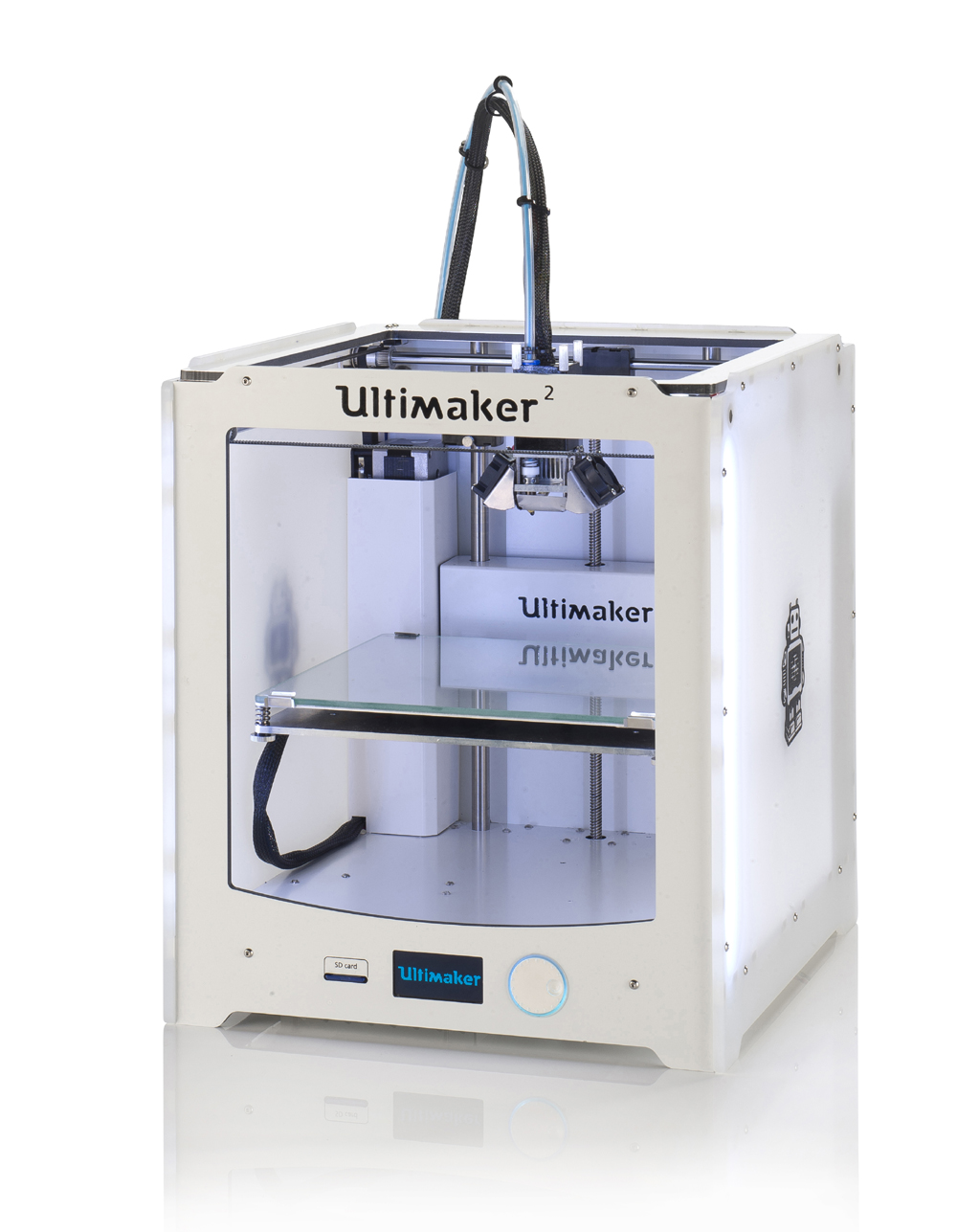
Move forward a few years, and now Ultimaker has released an updated version of its AM system, simply named the Ultimaker 2. The new 3D printer features a number of improvements over the original model. For starters, in place of a frame that was obviously the result of a kit, the new system is sleek and professional in appearance.
The build envelope of the Ultimaker 2 has expanded slightly to 230 x 225 x 205 mm (9 x 8.85 x 8 in.), while retaining the same desktop-size footprint. The new system has a resolution of 0.02 mm, which is reasonable, and is, according to the company, faster to complete prints. Some of the speed increase is the result of improvements to Cura, Ultimaker’s open source slicing software.
Even with the improvements, what really caught my eye was Ultimaker’s new social media and sharing site, YouMagine. Like Thingiverse, the new site is dedicated to people creating and sharing 3D designs. YouMagine also encourages people to riff off each other’s work. Currently, users retain IP rights to their creations, but Thingiverse ran into problems with that in the past, so we’ll see how long that lasts.
I think it’s reasonable to assume that Ultimaker is following MakerBot’s business model, which is probably a solid plan. Certainly their product is being marketed with prestige pricing: an Ultimaker 2 costs $2,563. If Ultimaker is able to inspire the sort of loyalty seen in MakerBot customers, it might become a serious contender in the AM market. The company might even be able to swipe some of MakerBot’s base, following that company’s acquisition by Stratasys, a move seen by a vocal minority in the maker crowd as selling out to big business.
Below you’ll find the Ultimaker 2 launch presentation video.
Source: Ultimaker


John Newman is a Digital Engineering contributor who focuses on 3D printing. Contact him via [email protected] and read his posts on Rapid Ready Technology.
Follow DE






About Us · Contact Us · Editorial Team · Advertising · Privacy Policy · Subscriber Services · © 2026 Digital Engineering 24/7 · Peerless Media