Helping design and engineering professionals discover, evaluate and specify technologies and processes that shorten the design cycle and enable success.


Alert!
Digital Engineering ceased publication on July 1, 2026. This website remains available as an archive of engineering content.
For inquiries or information, please email [email protected].

Digital Engineering April 2026
In the latest issue of Digital Engineering, we take a look at the latest innovations in design for additive manufacturing, including the use of natural language inputs, social media cosplayers, and AI integration. The issue also includes a feature…

January Special Focus Issue: Design for Additive
In this Special Focus Issue of Digital Engineering, learn about the latest advancements in design for additive manufacturing, including new software tools, additive in automotive, custom medical devices, and more.
The culture surrounding 3D printing at the University of Washington (UW) appears to have different ideas about how to best leverage the technology. The students and researchers at UW still think big, but seem to be able to remain practical about what is currently possible with AM. This attitude leads to projects that are viable right now, rather than projects that may become viable 20 years down the road.
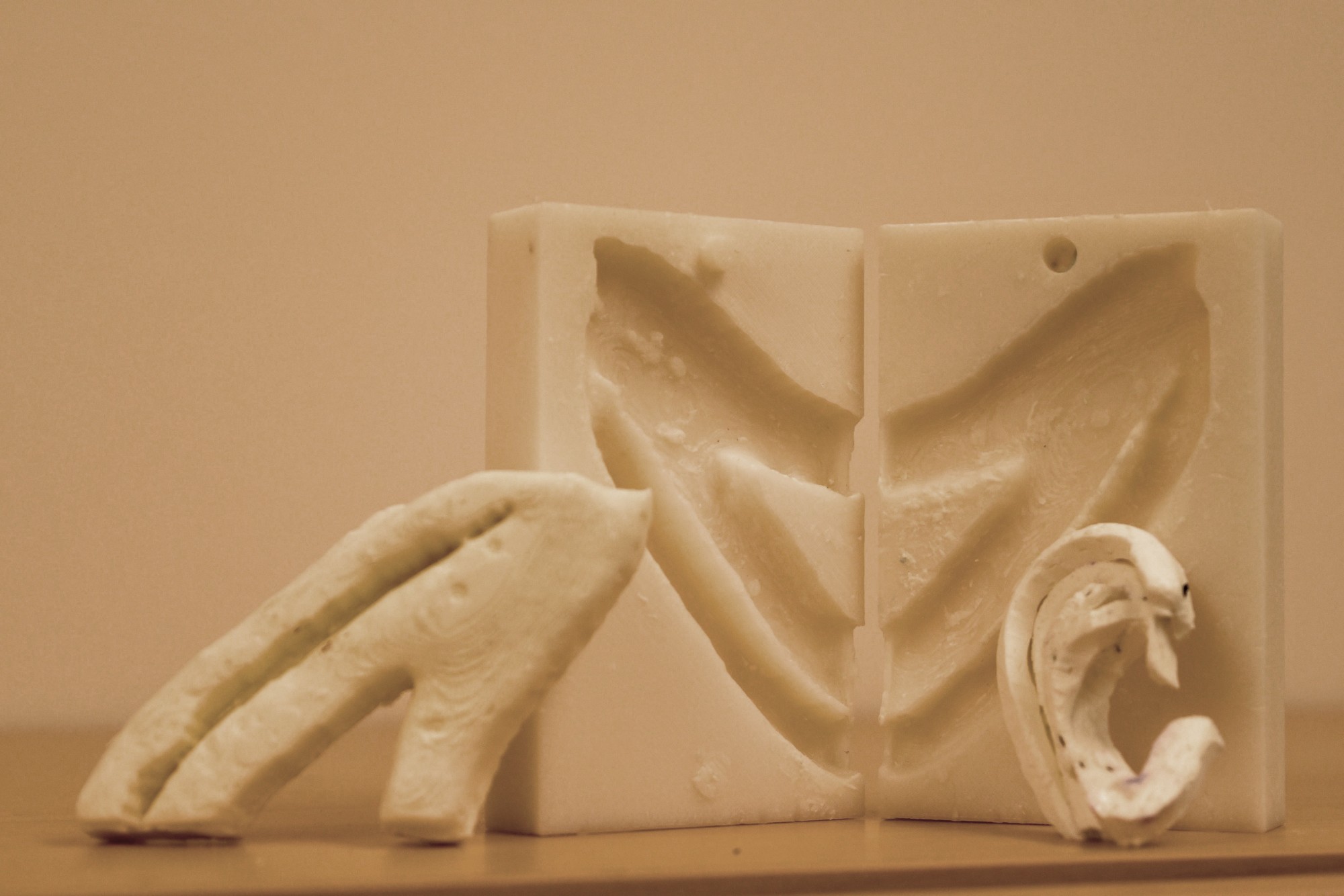
 An example of a practice rib (and practice ear) made from CT scan data and a 3D printed mold. Courtesy of UW.
The latest example of this approach is the combination of 3D printing and replacement ears. Other research facilities have gone all in with attempting to print “bionic” ears, while UW has taken a more nuanced approach to the same goal. Rather than attempting to print entire ears, Angelique Berens and her fellow researchers have chosen to assist doctors who are recreating ears.
Generally, to treat children with underdeveloped or missing ears, surgeons borrow some of the patient’s rib cartilage and then carve it into the shape of an ear. The problem is that most doctors don’t have a lot of practice carving ears, and it’s difficult to find a material similar in feel to the cartilage used for the procedure.
“It’s a surgery that more people could do, but this is often the single biggest roadblock,” said Kathleen Sie, a UW Medicine professor of otolaryngology and director of the Childhood Communication Center at Seattle Children’s. “They’re hesitant to start because they’ve never carved an ear before. As many potatoes and apples as I’ve carved, it’s still not the same.”
The solution discovered by the research team was to use CT scan data to create a 3D printed mold of a patient’s ribs. A special silicone solution is then poured into the mold and allowed to set. The finished product is an artificial rib that, according to the UW team, feels and behaves more like actual rib cartilage than anything else thus far.
“It’s a huge advantage over what we’re using today,” said lead author Angelique Berens, a UW School of Medicine otolaryngology surgery resident. “(Today) you literally take a bar of Lever 2000 (soap) while the attending is operating and you carve ear cartilage. It does teach you how to get the shape right, but the properties are not super accurate — you can’t bend it, and sewing it is not very lifelike.”
Below you’ll find a video about 3D printing at UW.
Source: UW


John Newman is a Digital Engineering contributor who focuses on 3D printing. Contact him via [email protected] and read his posts on Rapid Ready Technology.
Follow DE






About Us · Contact Us · Editorial Team · Advertising · Privacy Policy · Subscriber Services · © 2026 Digital Engineering 24/7 · Peerless Media