Helping design and engineering professionals discover, evaluate and specify technologies and processes that shorten the design cycle and enable success.


Alert!
Digital Engineering ceased publication on July 1, 2026. This website remains available as an archive of engineering content.
For inquiries or information, please email [email protected].

May 2026 Special Focus: Artificial Intelligence in Design and Simulation
In this Special Focus Issue, learn about the latest developments in the integration of artificial intelligence into engineering workflows.

April 2026 Special Focus Issue: Generative Design
In this Special Focus Issue, Digital Engineering takes a look at how generative design solutions can be used across different types of design problems and with a variety of manufacturing approaches to accelerate design space exploration, and…
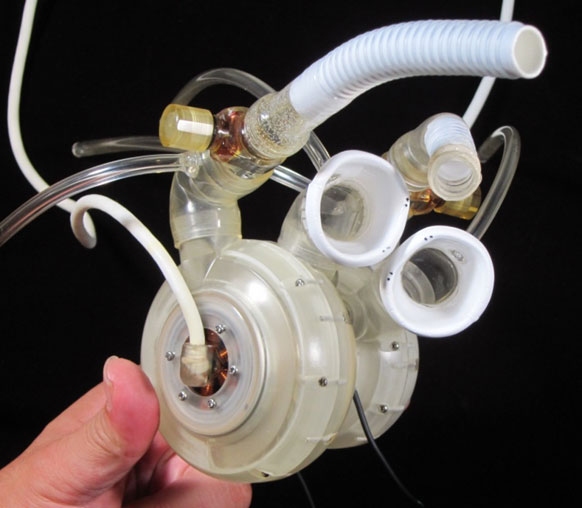 The Total Artificial Heart is able to completely replace the damaged heart.
The university started using Pro/ENGINEER to create models of its artificial heart design in 2003 and upgraded to Creo in 2012. The team uses Creo to simulate blood flow and model component machining. According to the company, Creo also supports daily collaboration across the team by enabling the creation of easy-to-understand graphical materials with cross-sections of 3D models and animations.
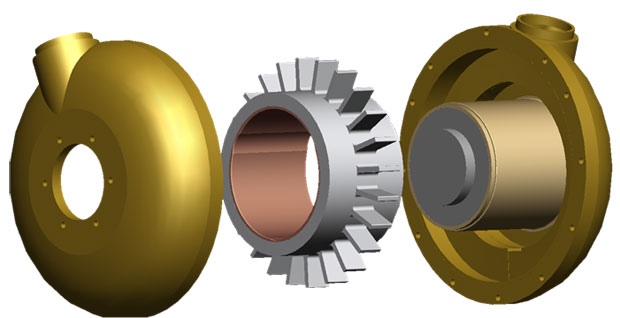 Researchers at the University of Tokyo implemented PTC software to model its Total Artificial Heart.
“PTC Creo has become an essential part of our development environment and a standard solution for the team in engineering an artificial heart,” said Takashi Isoyama, Ph.D., assistant professor, Department of Biomedical Engineering, the University of Tokyo Graduate School of Medicine and a member of the artificial heart research and development team. PTC Creo has successfully supported the processes of designs and studies in addition to component machining, and enables our team to make significant advances as we reach our goals.”
For more information, visit University of Tokyo and PTC.
Sources: Press materials received from the company and additional information gleaned from the company’s website.


DE's editors contribute news and new product announcements to Digital Engineering. Press releases may be sent to them via [email protected].
Follow DE






About Us · Contact Us · Editorial Team · Advertising · Privacy Policy · Subscriber Services · © 2026 Digital Engineering 24/7 · Peerless Media