Helping design and engineering professionals discover, evaluate and specify technologies and processes that shorten the design cycle and enable success.



May 2026 Special Focus: Artificial Intelligence in Design and Simulation
In this Special Focus Issue, learn about the latest developments in the integration of artificial intelligence into engineering workflows.

Design & Simulation Software Guide 2025
In this Special Issue, Digital Engineering presents its second annual guide to design and simulation software vendors.
As simulation becomes a more widely used tool in the design cycle, and as artificial intelligence (AI) and machine learning-enabled solutions require more and more data to train their algorithms, product and simulation data management are an increasingly important part of the engineering ecosystem.
We spoke to experts at Ansys, BETA CAE Systems and Siemens Digital Industries Software to learn more about the evolving role of simulation data management (SDM) in engineering.
How would you describe the state of simulation data management for most organizations? How do companies approach this problem, if at all?
Simulation data management is no longer a futuristic concept. It is a present-day necessity. Despite this, the state of SDM in most companies remains fragmented and inconsistent. Many struggle with effective data management due to a lack of standardized processes and insufficient integration with enterprise systems such as PDM/PLM [product data management/product lifecycle management], HPC [high-performance computing], and test results management databases.
Take the automotive industry, for example. The rise of global modular platforms, the explosion of design variants, the increasing resolution of finite element models, and the geographic dispersion of engineering teams have all made SDM a critical priority. As a result, companies are actively seeking commercial off-the-shelf solutions that can address these challenges while minimizing disruptions to their existing simulation ecosystems.
Sak Arumugam, Senior Product Manager, Materials and SPDM, Ansys: Today, only a few visionary organizations have fully implemented a structured SDM system. For most companies, simulation data remains fragmented, siloed and manually managed, leading to inefficiencies and limited traceability.
To address this challenge, companies are increasingly taking a phased approach as part of a broader simulation process & data management (SPDM) strategy. They typically begin by establishing a structured system for managing simulation data, ensuring traceability and accessibility. Once this foundation is in place, they focus on controlling simulation business processes, and integrating SDM with other enterprise systems such as product lifecycle management (PLM), requirements management, and digital engineering tools. This step-by-step approach helps organizations gradually gain control over their simulation ecosystem while minimizing disruption to existing workflows.
Wouter Dehandschutter, Director of Technical Product Management, Siemens Digital Industries Software: I think the state of SDM is diverse. There is one element you can recognize, that industries exposed to a high level of regulatory pressure, like aerospace, have a high level of attention to data management.
But it’s clear that in every other industry, people realize the importance of data, and recognize the need to grow their maturity in how they deal with data across their processes. More people realize they should not throw this data away.
Companies already secure important design decision data. At a given design milestone, the reference data are kept that tell you why a decision was made.
If we stick to a more disciplined, organized process at important design milestones as a basis for learning and improving the next design, you only keep the important data. If you want to develop more automatic machine learning models that learn from all of the simulations, you would need to keep much more data.
Are there new trends/pressures on companies to get a better handle on their simulation data?
Irene Makropoulou, BETA CAE Systems: Absolutely! Several key trends and pressures are driving companies to take simulation data management more seriously.
1. Rising complexity of simulations: The increasing number of model variants, the demand for higher-fidelity models and the need for precise representation of the physical phenomena, have led to multi-million-element models. Managing such complexity effectively requires modularization. And the more granular the modules, the greater the need for robust SDM.
2. Faster time to market: The pressure to accelerate product development has driven the push for automation and the formation of global teams working around the clock. Standardized simulation data and seamless, timely data sharing are now essential to support this pace.
3. Digital thread and traceability: Maintaining a complete digital thread for traceability has made integration with PDM/PLM systems a necessity rather than a luxury. Companies need full visibility into their simulation data to ensure compliance, reproducibility and informed decision-making.
4. Shift to cloud-based platforms: Transition from on-premise storage to cloud-based solutions is a current trend that has further elevated the importance of SDM, to ensure secure, scalable and accessible simulation data across global teams.
5. AI & Machine Learning: The saying “ML models are only as good as the data they’re trained on” holds true. High-quality, well-structured simulation data is the foundation for training accurate and reliable predictive models, making SDM a critical enabler of AI-driven engineering.
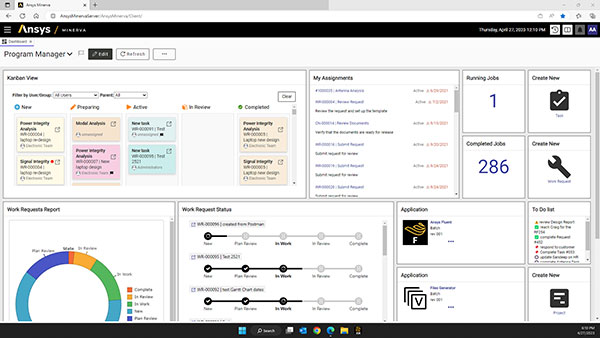
Ansys Minerva is an enterprise-level simulation process and data management tool. Image courtesy of Ansys.
Sak Arumugam, Ansys: Yes, two key trends are driving companies to take SDM more seriously than ever before: AI/ML and digital engineering. As AI/ML technologies rapidly mature, a fundamental requirement for maximizing their benefits is having a single source of truth for the data used in these tools. SDM serves as the backbone that enables companies to effectively leverage AI/ML. Similarly, digital engineering relies on well-managed simulation data to enhance collaboration, traceability and decision-making, further reinforcing the need for robust SDM practices.
Wouter Dehandschutter, Siemens: Yes, and again, all of this is not necessarily related to keeping more data for AI. Just look at the growing importance of digital threads. Being able to trace back the design process, but also creating value for the customer using digital twins, is a very important driver for doing a better job of organizing data. We have customers today that have digital twins running of products in operation. Those digital twins need to be well traced to the original design and to the components that went into the product in operation.
With that structure in place, you can combine simulated with operational data and do a better job for the next design. This starts with getting the fundamentals in place, having it connected with the lifecycle of the product, design traceability and the digital thread.
What are some key use cases for leveraging existing simulation data?
Irene Makropoulou, BETA CAE Systems: There are several key use cases for leveraging existing simulation data.
One of the biggest advantages is the ability to quickly search for and reuse existing data, significantly reducing simulation turnaround time. Reuse can happen at multiple levels: at the part level (e.g., by reusing existing meshes for new models) or at the subsystem level (e.g., sharing entire subsystems across different model variants).
Stored simulation data holds valuable insights. By applying AI and machine learning, companies can identify patterns related to past errors and best practices, helping engineers optimize product development and accelerate decision-making.
Existing simulation data [also] plays a crucial role in regulatory filings and certification processes. A well-structured SDM system ensures traceability and auditability, making it easier to demonstrate compliance with industry standards.
Sak Arumugam, Ansys: Some of the key use cases are the reuse of simulation models; enhanced collaboration and reduced prototype testing; and establishing a single source of truth for simulation data.
Leveraging existing simulation models that include versioning, contextual information and full traceability helps organizations improve productivity and enhance end-product quality by avoiding redundant efforts.
By making simulation data more accessible across teams, organizations can increase collaboration in product development, leading to fewer physical prototypes, faster iterations and cost savings.
Establishing a central repository for simulation data ensures consistency, accuracy and reliability across the organization, enabling better decision-making and reducing data silos.
What are some of the key challenges in implementing a structured approach to simulation data management?
Irene Makropoulou, BETA CAE Systems: One of the biggest challenges in implementing a structured approach to simulation data management is integration with existing systems and key software applications.
PDM/PLM integration: PDM/PLM systems are the primary sources of model data. A seamless interface between design and simulation is essential to ensure flawless data flow and prevent inefficiencies.
HPC integration: Since all major simulations run on HPC systems, a smooth data transfer mechanism between SDM and HPC is critical. Efficient integration minimizes bottlenecks and optimizes the usage of resources.
Pre-processor integration: The pre-processing stage generates and consumes vast amounts of data, and engineers spend significant time on modeling tasks. A well-integrated SDM system enhances standardization and automation, ultimately reducing CAE turnaround time.
Post-processor integration: The post-processor generates numerous reports and KPIs for each simulation. A well-integrated SDM system enables the effortless association of such processed results with the simulated model, enabling the review of information “in context,” and the quick comparison of different simulations.
The level of integration directly impacts adoption and efficiency. Poor integration disrupts workflows and creates resistance among engineers, whereas strong integration fosters collaboration, standardization and automation, leading to improved efficiency, better data security and a more seamless simulation ecosystem.
Sak Arumugam, Ansys: Different organizations face unique challenges when implementing SDM, but these can generally be categorized into three key areas:
Lack of Executive Sponsorship & Organizational Alignment: SDM is not just a tool but a cultural shift in how teams manage and use simulation data. Without strong executive sponsorship and alignment with overall business objectives, it can be difficult to secure resources, drive adoption and demonstrate value.
Inadequate IT Infrastructure & System Integration: Successful SDM implementation requires robust IT infrastructure that supports scalability, security and seamless integration with existing engineering and enterprise systems. Without the right infrastructure, adoption can be slow and ineffective.
User Adoption & Change Management: Simulation engineers and analysts often resist adopting new systems alongside their existing workflows and simulation applications. Ensuring ease of use, proper training and demonstrating clear benefits are critical for overcoming resistance and encouraging adoption.
Wouter Dehandschutter, Siemens: One key challenge is to make sure data management becomes part of the process. And that’s equally a challenge on the organizational side and the technical side. As a solution provider, we need to understand what is the typical process and at which points in time can we support end users through data management, so that important results are not lost or forgotten. We also have to make sure users get access to the right state of the data they should be using. Whenever you get more users to produce more systematically correct data into a system, it also becomes more valuable for other users.
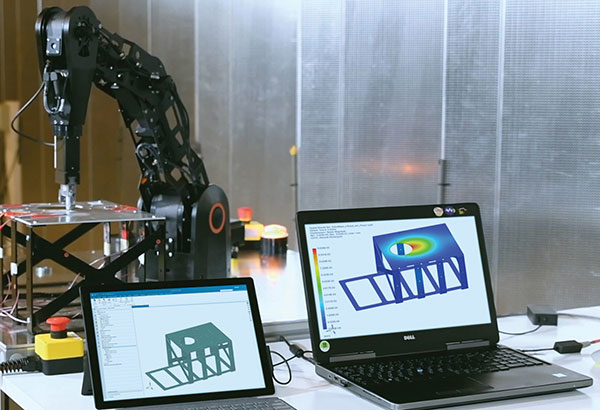
An image of an xDT showing the real-time results in Simcenter 3D in the foreground. Image courtesy of Siemens.
What are some key steps/requirements companies need to address to be successful with these initiatives?
Irene Makropoulou, BETA CAE Systems: A successful approach to simulation data management requires a combination of technology, process standardization and cultural change. To achieve this, companies should focus on three key steps:
First, define a clear SDM strategy and objectives, where the SDM goals are aligned with business and engineering needs. A phased implementation works best. Start with high-impact use cases, demonstrate value early and gradually expand capabilities.
Second, integrate SDM with existing core systems like PDM/PLM, HPC and the main pre- and post-processors.
Third, invest in process management. Process standardization and automation are critical, not only for individual productivity, but also for ensuring the broader adoption and long-term success of SDM initiatives. When engineers experience tangible efficiency gains, the perceived benefits of SDM increase, driving stronger engagement.
Wouter Dehandschutter, Siemens: What’s important is that there is a clear definition of processes. From a Siemens perspective, what we are after is to make sure simulation does not happen in a silo, but happens in a way that is tightly connected with the design process. That means that you need a good definition of what is the best outgoing state of the design data that can be taken into simulation. Where do the results need to go?
You cannot do this for the company as a whole; you need to start in a well-defined area, and then understand what in that area can be properly connected.
Second, you have to identify what can be more automated or improved in terms of process automation. With that you can achieve a gradual improvement of the maturity of that customer, area by area.
What are some approaches needed for managing heterogeneous data from different software tools/physics?
Irene Makropoulou, BETA CAE Systems: I would probably focus on two key strategies here.
First, the design of a common, yet flexible, data model, that should accommodate the diverse representations of simulation data across different tools and domains. This includes defining key metadata and establishing clear processes for how this metadata is generated and maintained. Flexibility is crucial to ensure compatibility without imposing rigid constraints that hinder usability.
Second, the standardization and automation of the transformation of data between different tools and physics, while maintaining consistency. Automation plays a key role here, ensuring interoperability, reducing manual effort and finally tracking the lifecycle of data, end to end.
Sak Arumugam, Ansys: A key approach to managing heterogeneous data from different software tools and physics is ensuring that the system used for simulation data management (SDM) is open, configurable and tool-agnostic. For example, systems like Ansys Minerva can integrate not only with Ansys tools but also with third-party applications and their associated file formats. This is highly beneficial for organizations because, in practice, most companies don’t rely on a single vendor’s tools. Instead, they use a variety of tools across different physics domains. Having a flexible SDM system that can work with multiple simulation tools enables seamless data integration and ensures that diverse simulation data can be managed effectively.
Wouter Dehandschutter, Siemens: Our ambition is to establish multi-domain processes, so there are ways to consume data across different domains. For example, you establish a system simulation model for a hydraulic pump and use that in a 3D motion model. These transfers between domains have to be possible; you have to have a data model that properly recognizes the specificity of the domain without being too specific. All applications within that domain fit within that definition of the model and results, and transfer is possible between different domains.
Are there any industry standards (current or emerging) that are important to be aware of when it comes to data formatting/management?
Irene Makropoulou, BETA CAE Systems: Yes, several industry standards play a crucial role in simulation data formatting and management. I would probably pick out the JT format [an ISO standard] and the Functional mock-up interface/functional mock-up unit (FMI/FMU) standards.
In the model-building phase, the JT format is widely used, as it combines geometric content with visualization elements. This allows for efficient 3D representation, enabling quick and lightweight model visualization in various tools. For multiphysics and system-level simulation, the FMI/FMU standards are essential, as they enable seamless model exchange between different simulation tools, facilitating interoperability across disciplines.
Sak Arumugam, Ansys: While there is ongoing work to standardize data formats for various simulation models, widespread adoption across industries has been limited. This is largely due to the fact that each simulation workflow is unique, with varying levels of complexity depending on the type of model, physics involved, and data used. As a result, achieving a universal standard that accommodates the diversity of simulation approaches and tools is a challenge. Different industries and end-users have specific needs, making it difficult for one-size-fits-all solutions to gain traction
Wouter Dehandschutter, Siemens: ASSESS created the Unified Model Characteristics for Engineering Simulation (UMC4ES), which focuses on having a roper extensive labeling or metadata description to identify compatibility, but it does not go the level of the format of the data itself. Other standards do go there, so that’s where we also provide significant support for the FMI standard, which is truly a standard that describes how you should package simulation models so they can be exchanged.


Simcenter™ software, from Siemens Digital Industries Software, uniquely combines system simulation, 3D CAE and test to help you predict performance across all critical attributes earlier and throughout the entire product lifecycle. By combining…
Making the Case for Artificial Intelligence and Machine Learning in Engineering
In this paper, Siemens Digital Industries Software and Digital Engineering will provide an overview of how AI/ML-enabled software can improve design workflows, while also addressing common questions and concerns around implementing this technology in an engineering organization.

Brian Albright is the editorial director of Digital Engineering.
Contact him at [email protected].

Join over 90,000 engineering professionals who get fresh engineering news as soon as it is published.






About Us · Contact Us · Editorial Team · Advertising · Privacy Policy · Subscriber Services · © 2026 Digital Engineering 24/7 · Peerless Media