Helping design and engineering professionals discover, evaluate and specify technologies and processes that shorten the design cycle and enable success.


Alert!
Digital Engineering ceased publication on July 1, 2026. This website remains available as an archive of engineering content.
For inquiries or information, please email [email protected].

May 2026 Special Focus: Artificial Intelligence in Design and Simulation
In this Special Focus Issue, learn about the latest developments in the integration of artificial intelligence into engineering workflows.

Design & Simulation Software Guide 2025
In this Special Issue, Digital Engineering presents its second annual guide to design and simulation software vendors.
While thermoset composites reinforced with fiber have become the material of choice for large-scale wind turbine development, the technology is not without challenges. Specifically, companies have been struggling to keep manufacturing costs low while also grappling with design issues related to performance and recyclability.
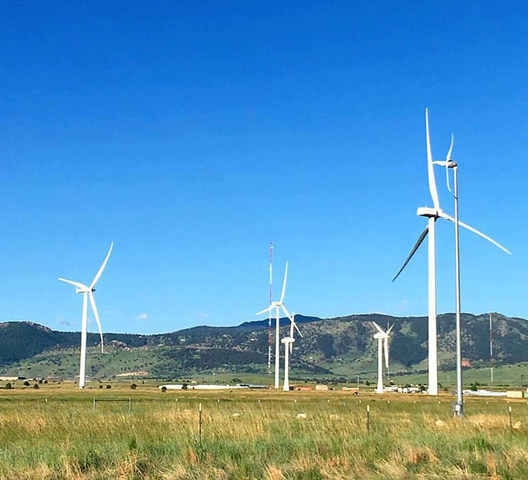 The IACMI-led project is aiming for reduced costs and recyclability of wind turbine blades. Image Courtesy of IACMI
IACMI, which functions as a Manufacturing USA Institute driven by the University of Tennessee in Knoxville, and the U.S. Department of Energy, is now joining up with a number of additional universities and industry players like Johns Manville, a provider of building insulation and commercial roofing, and Arkema, a global chemicals and materials manufacturing company, among others. The partners plan to explore new developments in thermoplastic materials with their goal being to lower production costs, improve recyclability and expand applicability so the components can be produced at large scale more efficiently.
By doing so, the team of partners hope to reduce manufacturing costs and promote process improvements for the large-scale turbine blades, as well as increase reliability in how the composite structures are produced. “These upcoming advancements will reduce lifecycle energy use and strengthen manufacturing innovations in wind turbine blade production,” said Bryan Dods, the CEO of the IACMI Composites Institute, in a press release announcing the partnership.
Key industry partners, which represent the entire wind turbine industry supply chain, came together to show off an early prototype of a 9-meter long wind blade, which was fabricated at the IACMI’s Wind Technology Area, earlier this month at the Winter IACMI meeting, officials said. A team of 11 industrial partners, including Arkema, Johns Manville and TPI Composites, one of the largest U.S. manufacturers of composite wind blades, participated in the construction and assembly of the wind blades.
For its part, Arkema will expand its work to include a new thermoplastic liquid resin said to enable the production of continuous fiber reinforced thermoplastic parts using typical closed mold thermoset processes. Partners Purdue University and Convergent Manufacturing Technologies are working on simulation tools to enable new large-scale wind turbine design and manufacturing processes, and a newly commissioned Vacuum Assisted Resin Transfer Molding (VARTM) lab at partner the Colorado School of Mines (CSM) will be ground zero for fabricating the concept panels. The full-scale blades will be manufactured at a different facility.
According to reports, the prototype blade is based on existing work by the Department of Energy, but includes innovations such as impact resistant components, continuous fiber reinforced thermoplastic parts, and exterior shell pieces that were produced with less than half of the normal CO2 emissions.
To find out more about the large-scale turbine production process and the new thermoplastic materials, watch this video.


Beth Stackpole is a contributing editor to Digital Engineering. Send e-mail about this article to [email protected].
Follow DE






About Us · Contact Us · Editorial Team · Advertising · Privacy Policy · Subscriber Services · © 2026 Digital Engineering 24/7 · Peerless Media