Helping design and engineering professionals discover, evaluate and specify technologies and processes that shorten the design cycle and enable success.


Alert!
Digital Engineering ceased publication on July 1, 2026. This website remains available as an archive of engineering content.
For inquiries or information, please email [email protected].
Sponsored

Digital Engineering April 2026
In the latest issue of Digital Engineering, we take a look at the latest innovations in design for additive manufacturing, including the use of natural language inputs, social media cosplayers, and AI integration. The issue also includes a feature…

January Special Focus Issue: Design for Additive
In this Special Focus Issue of Digital Engineering, learn about the latest advancements in design for additive manufacturing, including new software tools, additive in automotive, custom medical devices, and more.
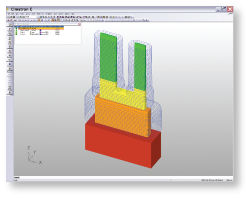 |
“Electrodes Made (Really) Easy” is a micro website built by Cimatron Ltd., the developer of CimatronE manufacturing, mold making, tool making, and NC programming software. CimatronE encompasses a range of tools for design, milling, micro-milling, post-processing, quoting, and wire EDM (electrical discharge machining). An integrated solution, CimatronE is also available as a standalone solution set. As you no doubt guessed, today’s Check It Out presentation focuses on Cimatron’s electrode solution.
The micro-site on the other end of the URL over there poses the question: “How long does it take to design and program 16 electrodes?” Spoiler alert: The answer is it seems not long at all, maybe minutes instead of hours. That seems an alluring response, considering the drudgery that electrode creation process is known to be.
Cimatron’s methodology to prove its assertion is three short, narrated videos and a brief case study, none of which require registration. You’re invited to fill out a form to arrange for a demonstration using your own project data if you want even more proof.
Demos are what the videos are all about. They show you how to put CimatronE to work for electrode design, NC programming, and EDM set up. The pace is just-right fast, the actual demonstrations straightforward, and project realistic. (Hint: Make sure to expand the videos so that you can see the dialog boxes clearly.)
The first thing that stuck me about CimatronE is that the user interface is well-defined yet concise, making the demos easy to follow. CimatronE uses automation throughout the three processes covered here. For example, when doing your EDM setup, automation eliminates typing in values and locations because this data as well as the burn conditions have already been passed into the setup procedures from your earlier work on the project. For that matter, when you’re designing electrodes you don’t have to use either solids or surfaces. You can use both in the same environment, and you can use solid tools on surfaces.
Everything that you can do, the videos assure you, is under your control, meaning that you can customize and save templates and set ups for your processes, materials, and machinery. Among the features demonstrated are CimatronE’s built-in interface to shape the burning process, one-click drawings, and automated NC programming.
The point of it all is that CimatronE can streamline your processes, save time and effort, and help reduce errors. To drive home the efficiency point, there’s the one-page case study -- really a testimonial -- about Motorola Rapid Prototyping Services. These people use Cimatron-E as their primary electrode design and programming tool, and they generate 15,000 to 20,000 electrodes in a typical year. That would be a lot of time if the process were not efficient.
“Electrodes Made (Really) Easy” is very clever and well done. The PDF takes just a minute to read, and the video lengths range from nearly 6 minutes to 13:30, so you’re looking at a tad more than a half hour investment of your time. Learning more CimatronE electrode solution seems like a good use of your time.
Thanks, Pal. – Lockwood
Anthony J. Lockwood
Editor at Large, Desktop Engineering


Anthony J. Lockwood is Digital Engineering's founding editor. He is now retired. Contact him via [email protected].
Follow DE






About Us · Contact Us · Editorial Team · Advertising · Privacy Policy · Subscriber Services · © 2026 Digital Engineering 24/7 · Peerless Media