Helping design and engineering professionals discover, evaluate and specify technologies and processes that shorten the design cycle and enable success.


Alert!
Digital Engineering ceased publication on July 1, 2026. This website remains available as an archive of engineering content.
For inquiries or information, please email [email protected].

Digital Engineering April 2026
In the latest issue of Digital Engineering, we take a look at the latest innovations in design for additive manufacturing, including the use of natural language inputs, social media cosplayers, and AI integration. The issue also includes a feature…

January Special Focus Issue: Design for Additive
In this Special Focus Issue of Digital Engineering, learn about the latest advancements in design for additive manufacturing, including new software tools, additive in automotive, custom medical devices, and more.
I expect improvements and expansion of AM materials (Objet is the poster child for this), but I must say I wasn’t expecting the next material I ran across to be wood. Of course, it isn’t solid wood. Think plywood rather than oak.
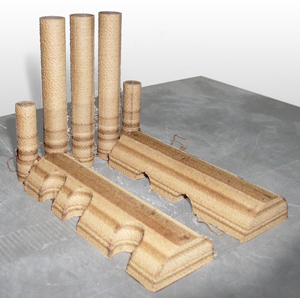
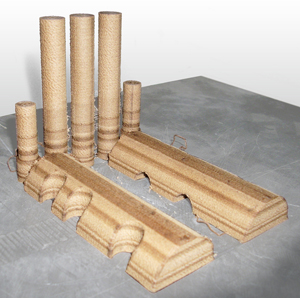
LAYWOO-D3 is a material created for use in RepRap or other material extrusion style 3D printers. It comes in spools that look similar to other materials used for extrusion, and prints without requiring alterations to the extruder head. Finished objects are described as having a wood-like rough texture. By altering the temperature of the material flow, users can create faux wood rings (by creating lighter and darker areas).
LAYWOO-D3 is created by mixing together 40% recycled wood with binding polymers. According to the creator, the finished product can be sawed, sanded or painted.
It was invented by a German Thingiverse member that goes by the handle Kaipa. I think that fact alone might be more interesting than the material itself. Some guy, probably working in his garage, figured how to manufacture a brand new AM material. He’s selling it via eBay!
Kaipa is only selling small amounts of LAYWOO-D3 for now and each order takes a month to process. All the same, this is the sort of innovation you don’t normally see from hobbyists. I think it’s an exciting development in AM. Will we start seeing Kickstarter drives for new material development next?
Below you’ll find a video demonstrating the new material in action. Please excuse the spelling errors at the beginning, the creator is a non-native English speaker. I think some leeway is in order, and besides, when was the last time you created a new AM material?
Source: Thingiverse


John Newman is a Digital Engineering contributor who focuses on 3D printing. Contact him via [email protected] and read his posts on Rapid Ready Technology.
Follow DE






About Us · Contact Us · Editorial Team · Advertising · Privacy Policy · Subscriber Services · © 2026 Digital Engineering 24/7 · Peerless Media