Helping design and engineering professionals discover, evaluate and specify technologies and processes that shorten the design cycle and enable success.


Alert!
Digital Engineering ceased publication on July 1, 2026. This website remains available as an archive of engineering content.
For inquiries or information, please email [email protected].

Digital Engineering April 2026
In the latest issue of Digital Engineering, we take a look at the latest innovations in design for additive manufacturing, including the use of natural language inputs, social media cosplayers, and AI integration. The issue also includes a feature…

January Special Focus Issue: Design for Additive
In this Special Focus Issue of Digital Engineering, learn about the latest advancements in design for additive manufacturing, including new software tools, additive in automotive, custom medical devices, and more.
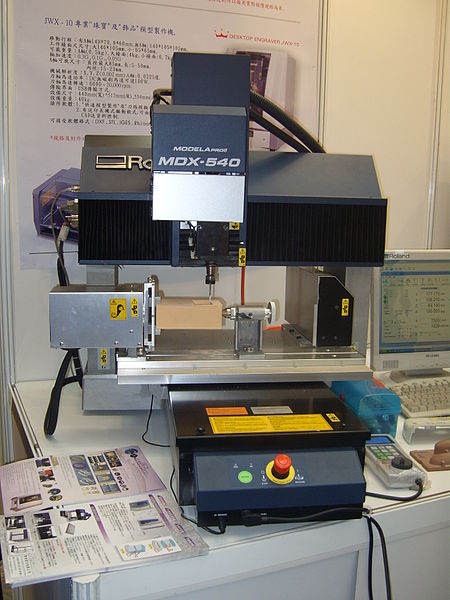
Roland DGA recently showcased its most advanced SRP systems at SIGGRAPH 2013. SIGGRAPH brought together more than 17,000 attendees, including artists, filmmakers, students and academics from 77 countries to the Anaheim Convention Center. On display from Roland was its MDX line of benchtop milling machines.

“At SIGGRAPH, we had an opportunity to introduce SRP technology to many educators, engineers and computer graphics professionals already familiar with 3D printing,” said Rachel Hammer, Roland product manager. “With a price tag that’s less than half the cost of most additive systems, the MDX is both a great investment for these end users and a powerful upgrade to their design and production environments.”
The MDX line features a 400W DC brushless motor, optional fourth rotary axis and automatic tool changer, and a maximum 19.68 x 15.74 x 6.10 inch XYZ-axis travel. Roland’s SRP Player, a CAM software tool, comes included with the SRP systems. In addition to building toolpaths, the SRP player can assist users in deciding which tool to use for their part, thanks to a dropdown menu based on material used and dimensions of part.
One area in which SRP still holds the advantage is material type used. While AM is better at conserving materials, SRP allows the user to build a part with the exact same material used in an end-use part. Instead of a titanium alloy powder that’s potentially proprietary to a single AM system, SRP can use whatever material the milling machine is capable of working.
Another advantage to SRP is price of system. You can purchase an AM system for around the same price as a benchtop milling machine, but the SRP system will be more flexible with the number of materials used.
Below you’ll find a video from Roland about their SRP systems.
Source: Roland


John Newman is a Digital Engineering contributor who focuses on 3D printing. Contact him via [email protected] and read his posts on Rapid Ready Technology.
Follow DE






About Us · Contact Us · Editorial Team · Advertising · Privacy Policy · Subscriber Services · © 2026 Digital Engineering 24/7 · Peerless Media