Helping design and engineering professionals discover, evaluate and specify technologies and processes that shorten the design cycle and enable success.


Alert!
Digital Engineering ceased publication on July 1, 2026. This website remains available as an archive of engineering content.
For inquiries or information, please email [email protected].

Digital Engineering April 2026
In the latest issue of Digital Engineering, we take a look at the latest innovations in design for additive manufacturing, including the use of natural language inputs, social media cosplayers, and AI integration. The issue also includes a feature…

January Special Focus Issue: Design for Additive
In this Special Focus Issue of Digital Engineering, learn about the latest advancements in design for additive manufacturing, including new software tools, additive in automotive, custom medical devices, and more.
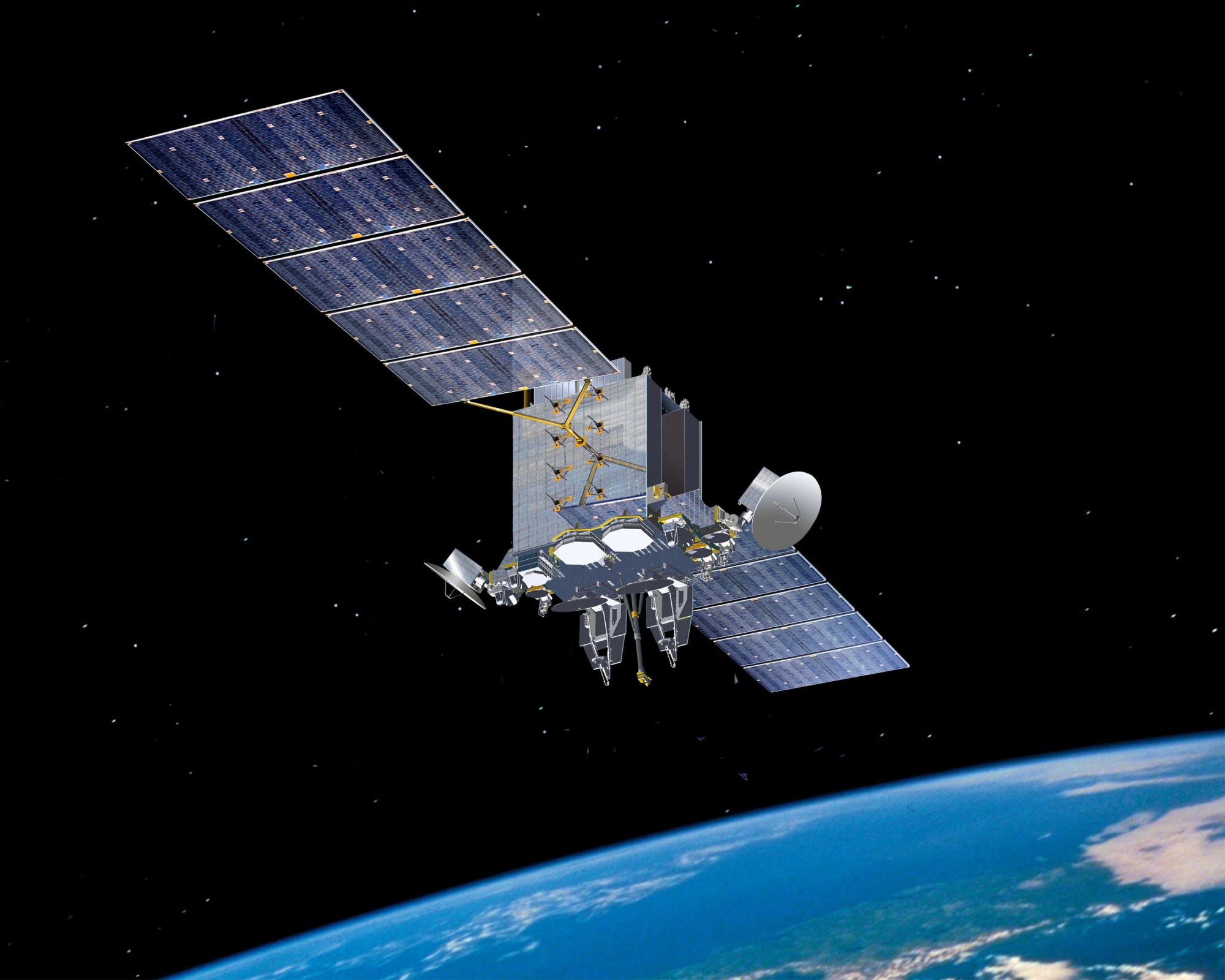
The remote interface unit will be part of the U.S. Air Force’s Advanced Extremely High Frequency (AEHF-6) satellite.
Previously, the part was created from using multiple machined parts. By switching to a single printed assembly, the company saved time during the design and production process and increased the quality of the part. According to the company, lead time for manufacturing the part went from six months to 1.5 months, and assembly time was cut from 12 to three hours.
Lockheed used a laser powder bed fusion process to manufacture the part out of aluminum. According to a press release, the enclosure will serve “as a model for use on other programs that are designed using the A2100 satellite bus.”
"3D printing provides the ability to rapidly implement innovation by controlling production from design through implementation with one digital model," said Iris Bombelyn, vice president of Protected Communications at Lockheed Martin Space Systems. "By providing affordable, innovative solutions for our customers with a reduced timeline, we are able to adjust to the rapidly changing environment of military space."
Lockheed is scheduled to deliver the forth AEHF satellite in 2017. The AEHF-5 and AEHF-6 are in production and will launch in 2018 and 2019. The satellites are part of a system that provides secure communication for strategic commanders and war fighters.
Lockheed also provided the first 3D-printed parts — a set of waveguide brackets — to fly on an interplanetary spacecraft (the Juno), and a part for the Orion multi-purpose crew vehicle for NASA.
Source: Lockheed Martin


Brian Albright is the editorial director of Digital Engineering.
Contact him at [email protected].






About Us · Contact Us · Editorial Team · Advertising · Privacy Policy · Subscriber Services · © 2026 Digital Engineering 24/7 · Peerless Media