Helping design and engineering professionals discover, evaluate and specify technologies and processes that shorten the design cycle and enable success.


Alert!
Digital Engineering ceased publication on July 1, 2026. This website remains available as an archive of engineering content.
For inquiries or information, please email [email protected].

Digital Engineering April 2026
In the latest issue of Digital Engineering, we take a look at the latest innovations in design for additive manufacturing, including the use of natural language inputs, social media cosplayers, and AI integration. The issue also includes a feature…

January Special Focus Issue: Design for Additive
In this Special Focus Issue of Digital Engineering, learn about the latest advancements in design for additive manufacturing, including new software tools, additive in automotive, custom medical devices, and more.
Build times can be sped up by reducing the resolution of a print. Choosing speed over resolution generally results in obvious strata lines and a prototype that looks somewhat rough around the edges, particularly in the case of material extrusion printers. The 3D Refiner by 3D Prints Express offers a potential solution to the quandary by smoothing the strata in low res prints.
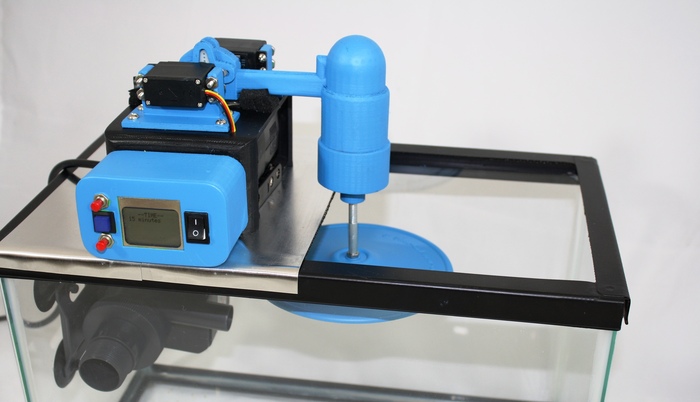
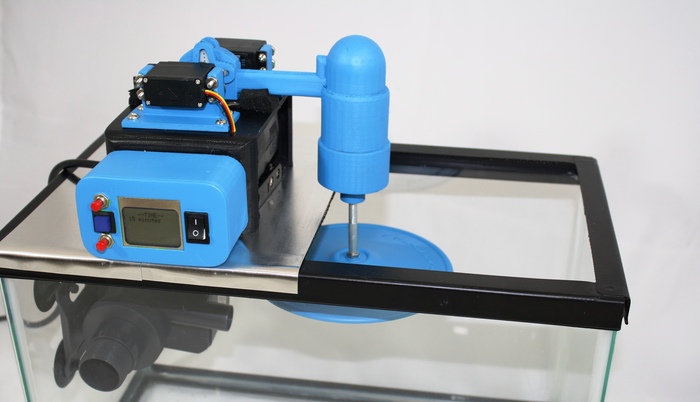
3D Prints Express was started by two engineering students at UC Berkley who love 3D printing, but aren’t so keen on waiting for high resolution prints. Rather than resigning themselves to longer waits, the students began experimenting with ways to refine low resolution prints. The end result of their work was the 3D Refiner.
The 3D Refiner operates by strapping a finished part to a plate that is then lowered into a solvent tank. The plate spins the part in the solvent and, after a few minutes, the newly smoothed part is retracted and left to dry. The end result is an object without the obvious, chunky strata that is the usual result of low resolution material extrusion.
The system does have a few flaws. Currently the 3D Refiner can only handle parts up to 6.5 x 6.5 x 8 in. (16.51 x 16.51 x 20.32 cm), but the design seems simple enough that it could be upgraded to handle larger parts. Having an open tank of solvent is its own issue, but the 3D Design Express team is working on a way to make the system airtight, so this may or may not end up being a problem.
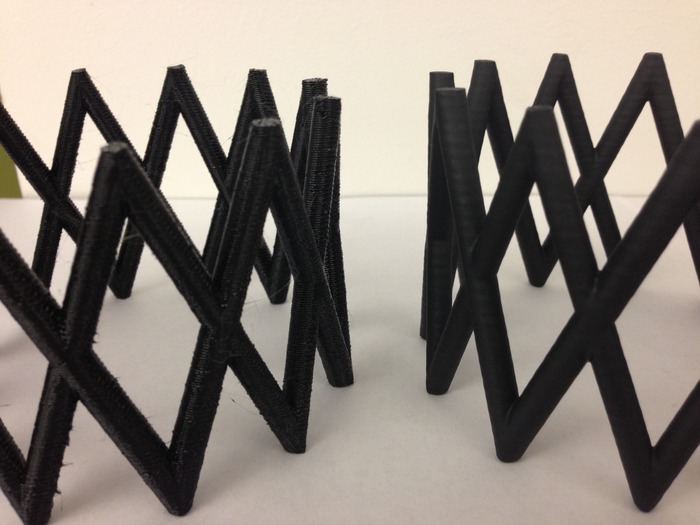
Begun on Kickstarter, the project has already surpassed its initial funding goal with almost a month left on the clock. Below you’ll find the Kickstarter video introduction, which includes an example of how much time can be saved using the 3D Refiner system over waiting for a high res part to finish printing.
Source: Kickstarter


John Newman is a Digital Engineering contributor who focuses on 3D printing. Contact him via [email protected] and read his posts on Rapid Ready Technology.
Follow DE






About Us · Contact Us · Editorial Team · Advertising · Privacy Policy · Subscriber Services · © 2026 Digital Engineering 24/7 · Peerless Media