Helping design and engineering professionals discover, evaluate and specify technologies and processes that shorten the design cycle and enable success.



May 2026 Special Focus: Artificial Intelligence in Design and Simulation
In this Special Focus Issue, learn about the latest developments in the integration of artificial intelligence into engineering workflows.

Design & Simulation Software Guide 2025
In this Special Issue, Digital Engineering presents its second annual guide to design and simulation software vendors.
Since connectivity is becoming a regular feature of modern products, from self-driving cars to home thermostats, the upcoming 5G network is also expected to have an impact on the way products are designed and used.
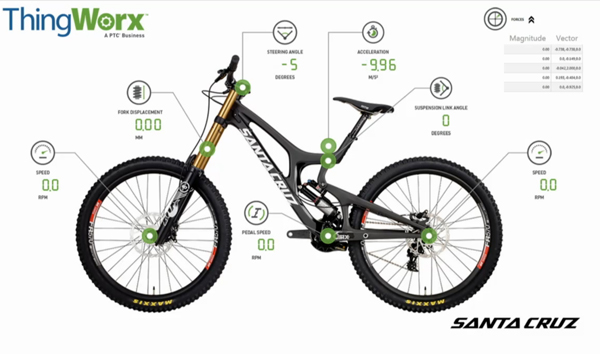
One company closely watching the anticipated the arrival of 5G is PTC, a company that caters specifically to connected device developers. It offers, among other things, ThingWorx platform, an industrial IoT application development platform.
In his CES 2018 blog post, Jonathan Lang, PTC's principal analyst, Thought Leadership Group, notes, "In 2018 and beyond, look for everything to continue to be smart and connected, running at remarkably low latency on 5G and in the cloud, delivering dazzling natural user experiences through AR/VR and voice-controlled, AI-driven interfaces."
A frequent question on 5G is "When" -- When will its capacity be delivered to the general public?
Telecom service provider Verizon says, "We are taking a progressive approach to rolling out 5G, beginning with super-fast broadband service in four markets in 2018, and will follow that with mobile 5G service, with plans to expand deployments in 2019 and beyond."
For general consumers, 5G promises faster downloads, better streaming videos, smoother online game play. For design and simulation software users, 5G means better user experience with cloud-hosted CAD and simulation software, among others.
"For companies in the industrial IoT space, 5G means being able to deliver more data and faster speed, and being able to do more things on the edge," says Rob Patterson, PTC's VP of strategic marketing.
The edge device (the WiFi-enabled sensor-equipped device in the field) is usually designed with limited computing power and storage capacity; therefore, in the era of limited bandwidth, it's often a challenge to transfer the accumulated data back to the cloud or a network for centralized processing. The arrival of 5G promises to improve this edge-to-network data flow.
"Applications build on our core IoT platforms like ThingWorks will be the first to benefit from 5G, because of the connectivity that lets the applications communicate with devices out in the field," says Patterson.
ThingWorks is a critical component of PTC's digital twin proposition -- that manufacturers may maintain digital counterparts of real-world machines, equipment, and products for diagnostics, analytics, and predictive maintanance. Digital twins are usually powered by conditioning monitoring sensors on the physical products. Therefore, 5G's high bandwidth promises better linkage between physical products and digital twins.
"Our augmented reality (AR) products with Vuforia will benefit significantly from 5G," Patterson also predicts. "Apps on tablets and mobile devices that people use to consume AR content for workforce training or manufacturing, for example, will be able to deliver more compelling AR experiences," he adds.
PTC owns Vuforia, which it acquired in 2015. The Vuforia division offers Vuforia Studio, Vuforia Engine, and Vuforia Chalk solutions for developing AR apps to use in manufacturing, sales and marketing, and service and maintanance.
In July, ABI Research, an industry analyst, published a report titled Smart Manufacturing Platforms. The firm gave PTC's ThingWorks top score in the report, citing "innovative initiatives across transformative technologies."
In another report titled 5G Network Slicing and Industry Verticles, ABI Research predicts, "network slicing stands to create approximately U.S. $66 billion in value for enterprise verticals including manufacturing, logistics, and transportation by 2026 ... The adoption of 5G network slicing for manufacturing alone is expected to create a U.S. $32 billion of value, at a CAGR of 96% through 2026."
Network slicing, according to the 5G resource site 5G.co.uk, is an architecture that "allows multiple virtual networks to be created on top of a common shared physical infrastructure.
"Manufacturing is predicated on inflexible proprietary and wired technologies where security of data and assets are of paramount importance," explains Don Alusha, Senior Analyst at ABI Research and the author of the 5G Network Slicing report. "Network slicing marks a departure from this rather rigid arrangement by affording flexibility and dedicated capabilities tailored to distinct manufacturing and IoT use cases, all of which can be coupled by bundled security provisions centered on mobility."


PTC is a computer software and services company founded in 1985 and headquartered outside of Boston, Massachusetts.

Kenneth Wong is Digital Engineering's resident blogger and senior editor. Email him at [email protected] or share your thoughts or suggestions at digitaleng.news/facebook.
Follow DE
Join over 90,000 engineering professionals who get fresh engineering news as soon as it is published.






About Us · Contact Us · Editorial Team · Advertising · Privacy Policy · Subscriber Services · © 2026 Digital Engineering 24/7 · Peerless Media