Helping design and engineering professionals discover, evaluate and specify technologies and processes that shorten the design cycle and enable success.


Alert!
Digital Engineering ceased publication on July 1, 2026. This website remains available as an archive of engineering content.
For inquiries or information, please email [email protected].

Digital Engineering April 2026
In the latest issue of Digital Engineering, we take a look at the latest innovations in design for additive manufacturing, including the use of natural language inputs, social media cosplayers, and AI integration. The issue also includes a feature…

January Special Focus Issue: Design for Additive
In this Special Focus Issue of Digital Engineering, learn about the latest advancements in design for additive manufacturing, including new software tools, additive in automotive, custom medical devices, and more.
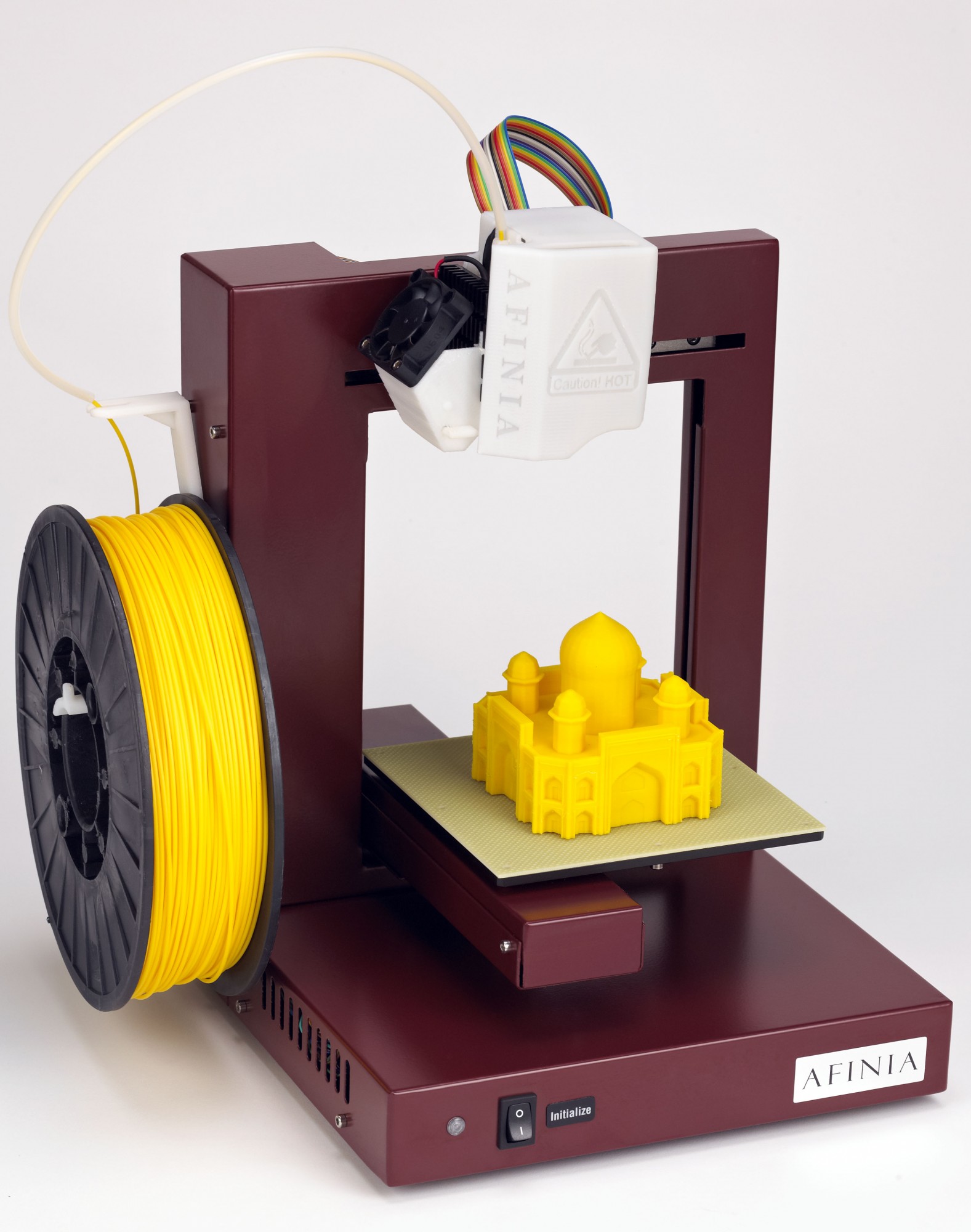
With, perhaps, a bit less fanfare than that surrounding the newest offerings from 3D Systems and MakerBot, Afinia gained some attention for its home 3D printer, the H-Series. While not a new release, the H-Series is a good example of the variety of AM systems available.
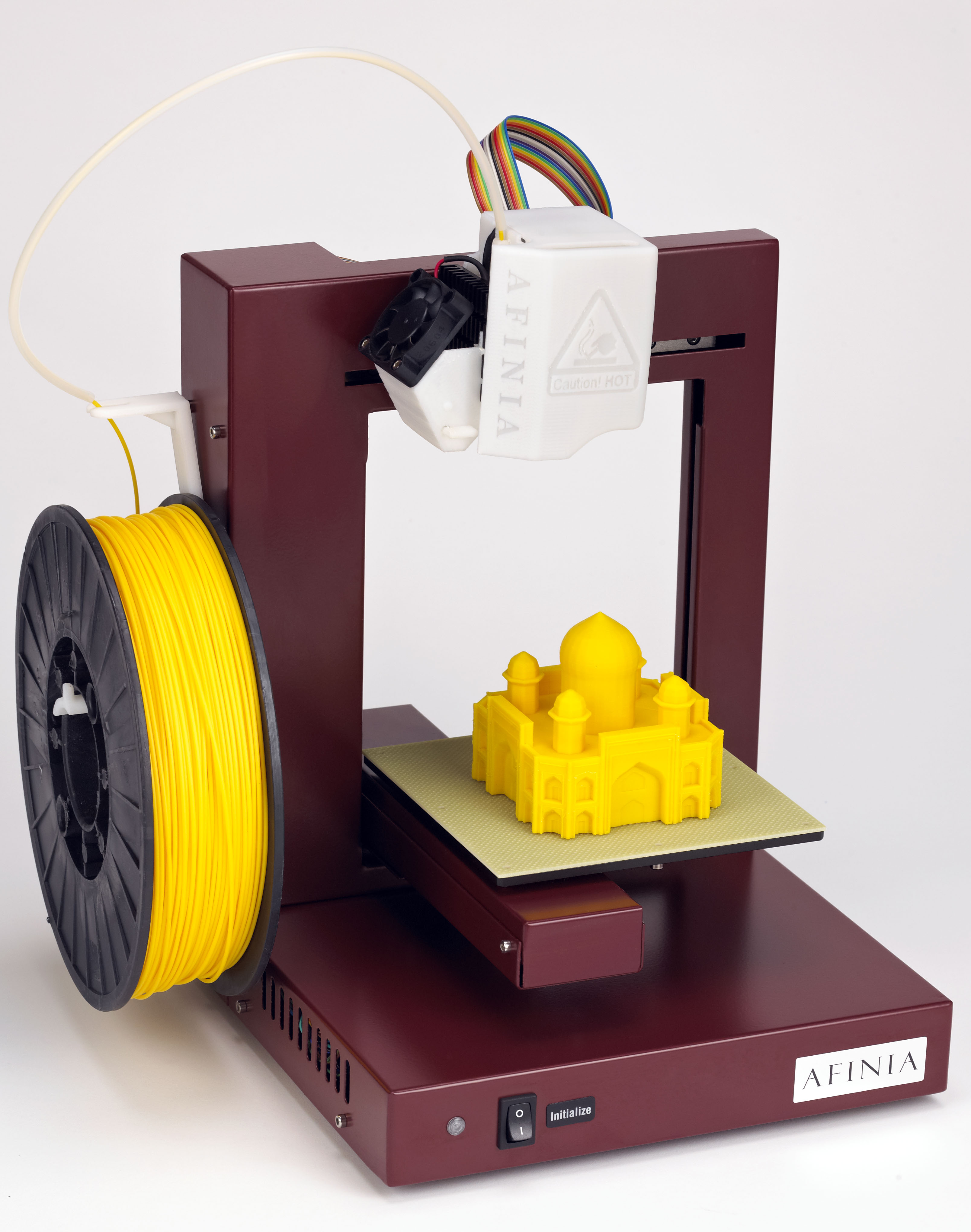
The specs for the system are pretty standard. It uses ABS or PLA plastic filament, and has a build envelope of 5.5 x 5.5 x 5.3 in. (140 × 140 × 135 mm), which is nearly identical to the Cube. The H-Series has a layer thickness of between 0.20 – 0.40 mm, and prints at 10 – 100 cm3/h.
The angle Afinia is selling is ease of use. The H-Series comes in one piece out of the box, ready for calibration and use. The on-board software directly accepts .stl files and will notify the user if there isn’t enough material to finish a print. At $1,499, I think the price is a bit high for a home system, but perhaps the company is looking to attract some small business attention as well.
Moving toward the application end of AM, Panasonic demonstrated a 56-in. organic light-emitting diode (OLED) television with 4k resolution (3,840 x 2,160 resolution, 8.29 million pixels). The TV is only a half-inch thick and weighs 27 lbs. The estimated price tag is $25,000. While a super huge television is cool and all, it isn’t the size that makes this distraction device interesting from a Rapid Ready point of view.
The monster prototype was constructed using AM to lay down organic layers of red, green and blue, the old RBG printing method of creating colors. Using AM for the manufacturing process in the future would create less waste and also mean the technology could be fairly easily scaled down to smaller, more market friendly sized display screens.
Below you’ll find a video about the Afinia H-Series.


John Newman is a Digital Engineering contributor who focuses on 3D printing. Contact him via [email protected] and read his posts on Rapid Ready Technology.
Follow DE






About Us · Contact Us · Editorial Team · Advertising · Privacy Policy · Subscriber Services · © 2026 Digital Engineering 24/7 · Peerless Media