Helping design and engineering professionals discover, evaluate and specify technologies and processes that shorten the design cycle and enable success.




Cut Retrieval-Augmented Generation (RAG) Hallucinations by 50%
Most teams hit the same wall with enterprise AI: LLMs that hallucinate, pipelines that don’t scale, and infrastructure that’s harder to design than the models themselves.

What Is Intelligent BOM Management? A Guide to Smarter Product Development
Learn how intelligent Bill of Materials (BOM) management helps teams collaborate, reduce errors, and bring innovative products to market faster with cloud-based PLM tools.
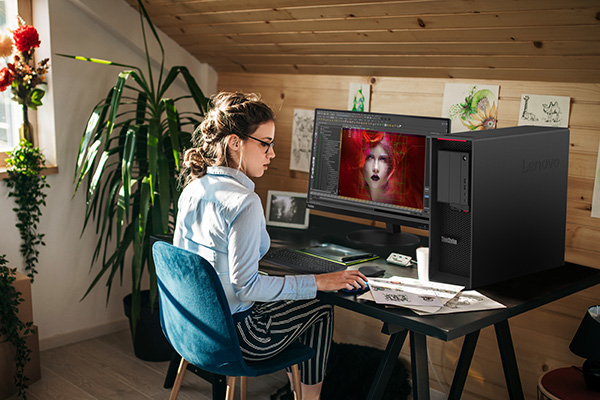
This morning, Lenovo and AMD announced the Lenovo P620, powered by AMD Ryzen Threadripper Pro 3995WX processors.
Threadripper Pro processors are meant for "artists, architects, engineers and data scientists," AMD said. The new workstation is set to be available in the fall. It's described as "the world's first 64-core Pro workstation system" by AMD.
“AMD Ryzen Threadripper Pro Processors are purpose-built to set the new industry standard for professional workstation compute performance,” said Saeid Moshkelani, senior vice president and general manager, AMD Client business unit.
AMD launched the Threadripper processor line at SIGGRAPH 2017, pitching it as a competitor to Intel's Core i CPUs for general computing. (For more, read the report from SIGGRAPH 2017 here.) AMD Ryzen Threadripper Pro CPUs are for professional desktop workstations, a rival to the Intel Xeon CPUs.
The AMD Threadripper Pro CPUs come in 12, 16, 32, or 64 cores.
Lenovo's ThinkStation workstation line ranges in size and scope from the P340 Tiny to the P920 tower with room for expansion. They are certified to run Autodesk, Dassault Systemes, and Ansys products.
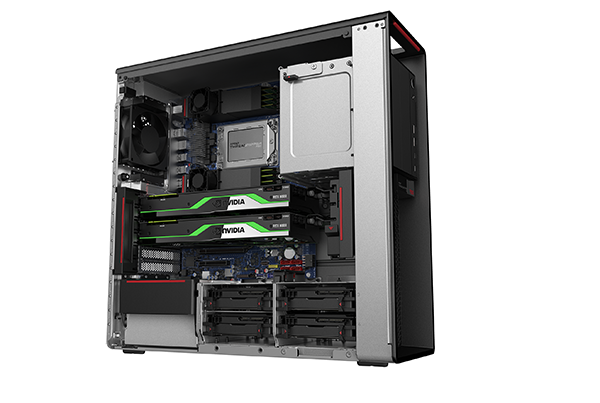
The P620 comes with PCIe Gen 4, with up to 1TB memory. For GPUs, it can be outfitted with two NVIDIA Quadro RTX 8000 or four NVIDIA Quadro RTX 4000.
The workstation market is dominated by HP, Lenovo, and Dell, augmented by additional players such as BOXX, MSI, MicroWay, and a few others. The partnership with AMD to produce "the word's first and only" Threadripper Pro-powered workstation signals another move in AMD's strategy to grab market share from the Intel Xeon-powered workstation segment.


We are proud to be the world's largest PC vendor. Our portfolio also includes workstations, servers, storage solutions, IT management software, smart TVs, tablets, smartphones, and even apps.As the world becomes faster, more demanding, and…

Making the Case for Engineering Workstation Upgrades
In this Making the Case whitepaper, Lenovo outlines how upgrading to the latest generation of professional workstations can provide a return on investment through increased engineering efficiency and greater flexibility.

Kenneth Wong is Digital Engineering's resident blogger and senior editor. Email him at [email protected] or share your thoughts or suggestions at digitaleng.news/facebook.
Follow DE
Join over 90,000 engineering professionals who get fresh engineering news as soon as it is published.






About Us · Contact Us · Editorial Team · Advertising · Privacy Policy · Subscriber Services · © 2026 Digital Engineering 24/7 · Peerless Media