Helping design and engineering professionals discover, evaluate and specify technologies and processes that shorten the design cycle and enable success.


Alert!
Digital Engineering ceased publication on July 1, 2026. This website remains available as an archive of engineering content.
For inquiries or information, please email [email protected].

Cut Retrieval-Augmented Generation (RAG) Hallucinations by 50%
Most teams hit the same wall with enterprise AI: LLMs that hallucinate, pipelines that don’t scale, and infrastructure that’s harder to design than the models themselves.

What Is Intelligent BOM Management? A Guide to Smarter Product Development
Learn how intelligent Bill of Materials (BOM) management helps teams collaborate, reduce errors, and bring innovative products to market faster with cloud-based PLM tools.
Ansys has a collaboration with NVIDIA to develop next-generation simulation solutions powered by accelerated computing and generative AI. The expanded collaboration will fuse technologies to advance 6G technologies, supercharge Ansys solvers via NVIDIA GPUs, integrate NVIDIA AI into Ansys software offerings, develop physics-based digital twins and customize large language models (LLMs) developed with NVIDIA AI foundry services.
Ansys recently joined the AOUSD to strengthen data interoperability and deliver enhanced graphics and visual rendering to its portfolio. Ansys has already connected Ansys AVxcelerate Autonomy to NVIDIA DRIVE Sim powered by the NVIDIA Omniverse platform, and plans to investigate additional integrations across the portfolio, including Ansys STK, Ansys LS-DYNA, Ansys Fluent and Ansys Perceive EM.
In addition to Omniverse integrations, the collaboration will prioritize advancements in four areas:
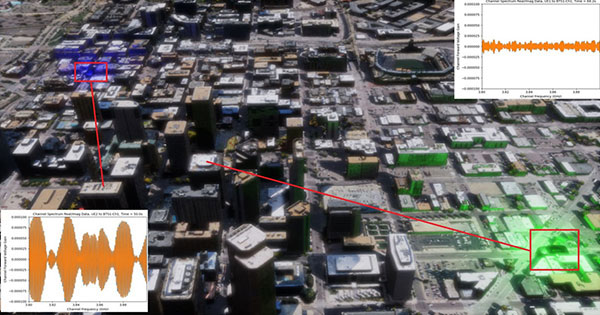
6G Telecommunications: Ansys is among the first adopters of the NVIDIA 6G Research Cloud platform, allowing researchers a suite to advance AI for radio access network technology. Ansys Perceive EM, a solver powered by Ansys HFSS, builds on NVIDIA 6G Research Cloud, which is designed to speed development of 6G technologies. Perceive EM’s synthetic data-on-demand enhances 6G system digital twins with elevated predictive accuracy, capable of assessing how real-world conditions impact wireless network performance. Perceive EM will also be available within the Ansys Academic and Ansys Startup Programs.
AI-Enhanced Simulation: Ansys is exploring the NVIDIA Modulus framework for physics-based machine learning to boost its software with AI techniques. The work aims to deliver enhanced functionality within the Ansys AI+ product family.
AI Foundry: Ansys is examining adoption of NVIDIA AI foundry to advance LLM development, furthering the democratization of simulation by simplifying setup and use Ansys intends to leverage the NVIDIA NeMo platform, which offers a set of tools that make it easier to develop generative AI capabilities, the company says.
“We are excited to extend our collaboration with NVIDIA to enable a new frontier of generative AI and accelerated computing,” says Ajei Gopal, president and CEO at Ansys. “Within the dynamic realm of NVIDIA Omniverse, our visionary customers can propel innovation, bridging virtual and physical realities to shape tomorrow’s technologies and help solve the most pressing engineering challenges of our time.”
“Everything manufactured will have digital twins—and the world’s designers and engineers in heavy industry markets rely on Ansys as their simulation engine,” says Jensen Huang, founder and CEO of NVIDIA. “We’re collaborating with Ansys to bring accelerated computing and generative AI to these massive workloads, and to extend Ansys’ leading physics simulation tools with NVIDIA Omniverse digitalization technologies.”
Sources: Press materials received from the company and additional information gleaned from the company’s website.


Since its founding in 1993, NVIDIA (NASDAQ: NVDA) has been a pioneer in accelerated computing. The company’s invention of the GPU in 1999 sparked the growth of the PC gaming market, redefined computer graphics, ignited the era of modern AI and…
Cut Retrieval-Augmented Generation (RAG) Hallucinations by 50%
Most teams hit the same wall with enterprise AI: LLMs that hallucinate, pipelines that don’t scale, and infrastructure that’s harder to design than the models themselves.

DE's editors contribute news and new product announcements to Digital Engineering. Press releases may be sent to them via [email protected].
Follow DE
Join over 90,000 engineering professionals who get fresh engineering news as soon as it is published.






About Us · Contact Us · Editorial Team · Advertising · Privacy Policy · Subscriber Services · © 2026 Digital Engineering 24/7 · Peerless Media