Helping design and engineering professionals discover, evaluate and specify technologies and processes that shorten the design cycle and enable success.


Alert!
Digital Engineering ceased publication on July 1, 2026. This website remains available as an archive of engineering content.
For inquiries or information, please email [email protected].

Digital Engineering April 2026
In the latest issue of Digital Engineering, we take a look at the latest innovations in design for additive manufacturing, including the use of natural language inputs, social media cosplayers, and AI integration. The issue also includes a feature…

January Special Focus Issue: Design for Additive
In this Special Focus Issue of Digital Engineering, learn about the latest advancements in design for additive manufacturing, including new software tools, additive in automotive, custom medical devices, and more.
Spark, announced last month, is an open source 3D printing platform designed to make it easier to print and control how 3D models are output, minimizing the amount of trial and error that is required today and introducing a wider number of material options. In addition to the Spark open source platform, Autodesk unveiled an actual 3D printer built on its reference architecture to showcase what is possible with the technology.
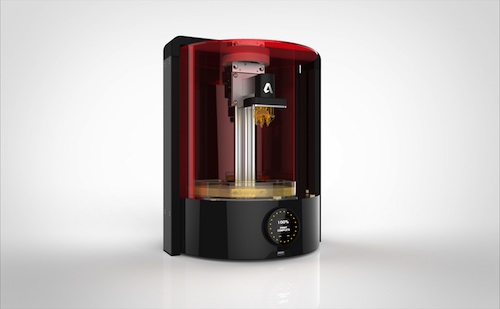 Autodesk is showing off a 3D printer it calls a reference architecture built on its open source Spark platform. Image Courtesy of Autodesk
Autodesk, which is providing its Spark APIs and an SDK to the public, opted for the open source route because it says that is the best way to spark innovation in a market that has huge potential, but is still evolving. While 3D printing, particularly as a consumer application, has been widely touted over the last couple of years, Autodesk believes the greater potential lies in applications for the manufacturing and industrial space.
Speaking at a recent O'Reilly Solid conference, Autodesk CEO Carl Bass was quoted as saying that "3D printing has been way overhyped," and that he while he was skeptical that the technology would create a revolution in the home, he believes there is huge opportunity for 3D printing to transform manufacturing.
Bass likened Autodesk's open source strategy to what Google has accomplished with Android. By providing an open and free license for 3D printing technology, Autodesk hopes to spawn an ecosystem of providers that will build on Spark to meet the requirements of their individual customer bases. "We think that is what will drive innovation," said MH McQuiston, Autodesk's director of product marketing and partnerships for the consumer division. "By making our designs open, people can take them and do what they want. In that way, whoever is interested can access and extend and take the platform in whatever direction they want."
While there has been intense interest in 3D printing across the board, from the largest enterprises to the home market, McQuiston said there are still obstacles to mainstream acceptance, including high costs and a relatively high failure rate. Too often, a 3D model that appears to be high quality on screen doesn't translate to a well-printed component, she explained. "Sometimes the problem is that the design isn't water tight, the support material isn't laid out correctly, or the slicing didn't occur properly," she explained. The Spark platform addresses those types of issues through algorithms and other capabilities, ensuring greater success with a 3D print job, according to the company.
Autodesk will also be spending time and energy on expanding and improving the materials that can be used with 3D printers based on Spark. "While we will have formulations and our own materials, we will provide that information so third parties can create materials that will work on our printers," she explained. "That will drive innovation as well."
The Spark 3D printer will be available in the second half of the year. While Autodesk declined to provide pricing, published reports say it will be available for around $5,000. This price point takes the printer out of the consumer/home market and positions it squarely for enterprise engineering departments or for smaller manufacturing companies.
Listen to this video to hear Autodesk CEO Carl Bass's keynote at MakerCon 2014, where he details the company's vision for 3D printing as well as its plans for the Spark platform.


Beth Stackpole is a contributing editor to Digital Engineering. Send e-mail about this article to [email protected].
Follow DE






About Us · Contact Us · Editorial Team · Advertising · Privacy Policy · Subscriber Services · © 2026 Digital Engineering 24/7 · Peerless Media