Helping design and engineering professionals discover, evaluate and specify technologies and processes that shorten the design cycle and enable success.



Cut Retrieval-Augmented Generation (RAG) Hallucinations by 50%
Most teams hit the same wall with enterprise AI: LLMs that hallucinate, pipelines that don’t scale, and infrastructure that’s harder to design than the models themselves.

What Is Intelligent BOM Management? A Guide to Smarter Product Development
Learn how intelligent Bill of Materials (BOM) management helps teams collaborate, reduce errors, and bring innovative products to market faster with cloud-based PLM tools.
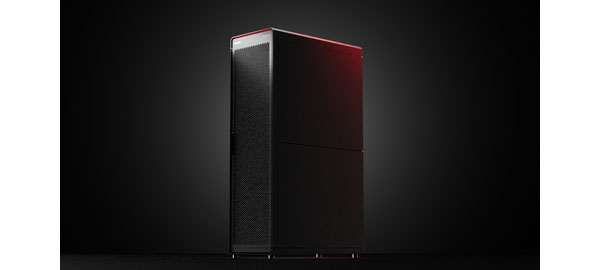
At its annual flagship user event, CadenceLIVE Silicon Valley 2025, Cadence announced a major expansion of its Cadence Millennium Enterprise Platform with the introduction of the new Millennium M2000 Supercomputer featuring NVIDIA Blackwell systems, which delivers AI-accelerated simulation at speed and scale across engineering and drug design workloads, Cadence reports.
The new supercomputer integrates Cadence’s solvers with NVIDIA HGX B200 systems, NVIDIA RTX PRO 6000 Blackwell Server Edition GPUs and NVIDIA CUDA-Xlibraries and solver software. This combination delivers reductions in simulation run times and higher performance versus CPU-based systems for electronic design automation (EDA), system design and analysis (SDA), and drug discovery applications.
The supercomputer provides a co-optimized hardware-software stack that enables performance with lower power across multiple disciplines, accelerating the build-out of AI infrastructure, advancing physical AI machine design and drug design.
“The Millennium M2000 Supercomputer will drive the next leap in AI-accelerated engineering by leveraging our massively scalable solvers, dedicated NVIDIA Blackwell-accelerated computing and AI to help designers continue to push the limits of what is possible,” says Anirudh Devgan, president and CEO of Cadence. “Purpose-built for the most advanced AI models of today and tomorrow, the Millennium M2000 Supercomputer delivers unprecedented designer productivity to propel the next generation of AI infrastructure, physical AI systems and drug discovery.”
“From biology to chip design, the world’s most complex engineering challenges require simulation at scales and speeds only possible with accelerated computing,” says Jensen Huang, founder and CEO of NVIDIA. “Built with NVIDIA Blackwell, CUDA-X and Cadence’s computational software, the Millennium M2000 Supercomputer is a new class of infrastructure: an AI factory for science to drive breakthroughs that will transform discovery across disciplines.”
An emulator for AI design, the Millennium M2000 Supercomputer combines all the multiphysics capabilities needed to analyze and optimize 3D-IC and advanced packaging designs, including power, thermal, stress/warpage and electromagnetics. Customers can now deliver simulations in less than a day with one Millennium M2000 Supercomputer that previously would have taken hundreds of CPUs almost 2 weeks, Cadence says.
The Millennium M2000 Supercomputer accelerates the design and operation of tdata center digital twins and the modeling process required for the racks, boards and equipment that power them. The Millennium M2000 Supercomputer also enables virtual simulations of machines that will embody AI outside of data centers, such as autonomous transportation, drones and robotics. Designers of electronic and mechatronic systems can now make crucial decisions in less than a day.
Cadence Molecular Sciences accelerates drug discovery by enabling pharmaceutical customers to perform more simulations in less time with the Millennium M2000 Supercomputer. Cadence’s Orion Molecular Design Platform on Cadence OnCloud, available on the Millennium M2000 Supercomputer, equips researchers with computational power to speed up the discovery of potential drug candidates and enhance process scalability.
The Millennium M2000 Supercomputer is available in the cloud and as an on-premises appliance. Multiple customers have provided endorsements, including Ascendance, Boom Supersonic, MediaTek, Supermicro and Treeline Biosciences, which can be viewed in the quote sheet.
Sources: Press materials received from the company and additional information gleaned from the company’s website.


Since its founding in 1993, NVIDIA (NASDAQ: NVDA) has been a pioneer in accelerated computing. The company’s invention of the GPU in 1999 sparked the growth of the PC gaming market, redefined computer graphics, ignited the era of modern AI and…
Cut Retrieval-Augmented Generation (RAG) Hallucinations by 50%
Most teams hit the same wall with enterprise AI: LLMs that hallucinate, pipelines that don’t scale, and infrastructure that’s harder to design than the models themselves.

DE's editors contribute news and new product announcements to Digital Engineering. Press releases may be sent to them via [email protected].
Follow DE
Join over 90,000 engineering professionals who get fresh engineering news as soon as it is published.






About Us · Contact Us · Editorial Team · Advertising · Privacy Policy · Subscriber Services · © 2026 Digital Engineering 24/7 · Peerless Media