Helping design and engineering professionals discover, evaluate and specify technologies and processes that shorten the design cycle and enable success.



Digital Engineering April 2026
In the latest issue of Digital Engineering, we take a look at the latest innovations in design for additive manufacturing, including the use of natural language inputs, social media cosplayers, and AI integration. The issue also includes a feature…

January Special Focus Issue: Design for Additive
In this Special Focus Issue of Digital Engineering, learn about the latest advancements in design for additive manufacturing, including new software tools, additive in automotive, custom medical devices, and more.
EOS has announced that use of its EOSINT M 270 systems for the production of parts in titanium is increasing. Since the introduction of this material for the EOSINT M 270 laser sintering system in 2006, both the machine technology and the titanium building process have advanced, leading to higher productivity and improved surface quality of the parts, according to the company. This has led to increased interest and use of the technology in a range of industrial and consumer applications.
 |
As well as in the main markets of Europe, North America and Japan, there are now EOSINT M 270 customers using titanium in India and South Africa. Customers include industrial end-users, service provider companies, and research institutes.
Laser-sintering is an attractive production method for many titanium applications. For one thing, the conventional methods of casting, forging, and machining are often difficult and expensive with titanium materials. Following the e-manufacturing concept, titanium is also often used for high-value components produced in relatively small quantities. The capability to easily build hollow and other lightweight structures by laser-sintering offers many possibilities to improve the performance and therefore the value of titanium parts in weight-critical applications such as aerospace components.
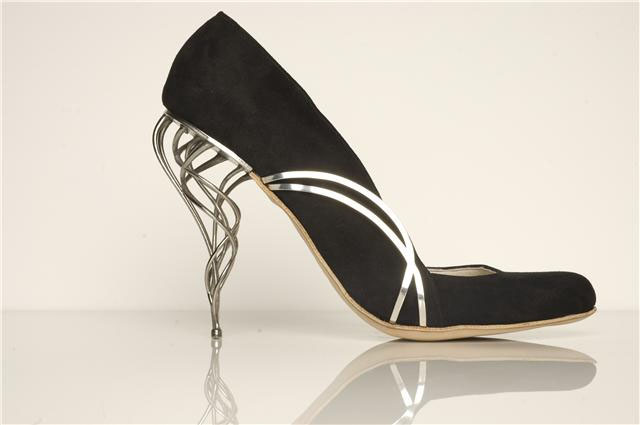
So far the main applications for laser-sintered titanium are in medical and dental devices, aerospace and motor sports, and the fashion industry. The most commonly used material is EOS Titanium Ti64, which is Ti6Al4V alloy in fine powder form. In some medical cases, an extra-low interstitial (ELI) version of this powder is used or commercially pure titanium powder.
For more information, visit EOS.
Sources: Press materials received from the company and additional information gleaned from the company's website.


DE's editors contribute news and new product announcements to Digital Engineering. Press releases may be sent to them via [email protected].
Follow DE
Join over 90,000 engineering professionals who get fresh engineering news as soon as it is published.






About Us · Contact Us · Editorial Team · Advertising · Privacy Policy · Subscriber Services · © 2026 Digital Engineering 24/7 · Peerless Media