Helping design and engineering professionals discover, evaluate and specify technologies and processes that shorten the design cycle and enable success.


Alert!
Digital Engineering ceased publication on July 1, 2026. This website remains available as an archive of engineering content.
For inquiries or information, please email [email protected].

Digital Engineering April 2026
In the latest issue of Digital Engineering, we take a look at the latest innovations in design for additive manufacturing, including the use of natural language inputs, social media cosplayers, and AI integration. The issue also includes a feature…

January Special Focus Issue: Design for Additive
In this Special Focus Issue of Digital Engineering, learn about the latest advancements in design for additive manufacturing, including new software tools, additive in automotive, custom medical devices, and more.
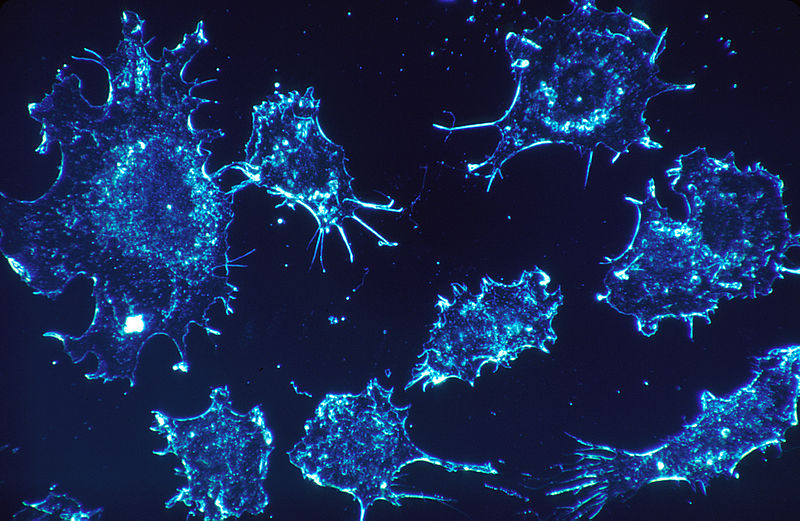
Researchers at Drexel University have begun to use 3D printers to artificially manufacture cancerous tumors. Doctors intend to use the tumors for medical testing and drug trials, and are hopeful the 3D printed tumors will behave and respond more like actual tumors than current 2D cancer cell cultures. The findings were published in a paper named “Three-dimensional printing of Hela cells for cervical tumor model in vitro” which can be found in the April edition of Biofabrication.
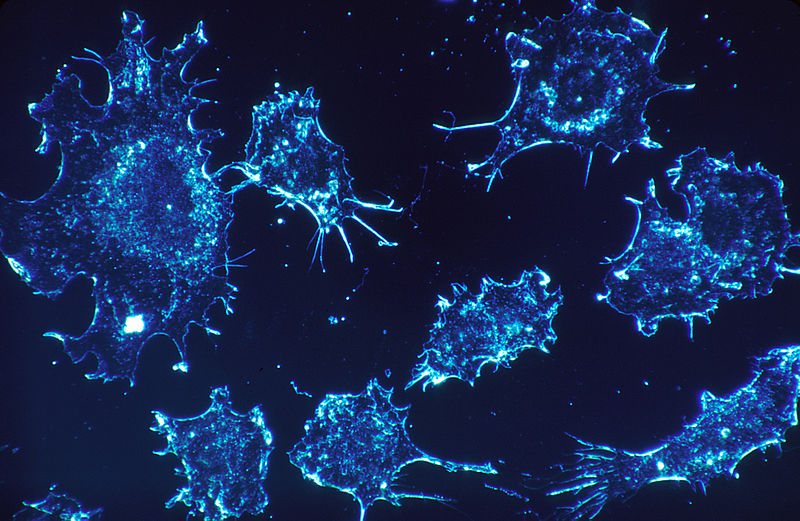 3D printed tumors may soon replace 2D cancer cells for research. Courtesy of the National Cancer Institute.
From the paper:
“Advances in three-dimensional (3D) printing have enabled the direct assembly of cells and extracellular matrix materials to form in vitro cellular models for 3D biology, the study of disease pathogenesis and new drug discovery. Cell proliferation, matrix metalloproteinase (MMP) protein expression and chemoresistance were measured in the printed 3D cervical tumor models and compared with conventional 2D planar culture models. Over 90% cell viability was observed using the defined printing process. Hela cells in 3D printed models also showed higher MMP protein expression and higher chemoresistance than those in 2D culture.”
In essence, the 3D printed tumors behave more like actual tumors found in patients. Currently, studies on tumors found in patients can only be conducted as part of clinical trials, and pushing the boundaries too far with human subjects raises ethical and moral quandaries. The ability to 3D print tumors may well act as a catalyst for future studies into the disease.
This isn’t the only case of doctors using AM as a form of rapid prototyping to assist with medical studies or procedures. Doctors have also used 3D printed models to prepare for pediatric heart surgery, and part of Organovo’s drive toward 3D printed organic materials is based on a desire for more accurate testing procedures that don’t require a test subject.
Below you’ll find a video that discusses another method for using AM as a cancer treatment.
Source: Biofabrication


John Newman is a Digital Engineering contributor who focuses on 3D printing. Contact him via [email protected] and read his posts on Rapid Ready Technology.
Follow DE






About Us · Contact Us · Editorial Team · Advertising · Privacy Policy · Subscriber Services · © 2026 Digital Engineering 24/7 · Peerless Media