Helping design and engineering professionals discover, evaluate and specify technologies and processes that shorten the design cycle and enable success.


Alert!
Digital Engineering ceased publication on July 1, 2026. This website remains available as an archive of engineering content.
For inquiries or information, please email [email protected].

Digital Engineering April 2026
In the latest issue of Digital Engineering, we take a look at the latest innovations in design for additive manufacturing, including the use of natural language inputs, social media cosplayers, and AI integration. The issue also includes a feature…

January Special Focus Issue: Design for Additive
In this Special Focus Issue of Digital Engineering, learn about the latest advancements in design for additive manufacturing, including new software tools, additive in automotive, custom medical devices, and more.
ESA’s Amaze Project is developing an entire research and industrial chain throughout Europe to investigate the potential and refine the usage of metal 3D printing. The project is intended to pave the way for AM-built rocket parts, satellites, and, perhaps more controversial, nuclear fusion reactors.
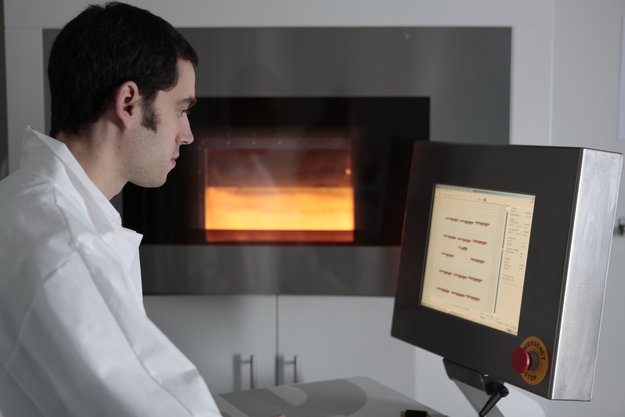
The Amaze title stands for Additive Manufacturing Aiming Towards Zero Waste & Efficient Production of High-Tech Metal Products, and was launched in January. Factory sites are already being prepared in France, Germany, Italy, Norway and the UK to develop the industrial supply chain. With an initial budget of €20 million (around $27 million), Amaze is being organized with assistance from 28 partners, including Airbus, Astrium, Norsk Titanium, Cranfield University, EADS, and the Culham Centre for Fusion Energy.
Part of the push for Amaze comes from a desire for greener ESA practices. 3D printed parts can be much lighter than those built using traditional manufacturing techniques, and for aerospace applications, weight is directly proportional to fuel usage. Not only will improved parts save money, but it will also reduce the carbon footprint of the ESA’s other programs.
ESA engineers hope to eventually use AM to build entire satellites during the course of a single print, which has the potential of saving up to 50% of the overall cost of building a satellite. Not even a single year into the program, ESA has already begun to print metal jet engine parts and 2m (6.5 ft.) wing sections for airplanes.
One of the biggest goals for the program is to develop methods of refining the metal AM process and ensuring quality products.
“One common problem is porosity; small air bubbles in the product. Rough surface finishing is an issue too," David Jarvis, ESA's head of new materials and energy research, told the BBC. "We need to understand these defects and eliminate them, if we want to achieve industrial quality. And we need to make the process repeatable – scale it up. We can't do all this unless we collaborate between industries; space, fusion, aeronautics. We need all these teams working together and sharing."
Below you’ll find a video about the ESA.


John Newman is a Digital Engineering contributor who focuses on 3D printing. Contact him via [email protected] and read his posts on Rapid Ready Technology.
Follow DE






About Us · Contact Us · Editorial Team · Advertising · Privacy Policy · Subscriber Services · © 2026 Digital Engineering 24/7 · Peerless Media