Helping design and engineering professionals discover, evaluate and specify technologies and processes that shorten the design cycle and enable success.



Digital Engineering April 2026
In the latest issue of Digital Engineering, we take a look at the latest innovations in design for additive manufacturing, including the use of natural language inputs, social media cosplayers, and AI integration. The issue also includes a feature…

January Special Focus Issue: Design for Additive
In this Special Focus Issue of Digital Engineering, learn about the latest advancements in design for additive manufacturing, including new software tools, additive in automotive, custom medical devices, and more.
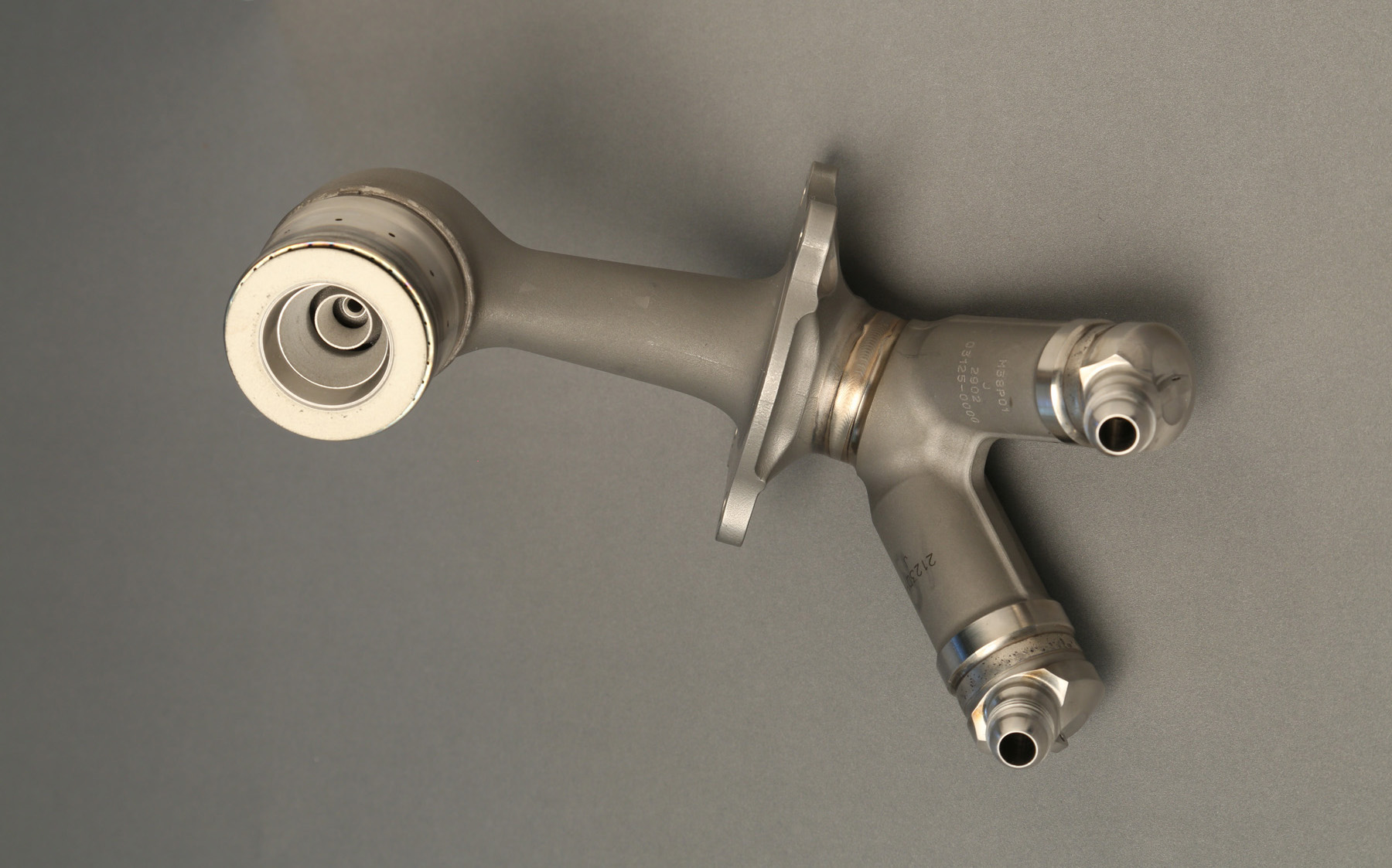
 GE's additively manufactured LEAP aircraft engine nozzle. Image courtesy of GE.
The agency submitted a draft Additive Manufacturing Strategic Roadmap to senior leadership in September that outlines a multi-year plan for certification, manufacturing and maintenance policies, as well as research and workforce education/training. The FAA also shared the draft roadmap with the U.S. Air Force and Army, NASA, and the Aerospace Industries Association’s additive manufacturing working group.
“Three to four years ago, none of my peers believed we would see additive manufacturing of safety-critical parts,” Michael Gorelik, FAA chief scientific and technical adviser for fatigue and damage tolerance, said at the Additive Aerospace conference in Los Angeles in October. “We don’t have them yet, but based on the leading indicators I see, it’s coming and it’s coming fairly fast.”
According to Gorelik, the wide variety of materials and additive manufacturing processes in use will make guideline development much more complicated compared to the adoption of other technologies.
While the FAA has issued some previous guidance on AM, manufacturers have already made significant progress in introducing printed parts and receiving FAA certification, including for GE’s LEAP engine fuel nozzle, and other parts introduced by Norsk Titanium (including structural parts for the Boeing 757 Dreamliner), Airbus, and others.
In June, Stratasys announced its Fortus 900mc Aircraft Interiors Certification Solution, which includes hardware and software for printing parts that meet FAA and EASA guidelines in a repeatable manner.
To develop future regulatory guidelines, the FAA will have to wrestle with a limited understanding of key failure mechanisms and material anomalies, sparse data on variation ranges for some key manufacturing parameters, and an overall lack of industry specifications and standards around 3D printing.
In addition, replacement parts manufactured using 3D printing may have different properties than previous parts manufactured using traditional processes and materials.
The agency launched its Additive Manufacturing National Team (AMNT) in 2015.
Source: Space News


Brian Albright is the editorial director of Digital Engineering.
Contact him at [email protected].

Join over 90,000 engineering professionals who get fresh engineering news as soon as it is published.






About Us · Contact Us · Editorial Team · Advertising · Privacy Policy · Subscriber Services · © 2026 Digital Engineering 24/7 · Peerless Media