Helping design and engineering professionals discover, evaluate and specify technologies and processes that shorten the design cycle and enable success.


Alert!
Digital Engineering ceased publication on July 1, 2026. This website remains available as an archive of engineering content.
For inquiries or information, please email [email protected].

Cut Retrieval-Augmented Generation (RAG) Hallucinations by 50%
Most teams hit the same wall with enterprise AI: LLMs that hallucinate, pipelines that don’t scale, and infrastructure that’s harder to design than the models themselves.

What Is Intelligent BOM Management? A Guide to Smarter Product Development
Learn how intelligent Bill of Materials (BOM) management helps teams collaborate, reduce errors, and bring innovative products to market faster with cloud-based PLM tools.
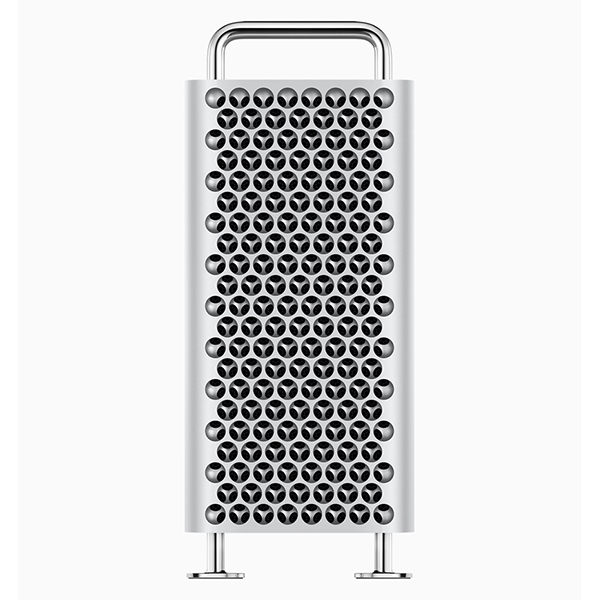
AMD announces that its new AMD Radeon Pro Vega II GPUs will be included in the all-new Mac Pro. Built on 7nm process technology, AMD Radeon Pro Vega II GPUs provide graphics performance for computation-intensive tasks, including rendering, 8K video, video effects and other high-end content creation workloads.
AMD Radeon Pro Vega II GPUs provide computational performance by harnessing 7nm AMD Radeon Vega family GPUs, High Bandwidth Memory (HBM2), and AMD Infinity Fabric Link GPU interconnect technology that enhances data-transfer speeds between GPUs. Providing up to 14 TFLOPS of single-precision floating-point (FP32) performance and up to 28 TFLOPS of half-precision floating-point (FP16) performance, AMD Radeon Pro Vega II GPUs are optimized for powering professional applications.
“Today’s high-end professional content creation applications are driving an insatiable need for ever increasing levels of processing power and memory,” says Scott Herkelman, corporate vice president and general manager, Radeon Technologies Group at AMD. “Equipped with Radeon Pro Vega II GPUs, the new Mac Pro delivers the computational horsepower and memory bandwidth to power ultra-high screen resolutions and help dramatically accelerate compute and content creation workloads, enabling creative professionals to focus on unleashing their creativity and delivering amazing results.”
Key capabilities and features of AMD Radeon Pro Vega II GPUs include the following:
Compute performance—the AMD Radeon Pro Vega II GPU delivers up to 14 TFLOPS of single-precision FP32 performance and up to 28 TFLOPS of half-precision FP16 performance.
Support for Infinity Fabric Link GPU interconnect technology—With up to 84GB/s per direction low-latency peer-to-peer memory access, the scalable GPU interconnect technology enables fast GPU-to-GPU communications.
Fast HBM2 memory—32GB of high-speed HBM2 memory delivers 1TB/s memory bandwidth, providing the memory capacity and data transfer speeds required by high-resolution, multi-display setups, 8K video and other content creation workloads.
Sources: Press materials received from the company and additional information gleaned from the company’s website.


AMD, or Advanced Micro Devices, has driven innovation in high-performance computing, graphics and visualization technologies. They develop high-performance computing and visualization products to solve some of the world’s toughest and most…

Accelerating Electric Vehicle Development with Multidisciplinary Simulation and High-Performance Computing
In this new Making the Case guide, learn how a unified approach to design and multidisciplinary simulation from Dassault Systèmes, combined with high-performance computing powered by AMD EPYC™ processors, can accelerate EV design.

DE's editors contribute news and new product announcements to Digital Engineering. Press releases may be sent to them via [email protected].
Follow DE






About Us · Contact Us · Editorial Team · Advertising · Privacy Policy · Subscriber Services · © 2026 Digital Engineering 24/7 · Peerless Media